

What Is Cold Water Immersion Therapy? A 2026 Guide
Table of Contents
- What Is Cold Water Immersion Therapy?
- Physiological Benefits and Health Outcomes
- Cold Plunge Benefits for Athletes: Recovery and Performance
- How Long to Stay in a Cold Plunge for Optimal Results
- Home Recovery Equipment Setup: Building Your Sanctuary
- Safety Protocols and Who Should Avoid Cold Water Immersion
- Conclusion: Creating Your Restorative Ritual
- Frequently Asked Questions
Last Updated: September 15, 2026
What Is Cold Water Immersion Therapy?
Cold water immersion is the practice of submerging the body in cold water, typically between 50°F and 59°F, for a short, controlled period to trigger recovery and mood-regulating responses. This guide from Prime Recovery Den explains what cold water immersion therapy does, how long to stay in, and how to build a home setup that fits your life.
The appeal is simple: a few deliberate minutes in cold water can leave you feeling alert, calm, and accomplished at the same time. That feeling is why so many athletes and homeowners now treat a cold plunge as part of their daily ritual rather than an occasional challenge.

What most guides get wrong is treating cold water immersion as a test of toughness. It isn't. It's a repeatable practice with a therapeutic window, and staying past that window works against you.
Below, we'll cover the physiological benefits, the recovery case for athletes, exact timing guidelines, home equipment options, and the safety rules that matter most.
Physiological Benefits and Health Outcomes
The most reliable benefits of cold water immersion are improved circulation, reduced feelings of muscle soreness, and a sharper, more positive mood after a session. Many people also find it helps them manage everyday stress.
Here's what happens in the body. Cold water causes blood vessels near the skin to narrow, a response called vasoconstriction, which helps preserve core body temperature. When you step out, those vessels widen again, and that shift is part of what leaves people feeling refreshed rather than drained.
The cold shock response also triggers a release of noradrenaline, which is linked to alertness and mood regulation. That is one reason a plunge can feel energizing even when you expected it to feel miserable.
A common mistake is chasing the coldest possible water. In practice, a consistent 50°F to 59°F session you'll actually repeat beats an extreme plunge you dread.
Cold Plunge Benefits for Athletes: Recovery and Performance
For athletes, the strongest case for cold water immersion is managing delayed onset muscle soreness, commonly called DOMS, after hard training. Reducing that soreness can help you return to training feeling fresher.
Cold exposure narrows blood vessels and may help limit swelling in the hours after intense exercise. Many practitioners pair a plunge with light movement and hydration rather than using it as a standalone recovery regimen.
Timing matters here. Placing cold water immersion immediately after strength work may blunt some of the muscle-building response, so many coaches schedule it on recovery days or after competition instead.
- After competition or a long event: plunge within an hour
- After heavy strength training: consider waiting several hours, or skip it
- On rest days: a short session supports circulation and mood
- During a taper week: keep sessions brief and consistent
That said, cold water immersion is not a substitute for sleep, protein, and a sensible training plan. It's a supporting habit, not a fix for overtraining.
How Long to Stay in a Cold Plunge for Optimal Results
The ideal cold plunge duration is 2 to 5 minutes at 50°F to 59°F for most healthy adults. Beginners should start at 30 to 60 seconds and add time gradually over several weeks.

The therapeutic window is real. Beyond roughly 10 minutes, you gain little extra benefit and take on more cardiovascular strain and hypothermia risk. Longer is not better.
Use this progression to build tolerance safely:
- Week 1-2: 30 to 60 seconds at 59°F
- Week 3-4: 90 seconds at 57°F
- Week 5-6: 2 to 3 minutes at 55°F
- Week 7+: 3 to 5 minutes at 50°F to 55°F
Frequency matters more than intensity. Three to four sessions per week is a common approach that keeps the practice sustainable.
Home Recovery Equipment Setup: Building Your Sanctuary
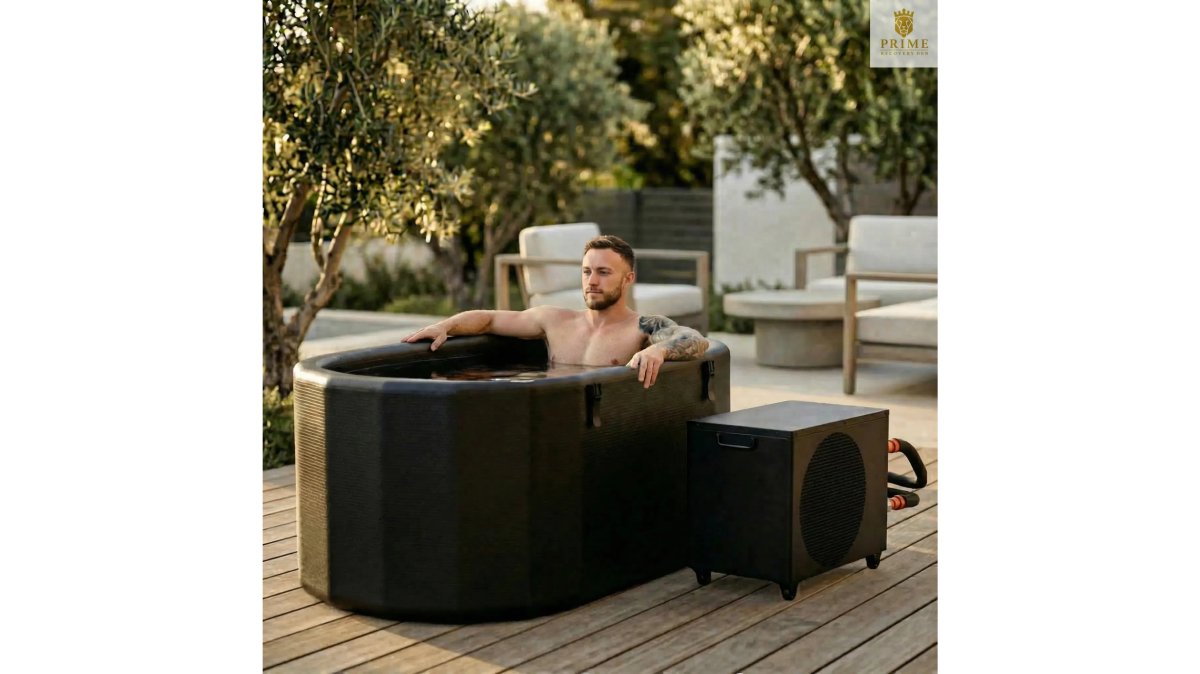
Most guides stop at theory. This section is the practical part: how to actually build a home cold plunge that you will use three times a week, not three times total. A home setup needs four things working together: a tub sized for full-body immersion, a way to keep water cold without hauling ice, filtration so the water stays clean, and a space that feels calm rather than clinical.

Step 1: Choose your tub
Inflatable models are the easiest entry point and can be stored when not in use. Rigid freestanding tubs cost more but hold temperature better and look intentional in a finished room. For full-body immersion, look for at least 100 gallons of capacity and a depth that lets you submerge to the shoulders while seated. If you are taller than 6'2", check the interior length before you buy.
Step 2: Decide how you will cool the water
This is the decision that determines whether you keep the habit. Three options:
- Ice only. Cheapest to start, but you will spend more on ice than a chiller within a few months, and the temperature swings session to session.
- Chiller-ready tub. You buy the tub now and add a chiller later. Good middle path if you want to start small.
- All-in-one with built-in chiller. Highest upfront cost, lowest ongoing effort. Set the temperature and forget it.
A chiller is what turns a novelty into a ritual. Ice runs get old within a month.
Step 3: Add filtration
Filtration keeps water clean between sessions, which matters far more than most buyers expect. Without it, you are draining and refilling every few days. With it, you can go weeks between water changes. Look for a system with both a particle filter and a sanitizing element.
Step 4: Place it where you will actually use it
A plunge near a shower or drain simplifies refills. Warm wood, stone, or tile around the tub keeps the room feeling like a retreat instead of a gym. Good lighting and a place to set a towel and a warm drink complete the space.

A beginner protocol you can start this week
Once your setup is ready, here is a safe progression for your first month:
- Week 1-2: 30 to 60 seconds at 59°F. Focus on breathing, not duration.
- Week 3-4: 90 seconds at 57°F. Add one session per week until you reach three.
- Week 5-6: 2 to 3 minutes at 55°F. This is where the mood and recovery benefits become obvious.
- Week 7+: 3 to 5 minutes at 50°F to 55°F. Hold here. Longer is not better.
Three to four sessions per week is a common approach that keeps the practice sustainable. Frequency matters more than intensity.
Products that make this easy
For a setup that fits a sophisticated home, the Nicebeam Cryo Pro XXL Inflatable Cold Plunge Tub holds 216 gallons, fits users up to 6'9", and connects to any water chiller for ice-free cold therapy. The FCP Premium 2XL Cold Plunge Tub Kit arrives with a 148-gallon oval tub, 1/3 HP chiller, filter, and pump, so there's nothing else to source. If you want effortless temperature control, the CSC Smart Freestanding Full-Body Cold Plunge Tub pairs a built-in chiller with app control and dual filtration.
| Setup | Capacity | Cooling | Best For |
|---|---|---|---|
| Nicebeam Cryo Pro XXL | 216 gal | Chiller-ready | Tall users, two at once |
| FCP Premium 2XL Kit | 148 gal | 1/3 HP chiller included | Complete first setup |
| CSC Smart Freestanding | Full-body | Built-in chiller, app control | Effortless daily use |
Each of these is chosen to feel like part of your home rather than equipment bolted into it. The Nicebeam gives tall users room to stretch out and the flexibility to add cooling on your own schedule. The FCP kit removes every sourcing decision, so your first session happens the day it arrives instead of the week after.
Safety Protocols and Who Should Avoid Cold Water Immersion
The cold shock response: what happens in the first 30 seconds
Who should not plunge
Session rules that prevent most problems
Afterdrop and rewarming: the part most guides skip
A safe rewarming sequence looks like this:
Conclusion: Creating Your Restorative Ritual
Frequently Asked Questions
What are the downsides of taking cold plunges?
Cold water immersion triggers a cold shock response, causing rapid breathing and increased heart rate. The main downsides include hypothermia risk if you stay too long, cardiovascular strain for those with heart conditions, and a temporary drop in core body temperature called afterdrop. Always consult a doctor first, start with 30-second sessions, and never plunge alone.
Is cold-water immersion actually good for you?
Yes, research shows cold water immersion reduces muscle soreness, lowers systemic inflammation, and boosts noradrenaline levels, which can improve mood and cognitive function. It also activates the parasympathetic nervous system to aid recovery. However, benefits depend on consistent practice, proper water temperature, and safe immersion duration. It is not a cure-all but a valuable recovery regimen.
How long should you stay in a cold plunge for optimal results?
For most people, 2 to 5 minutes at 50°F to 59°F is enough to trigger physiological adaptation without excessive cardiovascular strain. Beginners should start with 30 seconds and build up. The therapeutic window depends on your goals: shorter sessions for mood and arousal, longer for muscle recovery. Always exit if you start shivering uncontrollably.
What is the difference between an ice bath and a professional cold plunge?
An ice bath is a temporary setup using a bathtub or bin with added ice, making temperature control difficult. A professional cold plunge, like the Nicebeam Cryo Pro XXL or CSC Smart Freestanding Tub, uses a built-in chiller to maintain precise water temperature and filtration. This ensures a consistent, hygienic, and convenient recovery protocol at home.

Leave a comment
This site is protected by hCaptcha and the hCaptcha Privacy Policy and Terms of Service apply.