

7 Ways to Design a Peaceful Meditation Room
Table of Contents
- 1. Carve Out Space: Repurposing a Corner or Small Room
- 2. Choose Soothing Colors and Earthy Tones
- 3. Layer Soft Lighting and Ambient Glow
- 4. Bring in Natural Elements and Indoor Plants
- 5. Select Comfortable Seating, Cushions, and Textiles
- 6. Manage Sound and Scent for a Sensory-Friendly Space
- 7. Build a Luxury Home Wellness Center Around Your Meditation Practice
- Conclusion: A Peaceful Meditation Room That Feels Like a Retreat
- Frequently Asked Questions
Last Updated: September 28, 2026
1. Carve Out Space: Repurposing a Corner or Small Room
The best peaceful meditation room is rarely a whole room. In most homes, daily practice happens in a corner, an alcove, or a spare bedroom already doing three other jobs. At Prime Recovery Den, we see it constantly: the people who meditate most consistently are not the ones with a dedicated wing of the house, they are the ones who claimed eight square feet and defended it.

How to Zone a Corner Without Renovating
You do not need a contractor. You need three cheap signals that tell your brain the space has changed:
- A rug or mat that covers the footprint of the nook, so bare floor never appears inside it.
- A vertical anchor, such as a tall plant, a floor lamp, or a narrow shelf, that marks the boundary.
- A single seat with a cushion that lives there permanently and nowhere else.
The Meditation Room Essentials Checklist
Before buying anything decorative, confirm the functional layer is in place. This meditation room essentials list holds up over months of use:
- A seat you can hold for 20 minutes without shifting
- One dimmable or warm light source
- A small side surface for a timer, cup, or book
- A way to block sound at the door or window
- A blanket within arm's reach
- Nothing in your line of sight that reminds you of a task
2. Choose Soothing Colors and Earthy Tones
Color sets the emotional temperature of a meditation room before you sit down, but "warm neutrals and muted greens" is where most guides stop, not enough to decide at the paint counter.
The Light Reflectance Value Rule
Every paint color has a Light Reflectance Value (LRV) on a 0-100 scale, printed on the swatch or listed on the manufacturer's site, measuring how much light the color bounces back into the room.
- LRV 60-75: The sweet spot for meditation room walls. Enough light return to keep the room from feeling like a cave, low enough to avoid glare.
- LRV above 80: Too reflective. The walls themselves become a light source and the room feels clinical.
- LRV below 50: Too absorptive. The room closes in, which can feel oppressive rather than grounding in a small nook.
Which Specific Tones Work
- Warm neutrals: Mushroom, greige, oatmeal, warm limestone, the safest base, shifting gracefully under daylight and lamp light.
- Muted greens: Sage, olive, eucalyptus, muted moss. Green sits mid-spectrum, so the eye focuses it with the least muscular effort, a real physiological reason it reads as restful.
- Soft clay and terracotta: Warmth without saturation. Keep them on one accent surface, not all four walls.
- Sand and bone: Excellent for ceilings and trim, where you want light return without glare.
Avoid: pure white (LRV 90+), saturated navy, bright teal, and any color with a strong red or orange bias at full saturation. These raise arousal rather than lower it.
Texture Carries the Interest
Once the walls are quiet, one texture should carry the visual weight. A limewash finish, linen curtain, raw wood bench, or plaster accent wall adds depth without color noise. The rule: one texture, one focal surface, everything else flat.
3. Layer Soft Lighting and Ambient Glow
Overhead light is the fastest way to kill a peaceful atmosphere. Ceiling fixtures throw light downward onto your face and flatten the room. Layered ambient lighting, meaning two or three low sources at different heights, creates the softness that makes a space feel calm.
Warm Salt Lamps and Dimmable Options
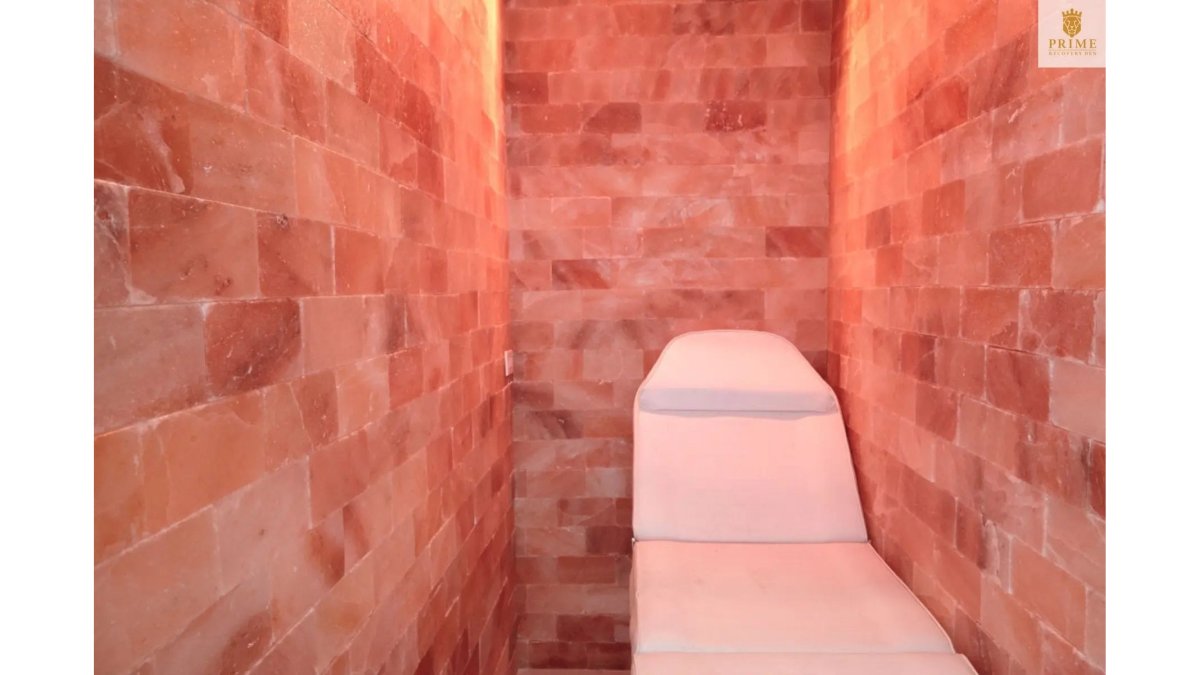
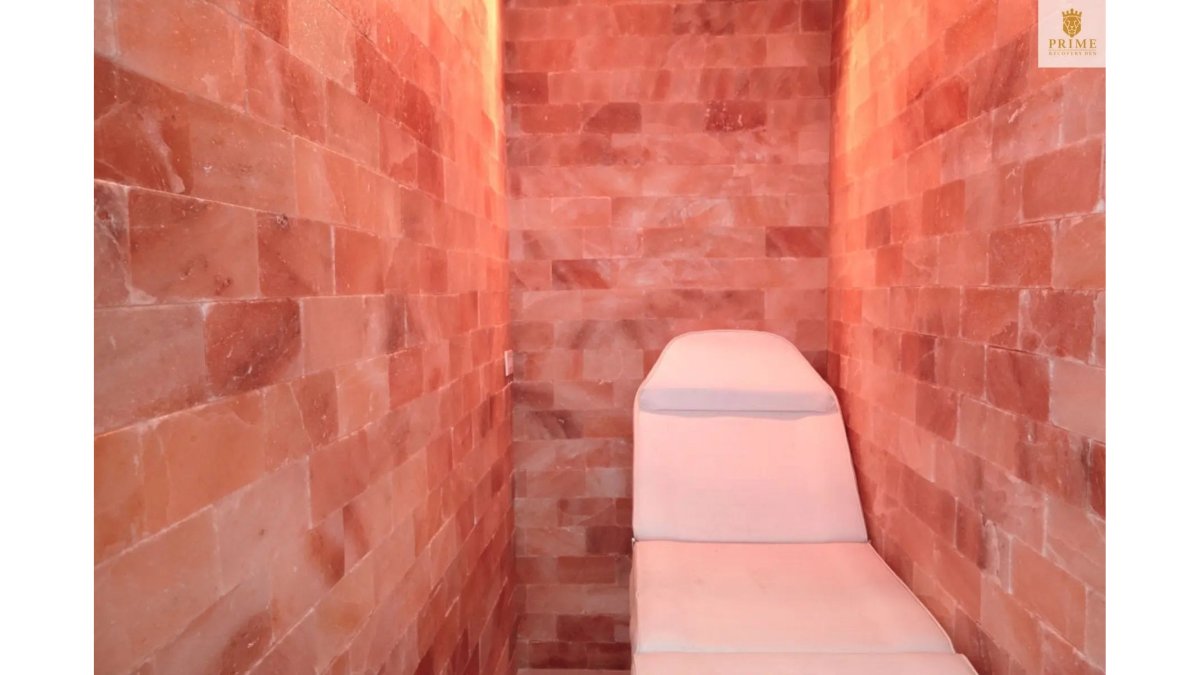
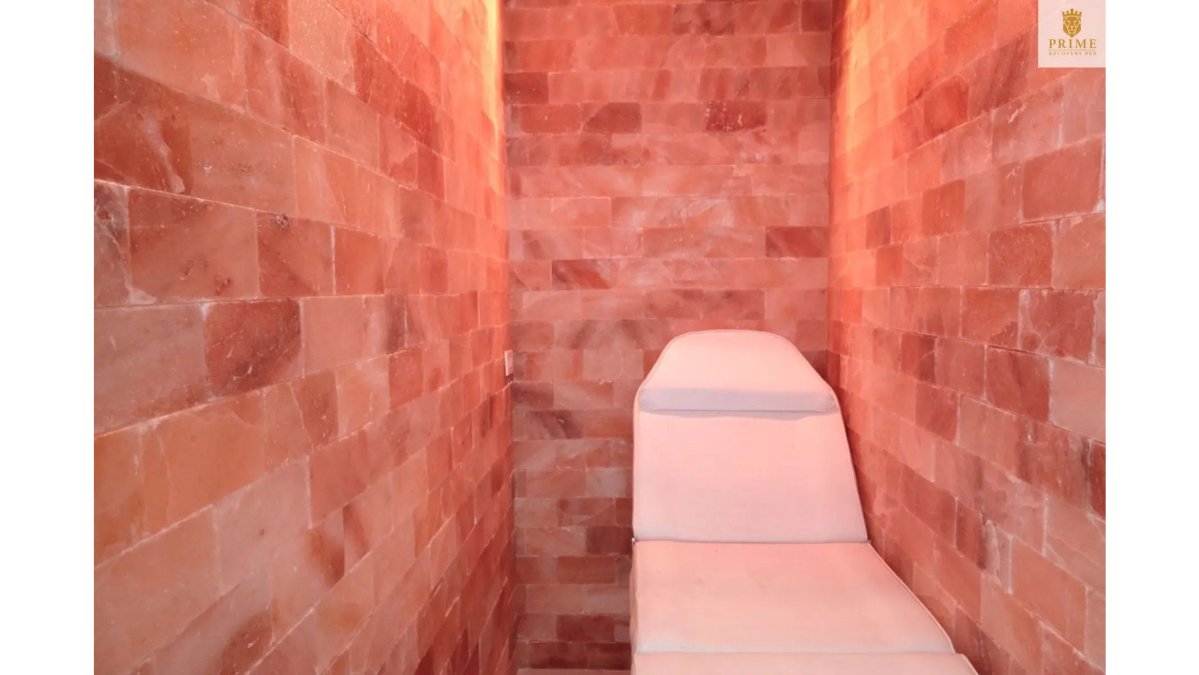
A Himalayan salt lamp is the simplest single upgrade you can make. It produces a warm amber glow that reads as firelight rather than electricity, and doubles as a sculptural object so you are not hiding a lamp behind a shade.
4. Bring in Natural Elements and Indoor Plants
Plants and raw materials ground a space, and the reason is neurological: the human visual system processes natural fractal patterns (leaf veins, wood grain, stone striations) with less effort than straight lines and manufactured surfaces. That reduced processing load is why a room with a single well-placed plant feels calmer than one with none.
The Three-Plant Rule
You do not need a jungle. A common pattern among long-term practitioners: three plants, three heights, three leaf shapes.
- One tall floor plant (4-6 feet) to anchor a corner and draw the eye upward. A snake plant, a rubber tree, or a tall dracaena works.
- One mid-height plant (18-30 inches) on a side surface or stool. A pothos on a stand, a ZZ plant, or a philodendron.
- One small plant (under 12 inches) at eye level when seated. A small fern, a peperomia, or a single succulent.
Low-Light and No-Light Solutions
With a window, snake plants, pothos, and ZZ plants handle low light and inconsistent watering. With no window at all, live plants will struggle regardless of what the tag says.
For windowless spaces, three options work:
Large Salt Room 16' x 16' Surface Area →
- Dried arrangements. A branch in a tall vase, dried eucalyptus, or pampas grass delivers natural form without sunlight. Replace every 6-12 months as they fade.
- Preserved moss walls or frames. These keep their color for years and add living texture without any light requirement.
- A single high-quality artificial plant. One good artificial fern reads as real from three feet away and never dies.
Raw Materials Beyond Plants
Plants are only one channel of biophilic design. The others are material and touch. Pair them with one or two natural materials you can actually feel:
- A raw wood stool or bench (walnut, oak, or acacia)
- A stone bowl or tray (river stone, travertine, or soapstone)
- A woven basket (seagrass, jute, or rattan)
- A linen or wool throw
What This Does for You
When you sit in a space that mimics natural patterns, layered heights, organic shapes, raw materials, your visual system stops scanning for threats and starts settling. Most practitioners describe the room "holding" them rather than surrounding them. That is the biophilic response, and the difference between a room that looks like a meditation space and one that actually functions as one.
5. Select Comfortable Seating, Cushions, and Textiles
Your seat decides whether you actually meditate or spend twenty minutes negotiating with your lower back. Comfortable seating for a peaceful meditation room means support that needs no constant adjustment.
| Seating Type | Best For | Height Guidance | Trade-off |
|---|---|---|---|
| Buckwheat zafu | Cross-legged sitters | 4-6 inches | Needs occasional refilling |
| Crescent cushion | Knee or hip pressure | 3-5 inches | Takes up floor space |
| Upholstered bench | Chair-style sitters | Seat at knee height | Less portable |
| Floor chair with back | Long sessions | Reclined base | Bulkier footprint |
Ergonomics for Long-Duration Meditation
Most guides ignore this, and it is why so many practices quietly die at the 25-minute mark. Ergonomics for long sessions comes down to one principle: your hips should sit higher than your knees.
6. Manage Sound and Scent for a Sensory-Friendly Space
Two senses get neglected in almost every meditation room guide: hearing and smell. Both shape whether a space feels calm far more than wall color does.
7. Build a Luxury Home Wellness Center Around Your Meditation Practice
Once the nook works, the natural next step is expanding it. A luxury home wellness center is not a gym with better lighting, it is a sequence of zones that each do one job well, with meditation as the anchor holding the rest together.
Conclusion: A Peaceful Meditation Room That Feels Like a Retreat
The hard part of designing a peaceful meditation room is not choosing colors or buying a cushion. It is resisting the urge to fill the space with things that belong to the rest of your life. Every object either supports the practice or competes with it.
Frequently Asked Questions
What are the essential elements of a meditation room?
A peaceful meditation room needs four things: a dedicated spot you can return to daily, comfortable seating you can hold for 20 minutes or longer, controllable light, and some way to soften noise. From there, add what helps you settle: a plant, a textured rug, a scent you associate with calm. You do not need a large room. A corner with a cushion, a small lamp, and a folded blanket works as well as a full spare bedroom, and it is easier to keep clutter-free.
How do I create a meditation space in a small room?
Start with one corner and define it clearly. Face the seat away from your desk or television, add a rug or mat to mark the boundary, and keep only meditation room essentials in that zone: a cushion, a throw, and a light source. Vertical space helps in small rooms, so wall-mounted salt panels or a slim shelf keep the floor clear. If the room serves other purposes, store your cushion and blanket in a basket so the space resets each time you use it.
What colors are best for a meditation room?
Earthy tones do most of the work: warm beige, clay, sand, muted olive, and soft gray-green. These colors lower visual stimulation, which makes it easier to settle. Avoid high-contrast black-and-white schemes and saturated reds or oranges, which read as alert rather than restful. You can add one deeper accent, such as walnut or charcoal, in a rug or cushion. Warm amber light from a Himalayan salt lamp or a 15W to 25W incandescent bulb reinforces the palette instead of fighting it.
How can I make my meditation space more relaxing?
Address sound and scent, which most people skip. Add a thick rug or upholstered cushion to absorb echo, close the door, and consider a white noise source if street noise reaches the room. For scent, choose one aroma and use it only during practice so your brain links it to settling down. Keep the temperature steady, dim the overheads, and leave your phone outside the room. A consistent 10 to 20 minute session in the same space at the same time does more than any single purchase.
Do I need special equipment for a home meditation room?
No. A cushion or chair, a blanket, and a dimmable light are enough to begin. Equipment matters only when it changes how long you can sit or how quickly you settle. If you want to go further, Himalayan salt wall kits and salt lamps from Prime Recovery Den add a warm amber glow and negative ion emission that make the room feel like a spa rather than a spare bedroom. Start simple, then add pieces that support the practice you already have.

Leave a comment
This site is protected by hCaptcha and the hCaptcha Privacy Policy and Terms of Service apply.