

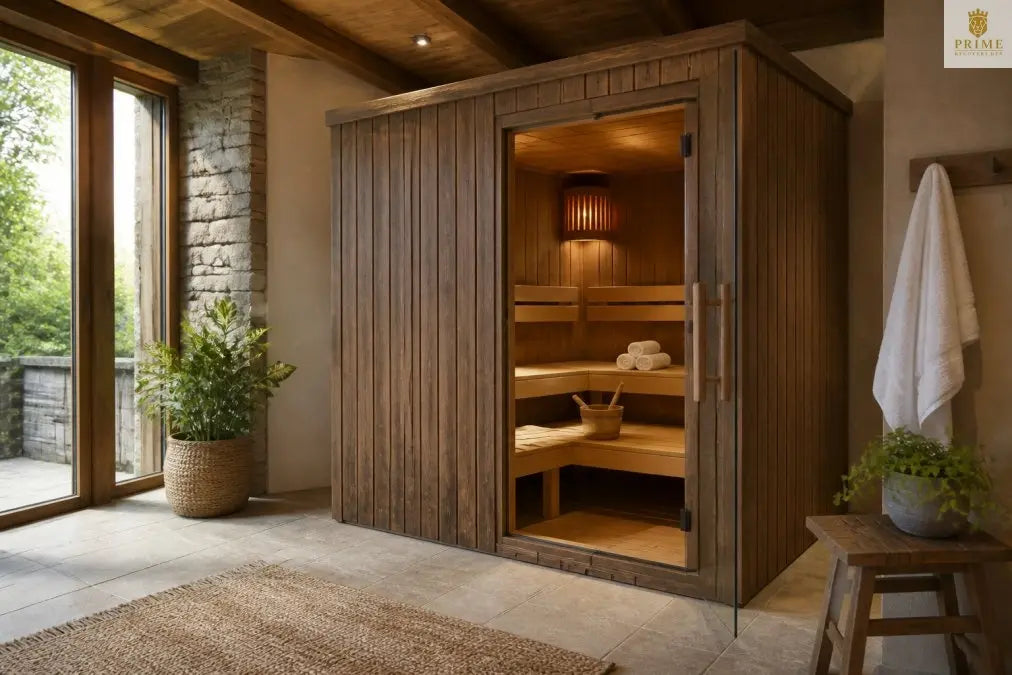
Traditional Aesthetic Home Sauna Design Ideas
Table of Contents
- What Defines Traditional Sauna Design
- Best Wood for Home Sauna Construction
- Traditional Sauna Layout Dimensions and Bench Configuration
- Authentic Finnish Sauna Design Elements
- Heating Options: Electric vs. Wood-Burning
- Lighting, Ventilation, and Ambiance
- Indoor vs. Outdoor Placement and Space Considerations
- DIY vs. Pre-Fabricated Sauna Kits
Last Updated: August 9, 2026
What Defines Traditional Sauna Design
Traditional sauna design prioritizes authenticity, natural materials, and timeless Finnish principles. Function trumps decoration, the goal is creating an environment where heat, steam, and ritual converge seamlessly. This means untreated wood (cedar or hemlock), simple tiered benches, minimal electrical ornamentation, and natural ventilation.
According to Finnish sauna traditions and wellness research, the traditional approach has remained largely unchanged for centuries because it works. The design philosophy centers on creating ideal conditions for löyly, the distinctive steam that forms when water meets hot stones, without unnecessary complication.
What separates traditional design from modern interpretations is restraint. A traditional sauna needs proper insulation, excellent wood selection, strategic ventilation, and a heater that produces genuine steam. Prime Recovery Den understands this distinction, curating sauna solutions that honor traditional principles while meeting contemporary expectations.
The aesthetic appeal emerges directly from functional roots. The warm honey tones of cedar, the geometric simplicity of benches, the soft glow of vapor-proof lighting, these aren't decorative choices but natural results of solving the sauna problem efficiently.
Best Wood for Home Sauna Construction
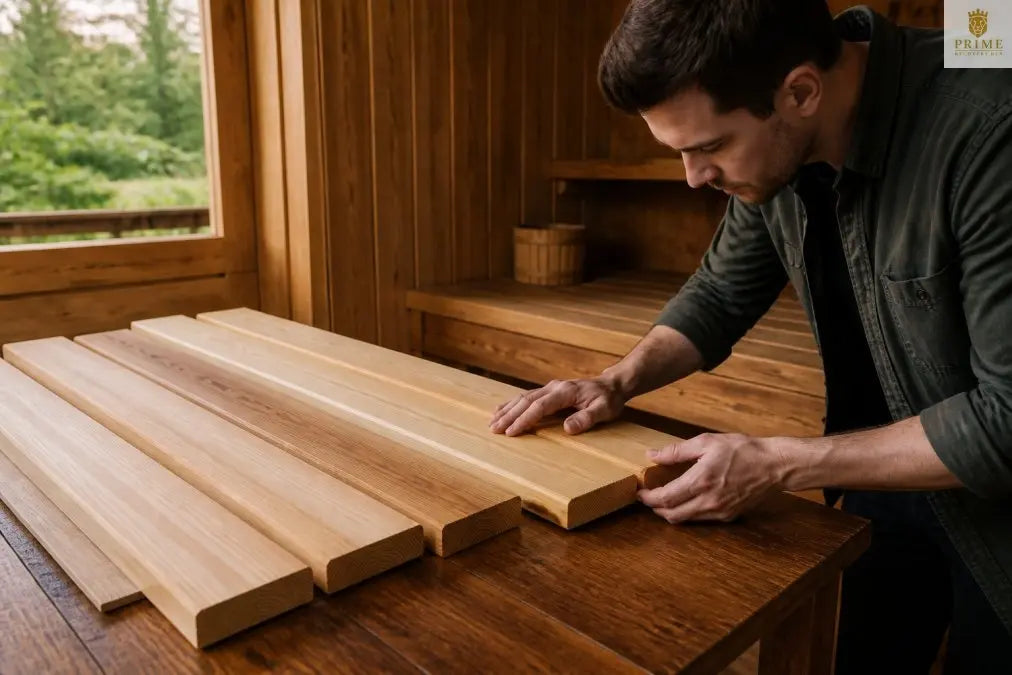
Selecting the right wood species is the most consequential decision in sauna design. The wood must withstand extreme heat and humidity without warping, cracking, or releasing toxic compounds. Two species consistently outperform alternatives: Western Red Cedar and Canadian Hemlock.
Western Red Cedar
Western Red Cedar is the gold standard for sauna construction. This wood naturally resists moisture, decay, and insect damage without chemical treatment, critical in an environment where you're breathing the air directly. Cedar's cellular structure allows expansion and contraction without dramatic warping.
Cedar produces a distinctive, pleasant aroma that enhances the sauna experience and maintains structural integrity through repeated heating and cooling cycles. Its natural oils provide inherent protection, meaning you can keep the interior completely untreated. The primary limitation is cost, Western Red Cedar commands a premium compared to alternatives. However, the longevity and performance justify the investment for homeowners planning 15+ years of use.
Canadian Hemlock
Canadian Hemlock offers a compelling alternative when budget matters. This lighter-colored softwood produces a brighter, more minimalist aesthetic. Hemlock is less naturally resistant to moisture than cedar, requiring careful attention to vapor barriers and ventilation. When properly installed, hemlock performs reliably in sauna environments.
The wood is easier to work with than cedar and costs significantly less without sacrificing structural performance. The lighter color appeals to homeowners seeking a Scandinavian aesthetic. The trade-off is that hemlock lacks cedar's natural decay resistance and aromatic qualities. Over 20+ years, hemlock may show more surface checking (small cracks), though this doesn't compromise structural integrity.
For most applications, wood species selection in sauna construction shows that either species works well when installed correctly. The choice comes down to aesthetic preference, budget, and long-term maintenance expectations.
Traditional Sauna Layout Dimensions and Bench Configuration
The layout of a traditional sauna determines comfort, safety, and experience quality. Traditional designs aren't arbitrary, they're refined solutions developed over centuries of Finnish practice.
A typical residential sauna occupies 40-100 square feet. Smaller saunas (4x6 feet) accommodate 2-3 people comfortably. Medium saunas (6x8 feet) fit 4-6 people. Larger installations (8x10+ feet) suit households that entertain or want generous space. The ceiling height should be 6.5-7 feet, tall enough to avoid cramped feeling but low enough for heat concentration near benches.
The heater placement is critical. It should sit in a corner, elevated slightly off the floor, with clear space around it for air circulation and safety. The heater guard is non-negotiable.
Tiered Bench Arrangements
Traditional saunas feature tiered benches rather than single-level seating. The typical arrangement includes a lower bench (12-18 inches high) and an upper bench (24-36 inches high). This tiering serves a practical purpose: heat stratifies in a sauna, with the hottest air near the ceiling. Tiered benches allow users to choose their preferred temperature intensity.
Bench width should be 18-24 inches, wide enough to recline comfortably but not so wide that heat distribution becomes uneven. Benches should have a slight slope (2-3 degrees) to encourage water drainage. Backrests (12-18 inches) prevent direct contact with hot walls and improve comfort during longer sessions.
Duckboard and Floor Drainage
The floor beneath benches should feature a duckboard, a slatted wooden platform that elevates users above the actual sauna floor. The duckboard provides thermal insulation, allows water drainage, and creates a safer surface than bare wood.
The actual sauna floor should slope slightly toward a drain or drainage area, preventing water accumulation that leads to rot and mold. The slope should be subtle (1/4 inch per foot). The space beneath the duckboard allows air circulation, essential for moisture management. Without this airflow, trapped water will eventually compromise the wood structure.
Authentic Finnish Sauna Design Elements
Authentic Finnish sauna design emphasizes simplicity and functionality. The Finns have refined sauna culture over generations, and their design principles reflect deep understanding of what actually matters.
Löyly and Steam Production
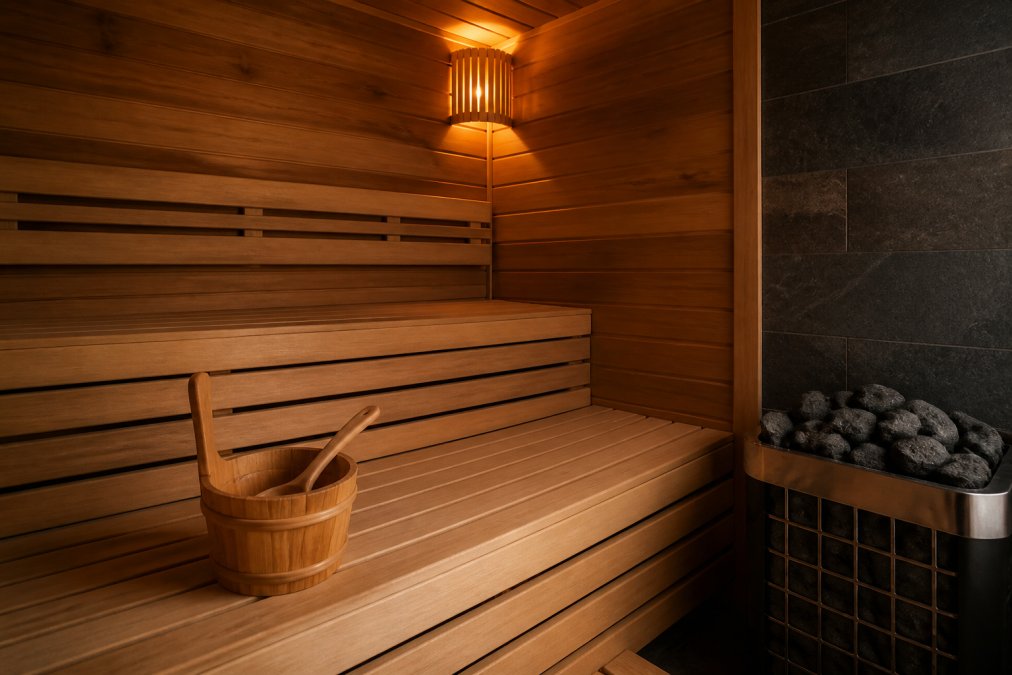
Löyly is the Finnish term for the distinctive steam that rises when water meets hot sauna stones. It's the soul of the sauna experience. Authentic Finnish design prioritizes conditions that produce proper löyly: extremely hot stones (typically 350-400°F), adequate water capacity in the heater reservoir, and sufficient ventilation to manage humidity.
The heater must maintain consistent stone temperature even after water is poured. This requires adequate thermal mass and proper air circulation. Ventilation is critical, a sauna needs fresh air intake (typically low on one wall) and exhaust venting (typically high on the opposite wall). This creates natural convection that draws cooler air across the heater, maintaining stone temperature while managing humidity. Without proper ventilation, the sauna becomes a humid, uncomfortable steam room rather than a traditional sauna.
Essential Accessories: Bucket, Ladle, and Thermometer
Three accessories are non-negotiable: the bucket, the ladle, and the thermometer.
The bucket holds water for creating löyly. Traditional buckets are made from wood (cedar or birch) with metal bands. A typical sauna bucket holds 3-5 gallons and should be positioned on the lower bench where it's easily accessible.
The ladle pours water over hot stones. A long handle (12-18 inches) keeps hands safe from intense heat. Traditional ladles are wooden with a metal cup. A shallow cup distributes water more evenly than a deep one, producing better löyly.
The thermometer tracks sauna temperature, typically reading in both Fahrenheit and Celsius. According to sauna temperature and humidity guidelines, the ideal traditional sauna operates at 160-180°F with relatively low humidity (20-40%). Modern thermometers are vapor-proof and heat-rated for sauna environments, mounted on the wall at eye level when seated on the lower bench.
These accessories aren't decorative, they're functional tools that enable the traditional sauna ritual. Prime Recovery Den includes these essentials with their sauna offerings, recognizing that authentic design requires the complete package.
Heating Options: Electric vs. Wood-Burning
The heating method fundamentally shapes the sauna experience. Traditional saunas use either electric heaters or wood-burning stoves.
Electric Heaters for Simplicity
Electric heaters offer consistent, controllable heat production without fire management complexity. Modern electric heaters reach operating temperature in 30-60 minutes. They come in various kilowatt ratings (typically 3-15 kW depending on sauna volume) and mount in a corner with sauna stones stacked on top.
The advantages are significant: no chimney required, no fire management, no ash cleanup, and precise temperature control. Electric heaters operate quietly and safely. For homeowners in urban areas or without chimney infrastructure, electric heating is often the only practical option. The limitation is that electric heating lacks the sensory richness of a wood fire, no visual flame, no wood aroma, no crackling sound.
Wood-Burning Stoves for Authenticity
Wood-burning sauna stoves deliver the complete traditional experience. The visible fire, wood aroma, and ritual of tending the stove connect users to sauna's historical roots. A properly designed wood-burning stove produces excellent löyly and maintains consistent heat throughout a session.
The HUUM HIVE Wood stove exemplifies modern wood-burning design. This Finnish-engineered stove combines traditional aesthetics with contemporary engineering, producing mild, long-lasting steam through superior heat retention.
Wood-burning stoves require infrastructure: a chimney or vent pipe that safely exhausts combustion gases outside. Installation demands attention to local building codes and fire safety regulations. You'll need dry firewood and must clean ash regularly. Starting a wood fire takes 45-90 minutes before the sauna reaches optimal temperature.
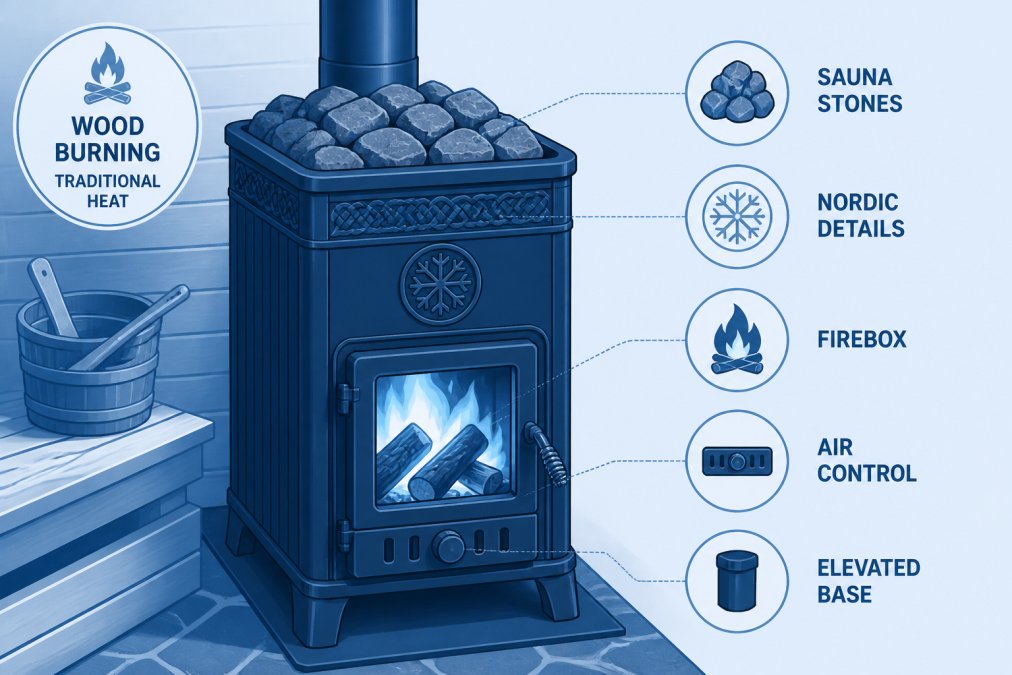
The choice between electric and wood-burning reflects your priorities. Electric heating prioritizes convenience and reliability. Wood-burning stoves prioritize authenticity and sensory experience. Both can produce excellent traditional saunas when properly designed and installed.
Lighting, Ventilation, and Ambiance
Lighting and ventilation profoundly affect both the experience and the sauna's longevity.
Lighting in a traditional sauna should be subtle and warm. Vapor-proof wall lights with warm color temperatures (2700K or lower) create the right ambiance. Fixtures must be rated for high heat and humidity. Avoid decorative lighting, a single wall-mounted fixture or two discrete fixtures are sufficient. The goal is visibility and safety, not illumination.
Ventilation serves two critical functions: maintaining oxygen levels and managing humidity. A sauna needs fresh air intake (typically a 2-4 inch duct positioned low on one wall) and exhaust venting (typically a 4-6 inch duct positioned high on the opposite wall). This creates natural convection that continuously refreshes air without causing uncomfortable drafts.
Proper ventilation prevents the sauna from becoming stuffy or excessively humid and extends wood life by preventing moisture accumulation. According to sauna ventilation design standards, adequate airflow is essential for both safety and performance.
Indoor vs. Outdoor Placement and Space Considerations
The decision between indoor and outdoor placement shapes every other design choice.
Indoor saunas integrate seamlessly into the home. They're accessible year-round regardless of weather, require no outdoor space, and can be built into existing structures. Indoor placement simplifies drainage and ventilation. The constraints include requiring dedicated interior space and careful ventilation design to prevent moisture migration into surrounding walls.
Outdoor saunas offer aesthetic appeal and eliminate moisture concerns affecting the home. A barrel sauna or small outdoor sauna becomes a garden feature. Drainage and ventilation are straightforward. The trade-offs include weather exposure, seasonal use limitations in harsh climates, and the need for adequate outdoor space.
For most residential applications, indoor placement makes more sense. It encourages regular use and integrates the sauna into daily wellness routines. However, homeowners with adequate outdoor space and commitment to year-round use often prefer outdoor placement.
DIY vs. Pre-Fabricated Sauna Kits
The final major decision is whether to build a custom sauna, assemble a prefabricated kit, or hire professionals.
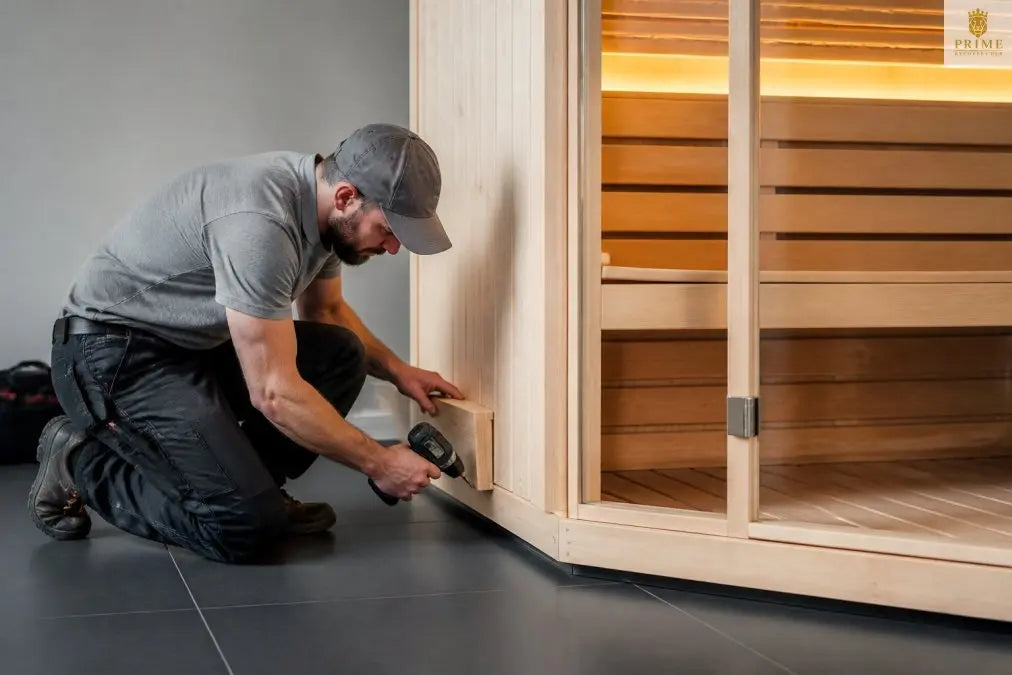
Pre-fabricated kits offer the most accessible entry point. Companies like SaunaLife provide precision-cut panels, pre-assembled benches, and all necessary components. Assembly typically takes 20-40 hours for a skilled DIYer. Kits are considerably less expensive than custom builds and eliminate design uncertainty.
The SaunaLife Model CL5G, for example, accommodates four people in a compact cube design and can be assembled by a homeowner with basic carpentry skills. The limitations include limited customization and predetermined aesthetics.
Custom builds from various companies offer unlimited design flexibility. Custom saunas are cut to fit specific spaces and engineered for your exact heating and ventilation needs. Custom saunas command premium pricing and require coordination with dealers and installers, but the result is a sauna that perfectly suits both the space and user preferences.
DIY construction from raw materials is possible but demanding. You'll source lumber, design the layout, handle all construction, manage ventilation and drainage, and coordinate electrical or chimney work. This approach offers complete control but requires genuine carpentry skills and deep sauna engineering knowledge.
For most homeowners, a prefabricated kit or professional custom installation makes sense. Kits suit outdoor placement and straightforward spaces. Custom installations suit indoor placement where fitting existing spaces matters.
The traditional aesthetic home sauna design ideas you choose will shape decades of wellness experiences. Whether you prioritize authentic wood-burning heat, electric heating convenience, or prefabricated kit flexibility, the core principle remains unchanged: a well-designed sauna is fundamentally about function. Beauty emerges naturally from solving the sauna problem correctly, proper materials, thoughtful layout, adequate ventilation, and respect for the ritual. Prime Recovery Den's curated sauna selection honors these principles, offering solutions that balance traditional authenticity with modern quality standards. The goal is creating a sanctuary where you'll actually spend time, regularly, for years to come.
Frequently Asked Questions
What is the best wood for a traditional home sauna?
Western Red Cedar and Canadian Hemlock are the top choices for traditional sauna construction. Cedar is naturally resistant to moisture, mildew, and decay, maintains dimensional stability in high heat, and provides a distinctive aromatic quality that enhances the experience. Hemlock offers similar durability and thermal properties at a competitive price point. Both woods are used in authentic Finnish sauna design and withstand the demanding sauna environment without swelling or shrinking.
What are the essential elements of authentic Finnish sauna design?
Authentic Finnish saunas center on creating löyly, the soft, mild steam produced by pouring water over hot sauna stones. Key elements include tiered wooden benches for varying heat exposure, a duckboard floor for drainage and foot comfort, proper ventilation to manage humidity, a heat-resistant door (often glass), and accessories like a wooden bucket, ladle, and thermometer/hygrometer. The interior uses tongue-and-groove wood cladding, a vapor barrier for moisture management, and ambient lighting that complements the warm, natural aesthetic.
Can you incorporate traditional sauna design in a small home?
Yes. Custom-cut sauna kits and pre-fabricated options are designed to fit existing spaces, from compact indoor rooms to small outdoor footprints. A 4-person traditional sauna can fit in a corner of a basement, spare bedroom, or small outdoor area. The key is working with a dealer or kit provider who can tailor dimensions to your space while maintaining authentic design principles, proper bench layout, ventilation, and wood selection remain consistent regardless of square footage.
What's the difference between electric and wood-burning sauna heaters?
Electric heaters like the Harvia KIP offer straightforward operation, precise temperature control, and faster heat-up times. They're ideal for year-round use and require less maintenance. Wood-burning stoves, such as the HUUM HIVE, deliver an authentic, romantic experience with the sights and sounds of a real fire and produce exceptionally mild, long-lasting steam. Wood-burning requires manual fire management and attention to local permits and chimney drafting, but many traditionalists prefer the sensory depth and connection to historical sauna practice.

Leave a comment
This site is protected by hCaptcha and the hCaptcha Privacy Policy and Terms of Service apply.