

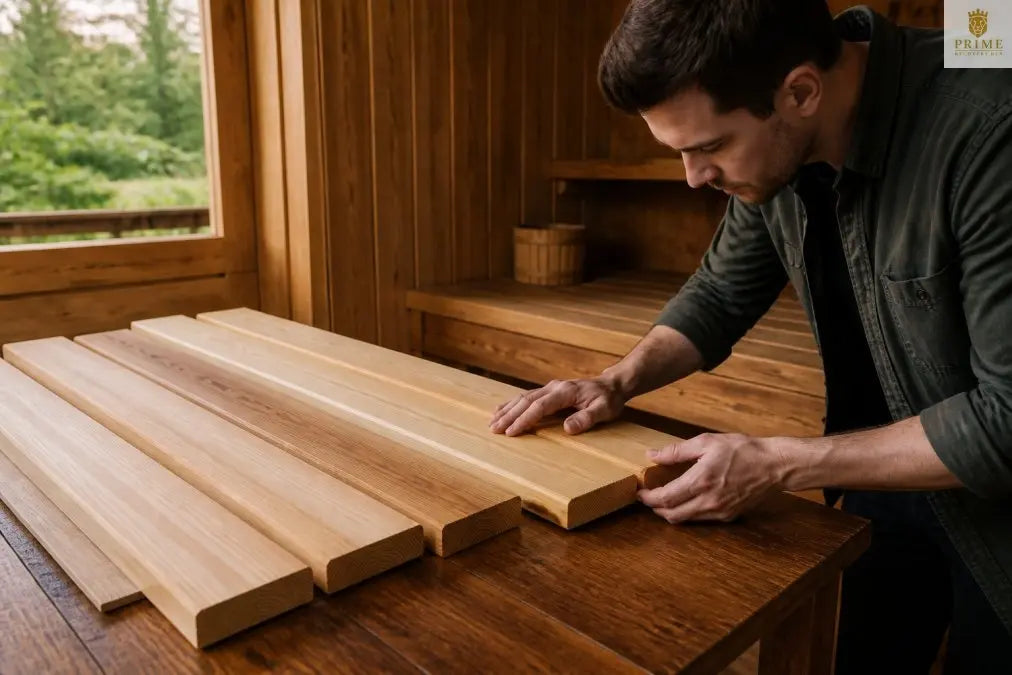
How to Identify High Quality Sauna Wood
Table of Contents
- Why Wood Selection Matters for Your Sauna
- Softwood vs. Hardwood: Understanding the Fundamentals
- Cedar vs. Hemlock for Sauna: Comparing Top Choices
- How to Inspect Wood Quality: The Clear Grade Standard
- Benefits of Thermo-Treated Sauna Wood
- Sauna Wood Maintenance Tips for Long-Term Durability
- Wood Selection for Sauna Benches and Wall Paneling
- Conclusion
Last Updated: August 8, 2026
Why Wood Selection Matters for Your Sauna
The wood you choose for your sauna determines how it feels, how long it lasts, and whether it delivers the restorative experience you're paying for. The right wood depends on where it goes in your sauna, how you use the space, and what matters most: durability, sensory experience, or budget.
High-quality sauna wood shares specific traits: low thermal conductivity so benches don't burn skin, stable grain structure that resists warping, and natural resistance to rot and mold. Understanding these trade-offs separates a sauna that feels premium after five years from one that shows wear after two.
Softwood vs. Hardwood: Understanding the Fundamentals
Softwoods come from conifers like pine, spruce, and hemlock. Hardwoods come from deciduous trees like oak, ash, and cedar. For saunas, this matters because the two categories behave very differently under heat and humidity.
Softwoods are lighter, less dense, and have lower thermal conductivity, making them safer for direct skin contact. Hemlock is popular for sauna benches for this reason. Hardwoods are denser with higher thermal conductivity, absorbing and retaining heat more aggressively. Cedar, technically a softwood but with hardwood-like density, falls in the middle and has become the industry standard.
Softwoods have larger cell structures and more variation in density between growth rings, making them prone to expansion and contraction. Hardwoods have tighter grain and more consistent density, giving them better dimensional stability. In a sauna environment where moisture swings wildly, dimensional stability directly impacts how long the wood stays flat and doesn't warp.
Thermal Conductivity and Heat Retention
Thermal conductivity is the rate at which heat moves through a material. For sauna wood, lower thermal conductivity is better for benches where skin makes direct contact. Cedar and hemlock both have low thermal conductivity compared to hardwoods. When you sit on a hemlock bench in a 190°F sauna, the surface stays cool enough to touch without burning.
Wall paneling has different requirements. You want the wood to absorb and release heat efficiently to help regulate the sauna's temperature. Thicker wall panels with moderate thermal conductivity create a more stable thermal environment.
Moisture Content and Dimensional Stability
Moisture content is the amount of water trapped inside the wood's cell structure. In a sauna, moisture content fluctuates constantly, causing the wood to shrink when heated and expand when cooled. This cycle, repeated thousands of times, causes warping and cracking if the wood isn't stable.
Kiln-dried wood has been dried in a controlled oven to reduce moisture content to 12-15%. This is the standard for sauna wood and stabilizes the grain, reducing the wood's ability to absorb additional moisture.
Wood with tight, consistent grain density maintains dimensional stability better than wood with variable grain. Cedar's medium density and consistent grain structure make it more stable than hemlock or pine, which is another reason it commands a premium price.
Cedar vs. Hemlock for Sauna: Comparing Top Choices
These two species represent the practical choice most sauna owners face. Cedar costs more but offers aromatic oils and natural durability. Hemlock costs less and still performs well for benches, though it lacks cedar's longevity and sensory benefits.
Cedar: Aromatic Oils and Natural Durability
Cedar's reputation is earned. The wood contains natural volatile oils that create the distinctive sauna aroma, that clean, slightly sweet scent many associate with a premium sauna experience. These oils provide natural rot and mold resistance. Cedar contains thujone and other compounds that inhibit fungal and bacterial growth, which is why cedar lasts longer in high-moisture environments.
Cedar's grain density sits between softwood and hardwood characteristics. It has low enough thermal conductivity for safe bench use but enough density to resist denting. As cedar ages, it develops a silvery patina that many find attractive without compromising structural integrity.
The trade-off is cost. Cedar typically costs 40-60% more than hemlock. For a full sauna with benches, wall paneling, and door frame, the premium adds up. But cedar's longevity and sensory benefits justify the investment for serious sauna users who plan regular use for years.
Hemlock: Cost-Effective Performance
Hemlock is the practical choice for budget-conscious buyers who still want solid performance. It has low thermal conductivity, making it safe for benches, and is kiln-dried to stable moisture levels. It resists rot reasonably well, though not as aggressively as cedar.
Hemlock lacks cedar's aromatic oils and weathers differently, turning gray rather than silver and developing surface checking more readily. For bench use in a well-maintained sauna, hemlock performs adequately for 5-8 years before showing significant wear. Cedar in the same application lasts 15-20 years or more.
The decision often comes down to usage intensity. If you're using the sauna 2-3 times per week and plan to keep it for a decade, cedar is the better investment. If you're using it occasionally or upgrading in 5 years anyway, hemlock makes financial sense.
How to Identify High Quality Sauna Wood: The Clear Grade Standard
High-quality sauna wood has specific visual and tactile characteristics that separate premium from mediocre.
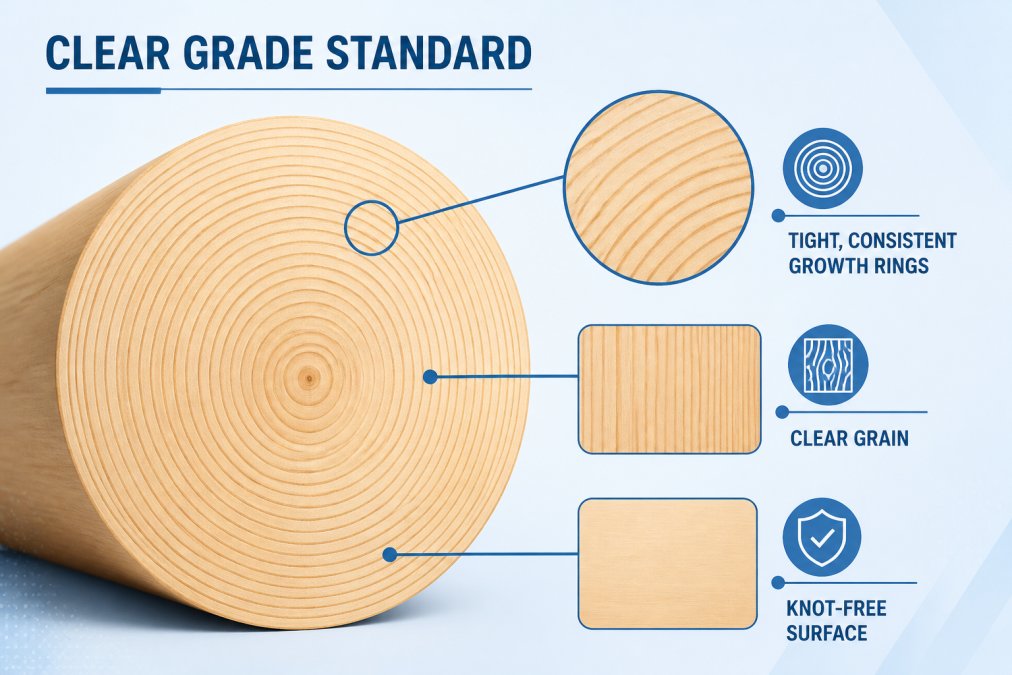
The clear grade standard is the starting point. Clear grade means the wood is free of large knots, splits, and defects. It doesn't mean perfect, but it means the wood is stable and free of structural flaws that will cause problems under heat and moisture stress.
Identifying Knot-Free and Clear Grade Wood
A knot is where a branch fell off the tree during growth. Knots cause problems in saunas because they heat differently, expand differently, and can pop out under thermal stress.
Clear grade wood has no knots larger than 1/4 inch. When you look at a board end-on, you should see consistent grain rings with no dark, hard spots interrupting the pattern. Run your hand across the surface; knot-free wood feels uniform. Large knots (bigger than 1/2 inch) are disqualifying for sauna benches.
Color consistency is also an indicator. Cedar should be reddish-brown to tan. Hemlock should be pale cream to light brown. Significant color variation, dark streaks, or blotchy sections suggest the wood came from different growth conditions or has been poorly stored.
Detecting Resin Pockets and Sap Bleeding
Resin pockets are small cavities filled with concentrated pitch or resin. Under high heat, they can rupture and leak sticky, flammable resin onto the sauna surface. Resin pockets appear as small dark spots or streaks in the wood grain and feel slightly raised or depressed compared to surrounding wood.
Sap bleeding occurs when resin or sap seeps from the wood under heat. This stains the sauna surface and can be nearly impossible to clean. High-quality kiln-dried wood has consistent color and a dry appearance. If the wood looks wet or has an oily sheen, it hasn't been dried adequately.
Checking Grain Density and Cross-Section
Grain density indicates how stable the wood will be. Tight grain means the tree grew slowly, producing consistent, dense wood. Look at the edge grain and count the rings in a 1-inch section. High-quality sauna wood has at least 8-10 rings per inch.
Feel the wood's surface. High-quality wood feels smooth and uniform. Press gently with your fingernail; the wood should resist denting. If your fingernail leaves an impression, the wood is too soft or poorly dried.
Benefits of Thermo-Treated Sauna Wood
Thermo-treated wood is kiln-dried at very high temperatures (around 400°F) to dramatically reduce moisture content and increase stability. This process makes the wood harder, more durable, and more resistant to rot, mold, and dimensional change.
The trade-off is cost. Thermo-treated wood costs 20-30% more than standard kiln-dried wood. For benches and high-stress areas, this premium is worth it. Thermo-treated wood also has a shorter aromatic life, as high-temperature drying drives off some volatile oils in cedar, reducing scent.
Sauna Wood Maintenance Tips for Long-Term Durability
High-quality wood only stays high-quality if you maintain it. Regular maintenance keeps your sauna looking and performing well for decades.
Seasonal Moisture Management
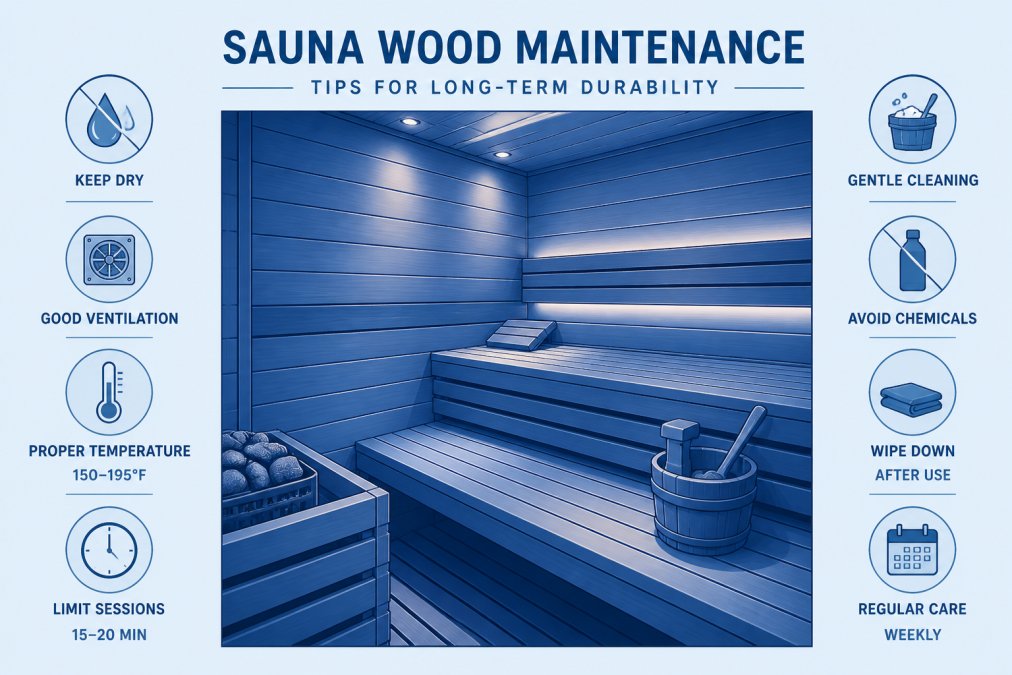
The biggest threat to sauna wood is uncontrolled moisture. After each sauna session, leave the door open for 30 minutes to allow steam to escape and the wood to begin drying. In off-season months, open the sauna occasionally to let air circulate.
Check wood moisture content annually if you have a moisture meter. Sauna wood should stay between 12-18% moisture content. If it exceeds 20%, increase ventilation. If it drops below 10%, the wood becomes brittle and prone to cracking.
Protecting Against Rot and Mold
Rot and mold start in areas where water pools or moisture stays trapped. Ensure your sauna has adequate drainage. The floor should slope slightly toward a drain or to the sauna's lowest point.
Inspect bench undersides quarterly for dark spots, soft wood, or musty smells. If you find them, increase ventilation immediately. Use a mixture of white vinegar and water (50/50) to clean affected areas. Vinegar kills mold without damaging wood or leaving toxic residues.
For long-term protection, some sauna owners apply natural oils or sealers annually. For hemlock, a light application of food-grade mineral oil or natural wood oil once yearly provides extra protection. Avoid heavy sealers that trap moisture inside the wood.
Wood Selection for Sauna Benches and Wall Paneling
Benches and walls have different requirements, so the ideal wood differs for each.
For benches, prioritize low thermal conductivity and durability. Cedar is the best choice because it heats slowly, resists denting, and ages gracefully. Hemlock is acceptable if budget is tight, but expect surface wear within 5-7 years. Bench wood should be clear grade, kiln-dried, and at least 1.5 inches thick. Thinner wood flexes under weight and can crack.
For wall paneling, you have more flexibility. Cedar is still ideal, but hemlock works well if maintained properly. Some builders use a mix: cedar for lower walls where moisture is highest, hemlock for upper walls where conditions are less harsh. Wall paneling can be 3/4 inch thick. Tongue-and-groove paneling is standard because it allows for wood movement without creating gaps.
For both benches and walls, avoid wood with large knots, resin pockets, or loose grain. The small premium for clear-grade wood pays for itself in longevity and appearance.
Choosing high-quality sauna wood is an investment in your recovery space. Cedar costs more upfront but delivers decades of reliable performance and sensory richness. Hemlock offers solid value if you're willing to accept shorter lifespan and less aesthetic appeal.
Prime Recovery Den offers a curated selection of premium home leisure and wellness products designed to transform your personal space into a sophisticated sanctuary. Whether you're building a home sauna or upgrading an existing installation, understanding thermal conductivity, moisture stability, and clear-grade standards ensures you're making an informed choice. Visit Prime Recovery Den to explore premium sauna options built with the wood quality standards outlined here.
Frequently Asked Questions
What is the best wood for a sauna?
Cedar and hemlock are the top choices for sauna construction. Cedar offers natural aromatic oils, excellent durability, and superior rot resistance, making it ideal for benches and wall paneling. Hemlock provides good thermal properties and cost-effectiveness, though it requires more maintenance. The best choice depends on your budget, climate, and whether you prioritize aromatic benefits or durability. Both should be kiln-dried, knot-free, and clear grade for optimal performance.
Why is knot-free wood preferred for saunas?
Knot-free, clear grade wood performs better in saunas because knots are weak points that expand and contract differently than surrounding wood. This differential movement causes cracks, gaps, and structural failure under repeated heat and humidity cycling. Clear grade wood maintains dimensional stability, prevents sap bleeding, and ensures a smooth, splinter-free surface for benches and walls. It also reduces VOC emissions and allergen exposure.
Should you treat sauna wood?
Thermo-treated wood is superior to chemically treated alternatives for saunas. Thermal treatment enhances durability, increases rot resistance, and improves dimensional stability without adding harmful chemicals or VOC emissions. You should not use standard wood stains or sealers inside saunas, as they off-gas under heat. Instead, focus on maintenance: allow proper ventilation between uses, manage moisture content below the fiber saturation point, and periodically sand and oil benches with food-grade mineral oil.
How does wood density affect sauna performance?
Wood density directly impacts thermal conductivity and heat retention. Higher-density hardwoods like cedar conduct and retain heat more effectively than lower-density softwoods, meaning benches stay cooler to the touch while the sauna maintains consistent temperature. Denser wood also resists moisture absorption better, reducing expansion and contraction cycles. Grain density variations within a single board can cause uneven expansion, which is why selecting consistent, straight-grained wood is essential for durability.


Leave a comment
This site is protected by hCaptcha and the hCaptcha Privacy Policy and Terms of Service apply.