

Sauna Electrical Requirements: Plan Your Wiring
Table of Contents
- Why Planning Sauna Electrical Requirements Matters
- 120V vs 240V Sauna Heater Performance: Which Do You Need?
- Using a Sauna Heater Amperage Calculator for Sizing
- Understanding NEC Sauna Wiring Standards for Safety
- Checklist: Planning Your Electrical Installation
- Sauna Electrical Cost Considerations and Permits
- Conclusion: Your Path to a Relaxing Sauna Experience
- Frequently Asked Questions
Last Updated: September 8, 2026
Planning the electrical setup for a home sauna is the single most important step between buying a unit and enjoying your first session, yet it is the one most people rush. Understanding the sauna electrical requirements before delivery prevents blown breakers, costly rework, and dangerous conditions. At Prime Recovery Den, we guide homeowners through every phase of creating a restorative sanctuary, starting with a safe, code-compliant power plan.
The process is entirely manageable when approached methodically. Most modern infrared saunas, including our Canadian Hemlock models, are designed for straightforward hookups, but planning determines whether installation takes an afternoon or a week. We will show you how to size your circuit, what to ask a licensed electrician, and how to budget so there are no surprises.
Why Planning Sauna Electrical Requirements Matters
Getting the electrical work wrong is a safety hazard and a source of frustration. A sauna heater draws significant current, and if your wiring, breaker, or outlet cannot handle the load, you risk tripping circuits, overheating wires, and voiding your warranty. Proper planning ensures your sauna operates at full performance from day one.
Many buyers focus on the sauna itself, only to discover their chosen spot lacks the necessary power supply. By checking your breaker panel capacity early, you can select a sauna that matches your setup or budget for an upgrade. Having an electrician assess your panel before you order takes about an hour and saves significant stress later.
120V vs 240V Sauna Heater Performance: Which Do You Need?
The voltage choice determines your heater's power output and warm-up time. 120V vs 240V sauna heater performance comes down to wattage: a 120V circuit supports heaters up to roughly 1,500 to 1,800 watts, while a 240V circuit handles 3,000 watts and above. For a meaningful sauna experience, 240V is almost always the right call.
Lower-voltage units heat more slowly and may struggle to reach therapeutic temperatures, especially in larger cabins. A 240V connection delivers the kilowatt output needed for rapid warm-up and sustained heat, which is what you want when stepping out of a cold plunge. Most full-size infrared saunas, such as our 4-person Maxxus model, require a 240V dedicated circuit to perform as designed.
| Voltage | Typical Wattage | Best For | Circuit Requirement |
|---|---|---|---|
| 120V | 1,500-1,800 W | Compact 1-2 person units | 15-20 amp dedicated circuit |
| 240V | 3,000-9,000 W | 2-5 person full-size saunas | 20-50 amp dedicated circuit |
A licensed electrician will confirm your panel supports a 240V breaker. Retrofitting an older home may involve running new wiring from the panel, which increases cost but is often necessary.
Using a Sauna Heater Amperage Calculator for Sizing
A sauna heater amperage calculator is a simple tool, but the math matters. Amperage equals wattage divided by voltage. A 4,500-watt heater on a 240V circuit draws roughly 18.75 amps, and the National Electrical Code requires the circuit to handle 125% of the continuous load, so a 20-amp breaker is the correct minimum.
Let’s walk through a few common scenarios to show how this plays out in practice.
Scenario 1: A compact 1-2 person infrared sauna. These units often have a total heater output around 1,700 watts. On a standard 120V household circuit, that draws about 14.2 amps (1,700W ÷ 120V). Because this is a continuous load, the NEC requires the circuit to be rated at 125% of that draw, which comes to 17.7 amps. That means a 20-amp dedicated breaker is the minimum safe choice. A 15-amp circuit, even if it's not shared, would be overloaded and trip repeatedly.
Scenario 2: A 4-person infrared sauna. A typical unit in this class might have a total heater output of 6,000 watts. On a 240V circuit, that draws 25 amps (6,000W ÷ 240V). Applying the 125% continuous-load factor gives you 31.25 amps, so you cannot use a 30-amp breaker. You must step up to a 40-amp breaker with appropriately sized 8 AWG copper wire. This is a common mistake, homeowners see “30 amps” in the spec sheet and assume it’s fine, but the NEC’s continuous-load rule means the breaker must be sized for 125% of the heater’s draw, not the raw amperage.
Scenario 3: A larger traditional sauna with a 9,000-watt heater. This draws 37.5 amps on a 240V circuit. The 125% factor brings the required breaker size to 46.9 amps, which means you need a 50-amp breaker and 6 AWG wire. This is a substantial installation that requires a panel with available capacity and often a dedicated sub-panel if your main panel is already loaded.
Your electrician will perform a full load calculation on your panel to ensure the new circuit doesn’t exceed its rated capacity. A 200-amp panel is standard in newer homes, but older homes with 100-amp panels may need a service upgrade to accommodate a high-wattage sauna. This is a critical planning step many homeowners overlook.
If your sauna is more than 100 feet from the breaker panel, wire resistance can cause a voltage drop that reduces heater performance. The NEC recommends keeping voltage drop under 3% for branch circuits, so your electrician may need to increase the wire gauge by one size. Measure the distance from your panel to the sauna before getting a quote.
Understanding NEC Sauna Wiring Standards for Safety
NEC sauna wiring standards exist to protect you and your home, and they are not optional. The National Electrical Code specifies requirements for dedicated circuits, GFCI protection, grounding, and bonding in sauna installations. A dedicated circuit means the sauna has its own breaker, with no other devices sharing the line, which prevents overloads and ensures stable power delivery.
For indoor saunas, the NEC generally requires a GFCI-protected circuit for receptacles near the unit, and all wiring must be properly grounded. Hardwired units often need a disconnect within sight of the sauna. An electrical permit is typically required, and the work must pass inspection before you power the unit on. These National Electrical Code guidelines for sauna installations are enforced by local authorities, so verify requirements with your municipality.
The distinction between hardwired and plug-and-play matters here. Smaller 120V units plug into a standard outlet, while larger 240V saunas are either hardwired directly or use a special plug-and-play cord with a matching receptacle. Your installer will confirm which applies to your model and ensure compliance with local codes.
Checklist: Planning Your Electrical Installation

Working through a structured checklist keeps the project on track. Before you schedule installation, confirm each of the following items with your electrician and your sauna's documentation:
- Verify panel capacity: Ensure your breaker panel has room for a new dedicated circuit and sufficient total amperage.
- Confirm voltage and amperage: Match the sauna's requirements, typically 240V and the amperage listed in the manual.
- Choose circuit location: Plan the wiring route from the panel to the sauna, accounting for distance and voltage drop.
- Determine wiring method: Decide between hardwired and plug-and-play based on your model and local code.
- Schedule permit and inspection: Pull the required electrical permit and book an inspection before covering any work.
- Plan for GFCI protection: Install GFCI breakers or receptacles where the NEC requires them.
Sauna Electrical Cost Considerations and Permits
Budgeting for electrical work is often overlooked when purchasing a sauna. The cost of running a dedicated circuit varies with distance from your panel, wiring route difficulty, and local labor rates. Your electrician should provide a firm quote after assessing the site.
To estimate costs, break the project into line items: breaker, wire, labor, and permit. A new 240V breaker typically costs $10 to $50. Wire cost depends on gauge and length, 10 AWG runs roughly $1.50 to $2.50 per foot, while 6 AWG can cost $3 to $5 per foot. Labor is the largest variable; a simple installation might take two to three hours, while a complex run can take a full day.
Ask for a quote that itemizes each component, breaker, wire, labor, and permit fee. This lets you compare quotes fairly. Be wary of a quote that lumps everything into one number without explanation.
Electrical permits are a separate line item and are required in most jurisdictions. The fee is usually modest, but skipping the permit creates problems: your insurance may not cover damage from unpermitted work, and you will face issues when selling the home. The permitting process typically follows a predictable sequence:
- Submit an application to your local building department. This usually includes a description of the work, the sauna’s specifications, and the electrician’s license number.
- Pay the permit fee, which is often based on the project’s estimated value. For a sauna circuit, this might range from $50 to $200 depending on your municipality.
- Schedule the rough-in inspection after the wiring is run but before it is covered by drywall or insulation. The inspector will verify the wire gauge is correct, the breaker is properly sized, and the grounding is intact.
- Schedule the final inspection after the sauna is connected and the panel is closed. The inspector will confirm the circuit is properly labeled, the GFCI protection is functional, and the installation matches the approved plan.
In some jurisdictions, a homeowner can pull an electrical permit for work on their own primary residence, but the work must still meet code. Most homeowners find having a licensed electrician pull the permit is simpler and safer, because the electrician knows what the local inspector expects.
The inspection is straightforward if the work was done properly. The inspector checks for exposed wire splices, missing junction box covers, and improper grounding, and verifies the breaker is correctly sized and the sauna is on its own dedicated circuit. If flagged, you must correct the issue and schedule a re-inspection.
Planning for the cost and permit process in advance means no last-minute scrambling. When you know what the work will cost and what the inspection involves, you can budget accurately and schedule with confidence. Stepping into your sauna knowing everything is wired correctly, you will feel a deep sense of relief and anticipation, ready to let the heat melt away the day’s stress.
Conclusion: Your Path to a Relaxing Sauna Experience
Planning the electrical requirements for your home sauna transforms a potentially stressful project into a smooth process. When the wiring is correct, your sauna heats quickly, operates safely, and becomes the restorative retreat you envisioned. At Prime Recovery Den, we pair premium saunas with the guidance you need to enjoy them fully.
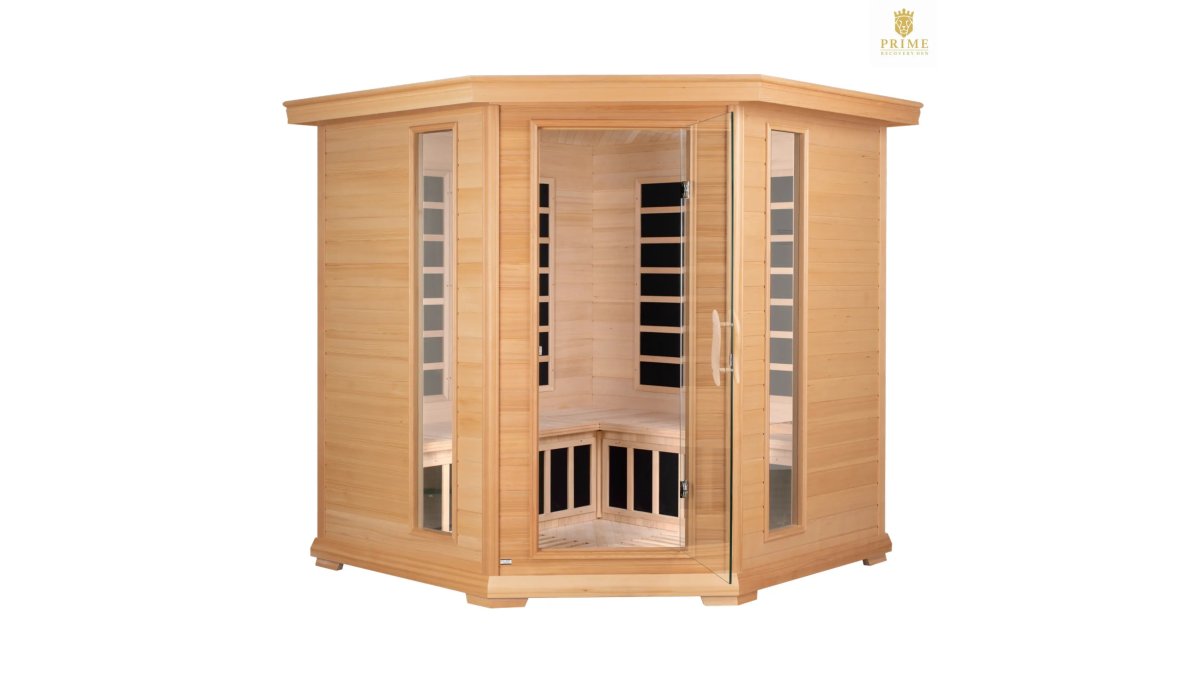
Our 2-Person Carbon Infrared Sauna runs on a standard 120V outlet, making it ideal for smaller spaces and simpler installations. For a larger family experience, the Maxxus 4-Person Low EMF FAR Infrared Sauna delivers professional-grade heat with a 240V connection, turning your home into a true wellness sanctuary. Each session will leave you feeling renewed, relaxed, and deeply restored.

Frequently Asked Questions
Do I need a 240V dedicated circuit for my sauna heater?
For most saunas with heaters above 3 kW, yes. A 240V dedicated circuit is a core sauna electrical requirement for larger heaters because it delivers power more efficiently than a 120V circuit. This setup is also mandated by the NEC sauna wiring standards for most installations. Always verify the specific amperage and voltage requirements listed on your chosen sauna's specification plate, and confirm these details with a licensed electrician before any work begins.
What is the difference between 120V and 240V sauna heaters?
The difference comes down to power and heat-up time. A 120V sauna heater is typically limited to around 1.5 kW, making it suitable only for very small, personal saunas. In contrast, a 240V sauna heater can provide 6 kW or more, offering superior 120V vs 240V sauna heater performance. This higher wattage output means faster warm-up times and the ability to heat a larger space effectively. For most home saunas, a 240V connection is the recommended choice.
How do I determine the amperage needed for my sauna heater?
You can find the required amperage by using a sauna heater amperage calculator, which uses the formula: Amps = Watts / Volts. For example, a 6,000-watt heater on a 240V circuit requires 25 amps. This is the minimum circuit rating you will need. Always factor in a safety margin and consult the manufacturer's specifications. A licensed electrician will perform the final load calculation to ensure your breaker panel and wiring are correctly sized.
Can I use standard household wiring for a sauna heater?
No, you should not use standard household wiring for a sauna heater. Sauna installations have specific NEC sauna wiring standards that require the use of a dedicated circuit, the correct gauge wire, and proper grounding. Standard outlets on shared circuits are not designed for the continuous high-amperage load of a sauna heater. This can create a serious fire hazard. Always have a qualified electrician install a dedicated circuit that meets all local codes.
The right preparation makes all the difference, and we are here to help you build that intentional space. Shop our full collection of infrared saunas at Prime Recovery Den and take the first step toward your personal retreat.


Leave a comment
This site is protected by hCaptcha and the hCaptcha Privacy Policy and Terms of Service apply.