

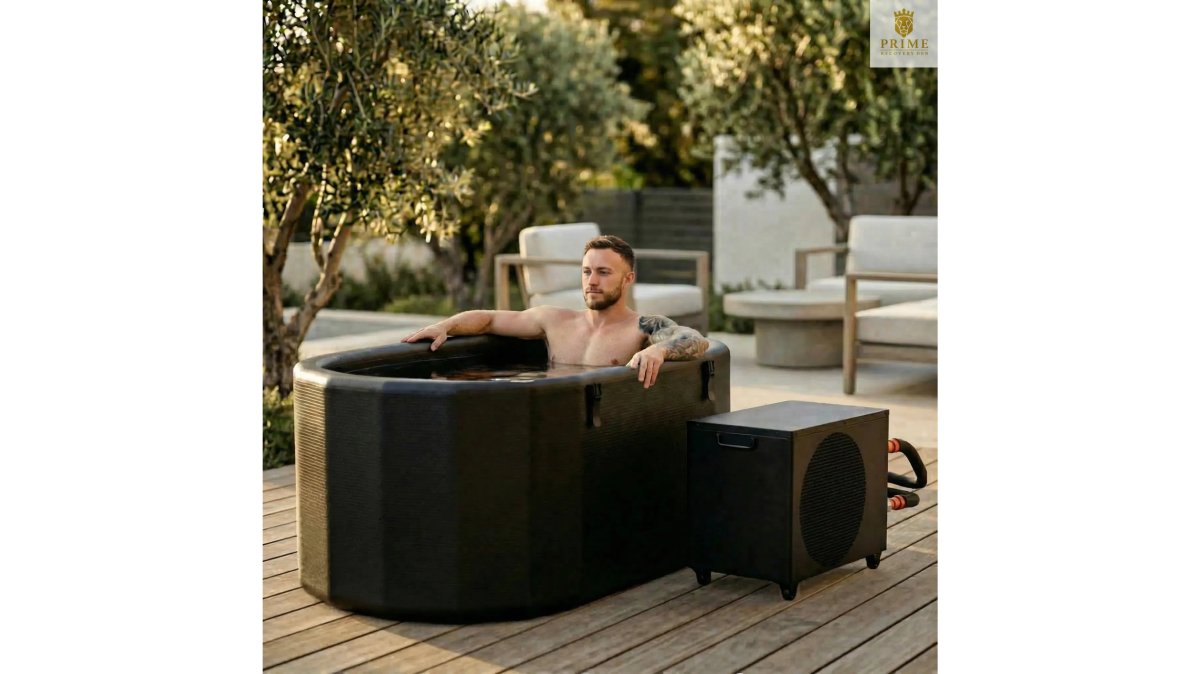
Is a Cold Plunge Chiller Worth It for Home Recovery?
Table of Contents
- The Verdict: Is a Cold Plunge Chiller Worth the Investment?
- Comparing Costs: Ice Bath vs Chiller for Home Recovery
- Chiller vs. No Chiller: What You're Really Paying For
- Key Benefits of Cold Plunge for Athletes
- How Long to Cold Plunge for Recovery Results
- What to Know Before You Buy: Space, Safety, and Upkeep
- Conclusion: Your Home Recovery, Elevated
- Frequently Asked Questions
Last Updated: September 7, 2026
Whether a cold plunge chiller is worth it for home recovery comes down to a single factor: consistency. A chiller removes the two biggest barriers to regular cold water immersion, the labor of sourcing ice and the unpredictability of water temperature, turning a sporadic ordeal into a daily habit.

A cold plunge chiller is a refrigeration unit that connects to a dedicated tub, continuously cooling and filtering water to a precise temperature. Below, we break down the true costs, physiological benefits, and practical considerations before you commit.
The Verdict: Is a Cold Plunge Chiller Worth the Investment?
For most people serious about muscle recovery and mental clarity, the answer is yes, provided you will use it several times per week. The value of a cold plunge chiller is not in the initial plunge but in removing the friction that kills home recovery routines.

The honest limitation is the price tag. A complete system is a significant investment compared to a simple inflatable tub. However, compared to the long-term cost of buying bags of ice weekly, the chiller often pays for itself within a season of consistent training.
Comparing Costs: Ice Bath vs Chiller for Home Recovery
Most guides stop at the purchase price, but whether a chiller is worth it comes down to monthly cost, not just day one.
The True Cost of a Manual Ice Bath
A manual ice bath looks cheap at first. A basic inflatable tub costs $50 to $150, and a bag of ice runs $3 to $5. The problem is volume. To get a standard 100-gallon tub down to 45°F to 55°F, you need roughly 30 to 40 pounds of ice per session, or $18 to $40 every time you plunge.
Training three times per week means $216 to $480 per month, or $1,300 to $2,900 over a six-month season, assuming you can find that much ice consistently, which becomes a logistical nightmare during summer demand spikes.
The Real Monthly Cost of Running a Chiller
A chiller shifts the cost from your wallet to your utility bill. The exact number depends on your chiller's horsepower, your tub's insulation, and your local electricity rate.
A 1/3 HP chiller, like the one in the FCP Premium 2XL Cold Plunge Tub Kit, draws roughly 400 to 500 watts. In a warm garage or outdoor setting, expect it to cycle 4 to 6 hours per day to maintain 45°F water, translating to $10 to $15 per month in electricity.
A larger 1.5 HP chiller, such as the LUX unit paired with the RevX Acrylic X Tub, draws more power but cycles far less because the tub's 3-inch insulated walls hold the cold, often costing the same or less to run monthly than a thin inflatable tub with a smaller chiller.
The Hidden Cost of Water and Filtration
Beyond electricity, factor in water chemistry: testing pH and sanitizer levels weekly adds $10 to $20 per month, and replacing the filter cartridge every 4 to 6 weeks runs $15 to $30 per cartridge.
The Break-Even Calculation
Here is where the chiller wins decisively:
| Cost Category | Manual Ice Bath (Monthly) | Chiller Setup (Monthly) |
|---|---|---|
| Ice / Electricity | $216 - $480 | $10 - $25 |
| Water Treatment | $0 | $10 - $20 |
| Filter Replacements | $0 | $10 - $30 |
| Total Monthly Cost | $216 - $480 | $30 - $75 |
Even with the upfront cost, monthly savings of $150 to $400 mean a $1,000 system pays for itself in 3 to 7 months of consistent use.
Why Our Systems Make This Easier
At Prime Recovery Den, we pair every chiller with a properly insulated tub and filtration system designed to minimize monthly operating costs. The FCP Premium 2XL Kit gives you a complete, energy-efficient setup at a true entry-level price, so you start saving against ice costs from the first month. The RevX Acrylic X Tub goes further with superior insulation that keeps your chiller running less, your utility bill lower, and your water temperature rock-steady. You will feel the difference in your recovery and in the quiet satisfaction of a routine that costs less than a single trip to the store for ice.
Chiller vs. No Chiller: What You're Really Paying For
The difference between a chiller and a non-chiller setup is the difference between a wellness routine and a weekend project.
Upfront Cost and Long-Term ROI
A complete cold plunge kit, such as the FCP Premium 2XL Cold Plunge Tub Kit at $999.97, includes the tub, a 1/3 HP chiller, filter, and pump. For a more permanent fixture, the RevX Acrylic X Tub with LUX 1.5HP Chiller at $7,500.00 provides a deeper, insulated tub with adjustable jets. The long-term ROI is realized through usage; a system used three times a week delivers immense value, while a cheaper setup abandoned after a month is a complete waste.
Electricity Consumption and Utility Costs
Running a chiller is not free, but the key is insulation; a tub with 3-inch insulated walls, like the RevX model, holds the cold far better than a thin inflatable, meaning the chiller cycles on less frequently and costs less to run.
Key Benefits of Cold Plunge for Athletes
Cold water immersion triggers vasoconstriction, which helps flush metabolic waste from the muscles, and the cold numbs nerve endings to manage perceived soreness. This is why many athletes report reduced inflammation and a faster return to training.
The mental benefits often keep people coming back. The initial shock of the cold forces a controlled breathing response that calms the nervous system, leading to mental clarity and alertness that lasts for hours. Many users describe a feeling of calm accomplishment after a session, a quiet confidence that sets the tone for the day.
How Long to Cold Plunge for Recovery Results
How long to cold plunge for recovery results has a simple answer: you do not need to stay in very long. For most therapeutic benefits, sessions should last 2 to 5 minutes at temperatures between 45°F and 59°F. Longer is not better; extended exposure increases hypothermia risk without adding significant recovery value.
- First Session: Start with 1 to 2 minutes to gauge your response.
- Regular Routine: Aim for 3 minutes per session, 3 to 4 times per week.
- Advanced Users: Extend to 5 minutes for a more intense physiological response.
The goal is consistency, not endurance. A 3-minute plunge done regularly is far more effective than a 10-minute plunge done sporadically.
What to Know Before You Buy: Space, Safety, and Upkeep
The decision to buy a chiller is not just about budget; it is about whether your home can physically and safely support the system. Here is the pre-purchase checklist most guides skip.
Space and Floor Load: The 1,000-Pound Question
A filled cold plunge is heavy. A 100-gallon tub holds roughly 834 pounds of water alone; add the tub, chiller, and a person inside, and you are easily exceeding 1,000 pounds of static load. Verify that your floor can handle this before you commit.
- Ground-Level Slabs: Ideal. A concrete patio or basement floor easily supports the weight.
- Elevated Decks: Check the joist spacing and consult a structural engineer if the deck is more than a few feet off the ground. Most residential decks are rated for 50 pounds per square foot, which a concentrated plunge load can exceed.
- Upper-Floor Rooms: Generally not recommended unless you have reinforced flooring. A 1,000-pound point load in a standard wood-frame second story is a serious risk.
Ventilation and Electrical Requirements
Chillers generate heat and need airflow to reject it efficiently. Leave at least 12 to 18 inches of clearance on all sides; without it, the chiller works harder, cycles longer, and drives up your electricity bill.
Electrical requirements vary by unit. Most 1/3 HP chillers run on a standard 110V grounded outlet. Larger units, such as the 1.5 HP LUX chiller, may require a dedicated 220V circuit. Check your breaker panel before purchase.
Drainage and Water Access
You will need to drain and refill your plunge every 4 to 8 weeks depending on usage and filtration quality. Plan for a drain hose that reaches a floor drain, utility sink, or exterior drainage point.
Safety Protocols and Who Should Not Plunge
Cold water immersion is not risk-free. The cold shock response triggers a rapid increase in heart rate and blood pressure. For most healthy individuals, this is manageable and even beneficial; for others, it can be dangerous.
Beyond the medical contraindications, follow these safety protocols every session:
- Never plunge alone for the first few sessions. Have someone nearby in case you experience dizziness or panic.
- Limit sessions to 5 minutes maximum. Longer exposure increases hypothermia risk without adding recovery benefit.
- Keep a thermometer in the water. Do not trust the chiller's display alone; verify water temperature with a separate floating thermometer.
- Exit immediately if you feel numb, confused, or experience chest pain. These are signs of serious cold stress.
- Warm up gradually afterward. Do not take a scalding hot shower immediately. Let your body rewarm naturally or use a lukewarm shower to avoid blood pressure swings.
Upkeep: The Weekly and Monthly Routine
A chiller system is not zero-maintenance, but it is dramatically less work than sourcing ice:
| Frequency | Task |
|---|---|
| Weekly | Test pH and sanitizer levels; adjust as needed |
| Weekly | Skim debris and wipe the waterline |
| Monthly | Replace or clean the filter cartridge |
| Every 4-8 Weeks | Drain, clean the tub interior, and refill |
| Quarterly | Inspect hoses and connections for leaks |
How Our Products Simplify the Upkeep Burden
We designed our product lineup to minimize the maintenance load so you can focus on recovery, not chores. The Kohler x Remedy Place Ice Bath uses UV light technology and continuous filtration to dramatically reduce the frequency of chemical adjustments and water changes. The iCoolsport MiPod Pro goes further with a self-contained chiller and heater, eliminating external hose connections and giving you year-round contrast therapy in a single, commercial-grade unit. Choosing one of these systems means less time testing water and more time feeling the calm, focused clarity that comes after a proper plunge. You will feel the difference: less hassle, more consistency, and a deeper sense of control over your recovery space.


Conclusion: Your Home Recovery, Elevated
Building a home recovery space is about creating an environment that supports your goals without adding stress. A cold plunge chiller delivers that by making cold water immersion a reliable, daily practice rather than a logistical challenge.
At Prime Recovery Den, we curate cold plunge systems built to last and designed to fit a sophisticated home aesthetic. Whether you choose the portable FCP kit to start or the deep RevX acrylic tub for a permanent installation, you are investing in a sanctuary for your own well-being. Explore our collection and find the system that will make you feel stronger, clearer, and more in control of your recovery.
Frequently Asked Questions
What are the primary health benefits of consistent cold plunge therapy?
Consistent use supports muscle recovery, reduces inflammation, and lowers perceived soreness after training. Many athletes also report improved mental clarity and alertness from the dopamine release triggered by cold water immersion. The key is consistency, which a chiller makes possible by keeping water at a steady 39-50°F, so your body adapts and the therapeutic benefits compound over weeks and months.
How does a dedicated chiller compare to using bags of ice?
A chiller recirculates and cools water to your target temperature automatically, holding it there for days. Bags of ice require constant repurchasing, cool the water unevenly, and cost hundreds of dollars per month to maintain. A chiller's upfront cost is offset by eliminating that recurring expense and the hassle of hauling ice, making daily plunges practical for a home recovery routine.
Is there a downside to cold plunge?
The main downsides are the upfront cost and the space required. A chiller unit needs proper electrical access and adequate room for ventilation. There are also important safety protocols: start with short sessions of 1-3 minutes to gauge your response, and avoid plunging if you have uncontrolled high blood pressure or cardiovascular conditions. Consulting your doctor first is the right call.
What maintenance is required for a home cold plunge chiller?
Plan on a simple weekly routine: check the water chemistry, skim the surface, and inspect the filter cartridge. Most systems, like the FCP Premium 2XL kit, feature a replaceable cartridge that makes this quick. You will also periodically need to clean the chiller unit's intake and ensure proper water flow. This routine takes about 15 minutes a week and keeps the water clear and safe.

Leave a comment
This site is protected by hCaptcha and the hCaptcha Privacy Policy and Terms of Service apply.