

Percussion Massager Benefits for Muscle Soreness Relief
Last Updated: November 8, 2026
Quick Summary
A percussion massager delivers rapid, targeted pulses into soft tissue to loosen tension and ease soreness after training or daily strain. Use it the day after exercise for one to two minutes per area on the lowest comfortable speed, keeping the head moving over the muscle belly.
- DOMS peaks 24 to 72 hours after unfamiliar exercise and comes from microscopic muscle damage, not lactic acid.
- Glide the head slowly along the muscle belly and avoid joints, bone, and the spine itself.
- Spend 30 to 60 seconds per zone and stop if you feel sharp pain, numbness, or tingling.
- Track soreness on a 0-to-10 scale each morning for a week or two to judge whether it helps you.
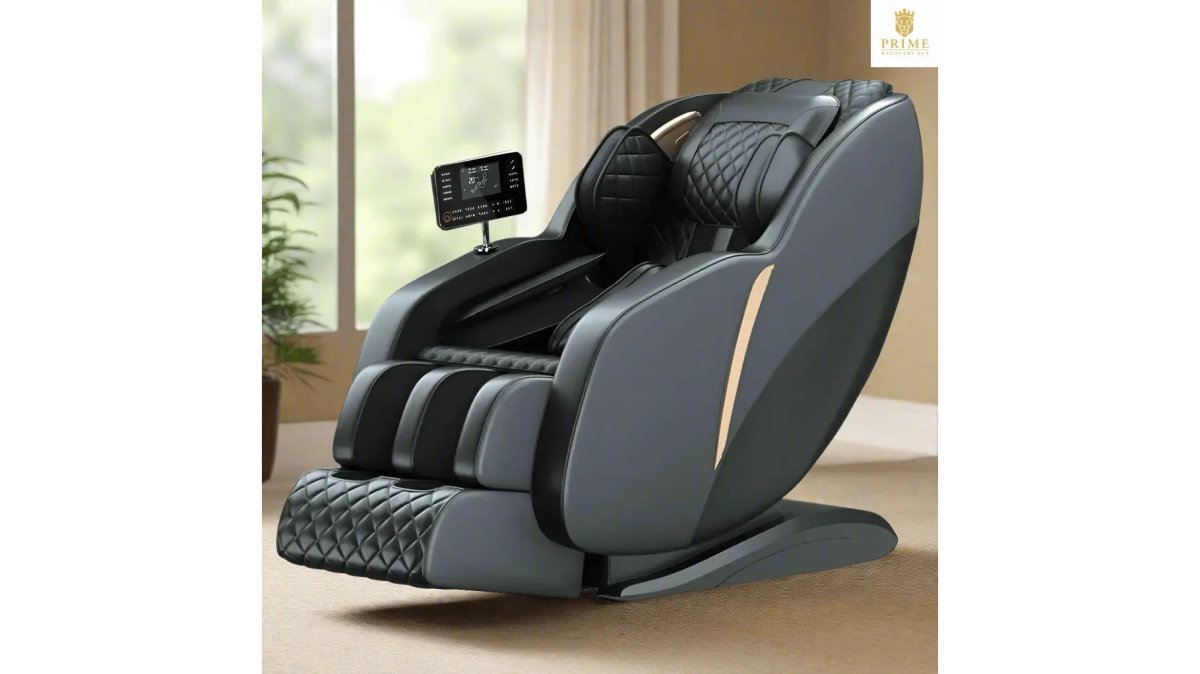
- Our full-body massage chairs like the MedEq Recovery C13 and TruComfort NeuroLuxe SL add roller massage, zero-gravity recline, and heat so recovery feels like a deliberate pause.
Table of Contents
- How a Percussion Massager Eases Muscle Soreness
- Using a Massage Gun for Delayed-Onset Muscle Soreness
- Percussion Massager Benefits for Muscle Soreness: How Long Until You Feel a Difference
- Massage Gun Benefits on Legs: Hamstrings, Calves, and the Posterior Chain
- Building a Recovery Sanctuary With Prime Recovery Den
- Frequently Asked Questions
How a Percussion Massager Eases Muscle Soreness
A percussion massager delivers rapid, targeted pulses into soft tissue, driving rhythmic pressure into a muscle belly to loosen tension after training and daily strain. At Prime Recovery Den, we think of a percussion massager as the simplest recovery tool in a well-designed home wellness room, one that works in minutes rather than a full session.
Percussion massage is the practice of applying fast, repeated mechanical pulses to muscle tissue to reduce stiffness and support recovery. The device head moves in and out at high frequency, mimicking the rhythm of a therapist's hands but with consistent force you control.
Most people reach for one after a hard leg day or a long week at a desk. The appeal is speed. You can treat a tight calf or a knotted shoulder in a few minutes, then get on with your evening.
What the Research Says About Soreness Relief
The evidence is more modest than the marketing suggests, and that honesty matters.
Many physical therapists use percussion massage as part of a broader recovery plan rather than a standalone fix, pairing it with gentle movement, hydration, and sleep. The tool helps you feel looser and more comfortable; it does not replace the fundamentals.
Where it earns its place is convenience. A five-minute session on sore hamstrings or a stiff lower back is easy to repeat daily, and consistency is what most recovery routines need.
The Lactic-Acid Myth and What Actually Causes DOMS
The lactic-acid story is the most persistent myth in recovery, and it is wrong. Lactic acid clears from muscle within roughly an hour of exercise, so it cannot be the cause of soreness that shows up a day or two later.
Delayed-onset muscle soreness, or DOMS, is the stiffness and tenderness that appears 24 to 72 hours after unfamiliar or intense exercise. It comes from microscopic damage to muscle fibers and the inflammation that follows, not from a buildup of metabolic waste.
That distinction changes how you use a percussion massager. You are not "flushing acid out." You are increasing blood flow, calming the nervous system's sensitivity in the area, and helping the tissue feel less guarded, real effects worth having, even if the old explanation was never true.
Using a Massage Gun for Delayed-Onset Muscle Soreness
The best time to use a massage gun for delayed-onset muscle soreness is the day after training, when stiffness peaks, and again on the second day. Work slowly over the sore muscle for one to two minutes per area, keeping the head moving.
Start on the lowest speed that produces a comfortable pulse. Press lightly at first, then add pressure as the tissue relaxes. Digging hard into a tender spot makes the muscle guard harder and defeats the purpose.
- Glide the head slowly along the muscle belly, not directly on joints or bone
- Spend 30 to 60 seconds per zone, then move on
- Breathe out as you apply pressure; holding your breath tightens everything
- Stop if you feel sharp pain, numbness, or tingling
For most people, a short session in the evening helps them settle before sleep. The goal is a muscle that feels warm and looser afterward, not bruised.
Practical Dosage and Timing
A short session is usually enough: a brief pass on the lowest comfortable speed, moving the head slowly over each muscle group.
Pressure should feel like a firm hand, not a deep dig. If the muscle tightens or you catch yourself bracing, back off. Keep the speed low enough that you can talk normally and breathe steadily; higher speeds mainly change how fast the head cycles, not how much the tissue benefits.
Whether you use the device before or after exercise is a matter of personal preference.
Avoid pressing hard on a single tender point for a long stretch.
Tracking Whether It Helps You
Because soreness is personal, judge a percussion massager by tracking a few things for a week or two: rate soreness on a 0-to-10 scale each morning before use, note how far you can move the joint without stiffness, and jot down how recovered you feel. If the numbers drift in the right direction over several sessions, the tool is earning its place; if nothing changes, adjust technique or timing before deciding it does not work for you.
A full-body massage chair can make the routine easier to keep. Our full-body massage chairs bring roller massage, zero-gravity recline, and heat into one seat, so you can relax your posterior chain and lower back without holding a device. The MedEq Recovery C13 and TruComfort NeuroLuxe SL offer targeted rollers across the glutes and hamstrings, and settling into one after a hard session can feel like a deliberate pause.
Here is the practical dosage guidance the article gives for using a massage gun on sore muscles.
| Item | Value | Note |
|---|---|---|
| Best timing | The day after training, and again on day two | When stiffness peaks |
| Time per area | One to two minutes | Keep the head moving |
| Time per zone | 30 to 60 seconds | Then move on |
| Speed | Lowest speed that feels comfortable | Low enough to talk normally |
| Pressure | Like a firm hand, not a deep dig | Back off if the muscle tightens |
| Stop if | Sharp pain, numbness, or tingling | Do not push through it |
| Avoid | Pressing hard on one tender point for long | Makes the muscle guard harder |
Percussion Massager Benefits for Muscle Soreness: How Long Until You Feel a Difference
Many people notice a difference as they use the device regularly. Percussion massager benefits for muscle soreness build with repetition rather than arriving in one dramatic moment.
Many people find the first pass helps tightness feel more relaxed.
Timing can matter, and many people use the device the day after exercise when soreness is strongest.
If you notice no change, try adjusting technique, pressure, or timing.
What the Evidence Actually Supports
It helps to separate two claims that often get blurred. The first is short-term soreness relief: many people report a session makes a sore muscle feel looser and less tender for a while, and studies on percussive devices generally point that way, though results vary by person, muscle group, and timing. Treat the device as a comfort and movement tool.
Where It Fits Among Recovery Strategies
Percussion massage is one part of a recovery routine, alongside sleep, hydration, and gentle movement.
The practical answer is that they stack. A short percussion session before stretching, a cold plunge on hard training days, and consistent sleep will do more than any single tool used alone. If you want to go deeper on cold therapy, our guide to what cold water immersion therapy is explains how it supports muscle recovery and how to build a home setup.
Where a percussion massager earns its place is in making the routine easy enough to repeat. That is also why our full-body massage chairs fit naturally beside a handheld device: the MedEq Recovery C13 and TruComfort NeuroLuxe SL bring targeted roller massage, zero-gravity recline, and heat into one seat, so the posterior chain and lower back get consistent attention without you holding a tool or guessing at pressure.
Massage Gun Benefits on Legs: Hamstrings, Calves, and the Posterior Chain
Legs are a common place to use percussion massage because the muscle groups are large and easy to reach.
(/products/icetubs-icebath-cold-therapy-immersion-bath-thermowood-stainless) alongside a massage device, while others pair percussion massage with [red light therapy](/collections/red-light-therapy) panels for a broader recovery room.The practical answer is that they stack. A short percussion session before stretching, a cold plunge on hard training days, and consistent sleep will do more than any single tool used alone.
Building a Recovery Sanctuary With Prime Recovery Den
A recovery space works best when the tools are pleasant enough to use every day. That is the idea behind our collection: pieces that look at home in a well-designed room and make recovery feel like something you look forward to rather than a chore.
Our full-body massage chairs bring roller massage, zero-gravity recline, and heat into a single seat, so you can relax the posterior chain and lower back without holding a handheld device.
If you are still mapping out the room, our look at smart wellness tech for stress relief can help you decide what belongs beside the chair. Each piece is chosen to help make your space feel more intentional.
Soreness after training is normal, but managing it shouldn't feel like a second workout.
Frequently Asked Questions
Should you use a massage gun on very sore muscles?
Yes, with a light touch. Start on the lowest speed and keep the head moving over the sore area rather than pressing hard into one spot. Very sore tissue is often tender, so a gentle pass for 30 to 60 seconds per muscle group is enough to test how it responds. If the soreness sharpens or the area feels bruised, stop and wait a day. A percussion massager can be used as a comfort tool on sore muscles.
How long should you use a percussion massager on sore muscles?
Most people do well with 1 to 2 minutes per muscle group, and no more than 10 to 15 minutes in a single session. Shorter, more frequent sessions tend to feel better than one long pass. For delayed-onset muscle soreness, treat the area once or twice a day during the 24 to 72 hours when soreness peaks. Keep the device moving at all times, and use the lowest speed that still feels effective rather than the highest setting the massager offers.
When should you not use a percussion massager?
Avoid percussion massage over open wounds and bony areas. If you are pregnant or have a medical condition, check with a doctor before using the device.
Is it better to use a massage gun before or after a workout?
Both timings have a place. Both timings are a matter of personal preference. A short, low-speed pass before training is one option, and a 1 to 2 minute pass per muscle group after a workout is another. Pair either session with sleep, protein, and hydration.


Leave a comment
This site is protected by hCaptcha and the hCaptcha Privacy Policy and Terms of Service apply.