

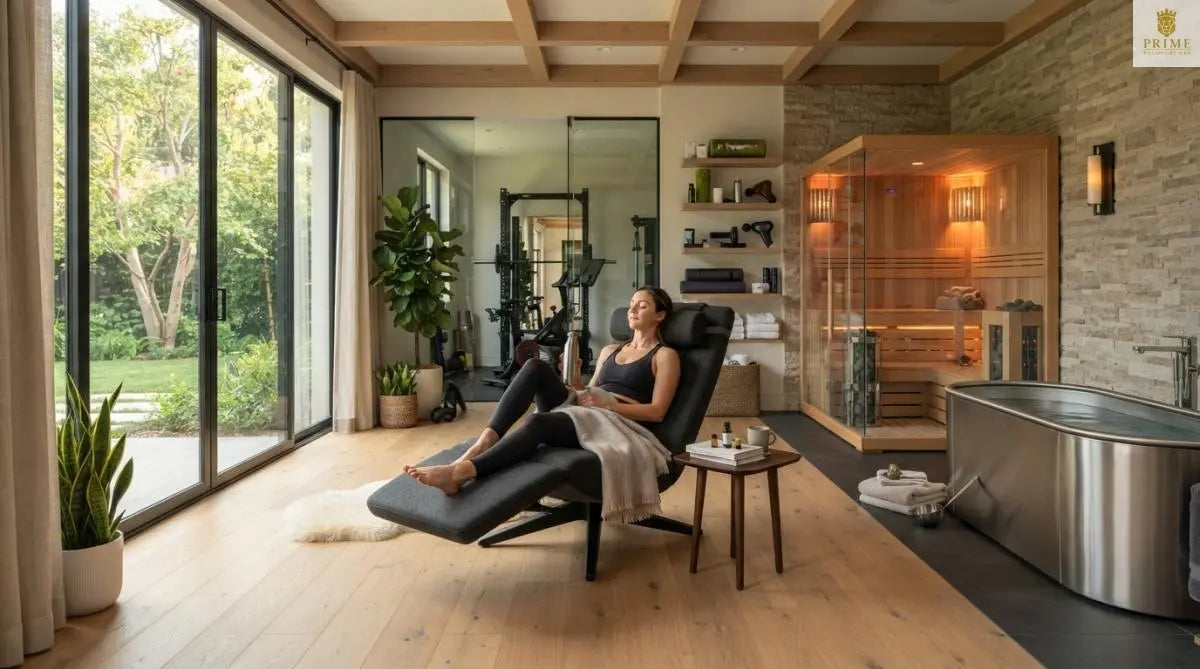
Luxury Home Gym Recovery Room Ideas: 10 Design Concepts
Table of Contents
- 10 Luxury Home Gym Recovery Room Ideas That Transform Your Space
- Cold Plunge at Home Ideas: Designing a Cryotherapy Zone
- Home Gym Design with Sauna: Creating Thermal Contrast Therapy
- High-End Gym Equipment for Recovery: Essential Tools and Technologies
- Luxury Home Wellness Suite Layout: Functional Design Principles
- Small-Footprint Recovery Solutions for Compact Spaces
- Maintenance, Hygiene Protocols, and Smart Home Integration
- ROI and Property Value Impact of a Home Recovery Room
Last Updated: July 29, 2026
10 Luxury Home Gym Recovery Room Ideas That Transform Your Space
Creating luxury home gym recovery room ideas requires thoughtful planning that balances modern wellness technology with sophisticated interior design. According to research from the American College of Sports Medicine, athletes who incorporate structured recovery protocols see measurable improvements in performance and injury prevention. At Prime Recovery Den, we've curated a comprehensive guide to designing a recovery sanctuary that honors both wellness science and refined aesthetics.
A well-designed recovery environment becomes the centerpiece of your home gym. Below, we'll walk you through ten distinct approaches covering cold plunge integration, thermal contrast therapy, smart home controls, and property value considerations.
What Makes a Recovery Room Truly Luxurious
Luxury in a recovery space isn't defined by price tags alone. It's the marriage of functionality, aesthetics, and intentional design that creates an environment where recovery feels like a privilege.
True luxury recovery rooms share three defining characteristics: they prioritize flow and movement with natural zone transitions, integrate technology seamlessly rather than making it focal, and maintain sophisticated design continuity through premium materials, thoughtful lighting, and cohesive color palettes.
Luxury recovery spaces typically feature neutral base colors, soft grays, warm whites, and natural wood tones, paired with accent materials like stone or brushed stainless steel. Layered lighting (ambient, task, accent) allows you to adjust the environment for different activities: bright for massage work, warm and dim for sauna relaxation, cool for cold plunge preparation.
Acoustic design separates luxury from ordinary. Acoustic Geometry's research on sound absorption in wellness spaces demonstrates that controlling ambient noise dramatically improves perceived quality. Sound-absorbing wall panels and strategic material choices transform the acoustic experience.
Cold Plunge at Home Ideas: Designing a Cryotherapy Zone
Cold water immersion has moved from fringe biohacking to mainstream recovery protocol. The Cold Plunge tub represents the gold standard for home cryotherapy, cooling water to 37°F and heating to 104°F for contrast therapy. Its circular filtration system with 20-micron filter and ozone sanitation keeps water clean without constant draining.
Space Requirements and Placement Considerations
A dedicated cold plunge requires 8-10 feet of clear floor space minimum, ideally positioned near your sauna for easy temperature transitions. The tub measures roughly 7.5 feet in diameter and 3.5 feet deep, occupying approximately 45 square feet including clearance for entry and exit.
Position your cold plunge away from high-traffic areas for privacy. Proximity to water access and drainage is essential. Most installations require a dedicated 240V electrical line for the chiller unit plus standard plumbing connections. Concrete or reinforced flooring handles the weight easily; the system weighs roughly 4,500 pounds when filled. In colder regions, an insulated or heated space maintains performance and reduces operational costs.
Integration with Hot Therapy for Contrast Recovery
The real power of home cryotherapy emerges when you combine cold plunges with heat therapy. Contrast therapy, alternating between cold and hot, triggers vasodilation and vasoconstriction cycles that accelerate blood flow and enhance recovery.
Design your cold plunge zone adjacent to your sauna, ideally 10-15 feet apart with a warm shower station in between. Most practitioners follow a 3:1 ratio: three minutes in heat, one minute in cold, repeated 3-5 times. Your space layout should support this rhythm without requiring long walks between zones.
Home Gym Design with Sauna: Creating Thermal Contrast Therapy
Infrared saunas have become the preferred choice for luxury home recovery rooms. Unlike traditional steam saunas, infrared models use radiant heat that penetrates tissue directly, requiring lower ambient temperatures (130-150°F) and shorter sessions (20-30 minutes).
Sauna Types and Layout Optimization
Three sauna styles dominate luxury home installations. Far-infrared cabins are prefabricated units arriving ready-to-assemble, typically 4x6 feet or 6x8 feet, with mid-range costs between $3,000-$8,000. Custom-built saunas offer design flexibility but require professional installation and higher costs. Position your sauna where it can be accessed from your main circulation path without detours, with proximity to a cold plunge or cold shower ideal for contrast therapy.
Electrical and Plumbing Infrastructure Requirements
Infrared saunas demand 240V dedicated circuits with 40-60 amp service, depending on heater wattage. A 6kW heater requires a 60-amp breaker and 10-gauge wire run directly from your electrical panel. You'll need a licensed electrician. Budget roughly $2,000-$4,000 for electrical infrastructure if your panel is nearby.
High-End Gym Equipment for Recovery: Essential Tools and Technologies
The equipment you choose defines your recovery room's capability and aesthetic.
Massage Chairs and Percussion Therapy Devices
The Human Touch Super Novo X represents the pinnacle of in-home massage technology. Its 3D/4D massage technology delivers varied intensity across the full body, with zero-gravity recline positioning your spine at optimal angles for decompression.
The Theragun PRO delivers professional-grade percussion therapy with QuietForce Technology that makes it genuinely usable in residential settings. Its adjustable arm reaches difficult-to-access areas, and app-controlled speed customization lets you dial in intensity for different muscle groups. Most luxury recovery rooms include both tools in separate zones.
Compression and Red Light Therapy Systems
The Hyperice NormaTec 3.0 leg recovery system uses dynamic air compression with patented Pulse massage patterns and seven intensity levels for customization. Bluetooth connectivity integrates with your broader recovery tracking ecosystem.
Red light therapy has transitioned from wellness fringe to mainstream recovery protocol. The Mito Red Light MitoPRO 1500 combines 660nm (red) and 850nm (near-infrared) wavelengths for comprehensive cellular recovery. High irradiance delivers effective results in 15-20 minute sessions. Position red light therapy panels where you can use them during other recovery activities, while sitting in your massage chair or during sauna sessions.
Luxury Home Wellness Suite Layout: Functional Design Principles
The spatial arrangement of your recovery room determines whether the space feels cohesive or chaotic. Strategic zoning creates natural flow that guides users through their recovery journey.
Zoning Your Recovery Space for Flow and Efficiency
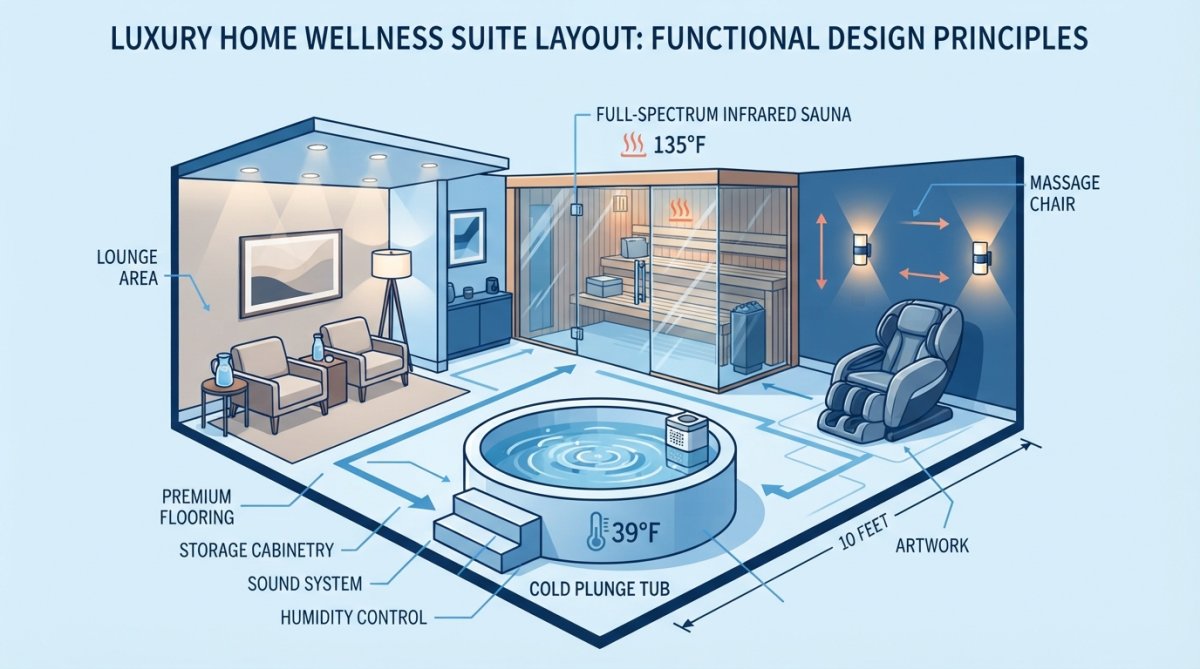
Divide your recovery room into five distinct zones: entry/transition, thermal therapy (sauna/cold plunge), active recovery (massage/percussion), passive recovery (lounge/meditation), and technology/monitoring.
The entry zone should include a small changing area with hooks for robes and towels. Thermal therapy occupies the most space; position your sauna and cold plunge with clear sightlines and easy transitions. A rinse shower between them accelerates acclimation. Active recovery equipment occupies the middle zone without disrupting thermal therapy activities. Passive recovery lounge seating should have views of the thermal zone if possible, creating visual continuity.
Aesthetic Integration: Materials, Lighting, and Ambiance
Material choices communicate luxury while managing the unique demands of a moisture-heavy environment. Natural stone (slate, granite, or travertine) for flooring handles water and provides thermal comfort. Sealed wood accents around sauna and plunge areas add warmth without absorbing moisture.
Layered lighting approach: ambient lighting provides base illumination, task lighting focuses on specific zones, and accent lighting highlights architectural features. Dimmable LED systems let you adjust the environment throughout your session. Warm color temperatures (2700K-3000K) promote relaxation; cooler temperatures (4000K) energize.
Proper HVAC design removes humidity without creating drafts or noise. High-quality ventilation systems cost $3,000-$6,000 for a dedicated recovery room. Greatmats premium gym flooring research on sound absorption shows that 2.5-inch high-density rubber tiles reduce impact noise by 40-50% compared to standard concrete. Fabric-wrapped acoustic panels on walls absorb mid-to-high frequencies.
Small-Footprint Recovery Solutions for Compact Spaces
Luxury recovery experiences are possible in 150-200 square feet with strategic equipment choices and design thinking.
Multi-Functional Equipment and Vertical Storage
Prioritize equipment that serves multiple purposes. A massage chair with integrated heat therapy and zero-gravity positioning replaces three separate tools. Portable cold plunges like smaller immersion tubs (4x4 feet) occupy significantly less space while delivering comparable benefits.
Vertical storage transforms compact spaces. Wall-mounted shelving for recovery gear keeps floors clear. Pegboard systems near your active recovery zone organize percussion devices without requiring floor space. Consider equipment that folds or stores compactly. The psychological experience of a small recovery room depends on visual clarity and organization.
Maintenance, Hygiene Protocols, and Smart Home Integration
A luxury recovery room requires consistent maintenance to preserve both functionality and aesthetics.
Keeping Your Recovery Equipment Clean and Functional
Cold plunges demand the most attention. Filter changes every 3-6 months prevent bacterial growth. Weekly water chemistry testing (pH, alkalinity, sanitizer levels) takes 10 minutes and prevents expensive problems.
Sauna maintenance is simpler. Wipe down interior surfaces monthly to remove mineral deposits. Check heater elements annually for proper operation. Ventilation systems require filter changes every 6-12 months depending on usage. Massage chairs need occasional cleaning of upholstery and mechanical components. Flooring in recovery rooms accumulates moisture and mineral deposits requiring regular maintenance.
App Control and Biometric Tracking Features
Smart home integration transforms recovery from isolated experiences into a coordinated wellness protocol. Recent smart home integration standards from the Connectivity Standards Alliance enable seamless control across multiple devices through unified apps.
The Cold Plunge system offers WiFi-enabled app control for temperature scheduling and remote management. Biometric tracking systems integrate with your recovery equipment to measure real-time impact. Heart rate variability, core temperature changes, and recovery metrics provide data-driven insights into which protocols work best for your physiology. Most premium equipment connects through standard protocols (WiFi, Bluetooth), allowing integration with broader smart home systems.
ROI and Property Value Impact of a Home Recovery Room
A well-designed recovery room represents a significant investment. Understanding the financial implications helps justify the expense and plan accordingly.
A luxury home recovery room typically costs between $25,000-$75,000 fully installed. Cold plunges range from $7,000-$12,000. Premium infrared saunas cost $4,000-$15,000 installed. Massage chairs add $3,000-$8,000. Professional electrical and plumbing work, design consultation, and finishing materials account for the remainder.
The property value impact is nuanced. Luxury recovery rooms don't typically add dollar-for-dollar value. However, high-end homes (valued $1M+) with sophisticated wellness spaces appeal to premium buyer demographics willing to pay 5-10% more for move-in-ready luxury amenities. The practical ROI comes from health benefits and lifestyle quality. Athletes and fitness enthusiasts who use structured recovery protocols consistently report improved performance, reduced injury rates, and better sleep quality.
Maintenance and operational costs are often underestimated. Cold plunges cost roughly $100-$200 monthly in electricity and water. Saunas add $50-$100. Equipment maintenance and replacement parts account for additional annual costs. Budget $200-$400 monthly for ongoing operation and maintenance.
Creating luxury home gym recovery room ideas that actually serve your needs requires balancing aspiration with pragmatism. The most successful recovery spaces aren't the most expensive, they're the ones where every piece of equipment integrates thoughtfully into your actual recovery routine. Prime Recovery Den specializes in curating premium recovery equipment that combines sophisticated design with genuine functionality. Our collection of cold plunges, saunas, and recovery technology is selected specifically for homes where quality and intentional design matter. Explore our curated recovery solutions and build the wellness sanctuary you've envisioned.
| Recovery Zone | Primary Equipment | Space Required | Key Benefit |
|---|---|---|---|
| Thermal Therapy | Cold plunge + sauna | 150-200 sq ft | Contrast therapy acceleration |
| Active Recovery | Massage chair + percussion | 80-120 sq ft | Targeted muscle treatment |
| Passive Recovery | Lounge seating + red light | 60-100 sq ft | Relaxation and cellular recovery |
| Support Systems | Storage + ventilation | 40-80 sq ft | Organization and air quality |
Frequently Asked Questions
What essential equipment should I include in a luxury home gym recovery room?
A well-rounded recovery room typically includes cold plunge or hydrotherapy equipment for cryotherapy, an infrared sauna for thermal therapy, a high-end massage chair or percussion therapy device like a massage gun, red light therapy panels, compression boots, and a comfortable stretching or lounge zone. The specific equipment depends on your fitness goals, available space, and budget. Start with equipment addressing your primary recovery needs, athletes focused on muscle soreness may prioritize compression and massage tools, while those seeking stress relief might emphasize sauna and cold plunge integration.
How do I design a cold plunge at home that fits a sophisticated aesthetic?
Modern cold plunge systems are designed to blend seamlessly into luxury spaces rather than look clinical. Choose units with sleek acrylic construction and stainless steel frames available in finishes that match your home's interior. Position the cold plunge in a dedicated zone with appropriate ambient lighting, soft, warm lighting around the plunge creates an inviting atmosphere. Consider surrounding it with natural materials like stone or wood accents, and integrate it into a larger wellness suite rather than treating it as standalone equipment. Proper placement near drainage and with visual privacy enhances both functionality and the luxurious feel.
What electrical and plumbing requirements do I need for a home gym design with sauna and cold plunge?
Both saunas and cold plunges require dedicated electrical circuits and water access. A traditional sauna typically needs a 240-volt dedicated circuit with adequate amperage (consult your sauna manufacturer for exact specs). Cold plunges require both water supply for initial filling and drainage capability. Before installation, have a licensed electrician and plumber assess your home's infrastructure. You may need to upgrade your electrical panel, install new circuits, or modify plumbing lines. Budget for professional installation, improper setup can damage equipment and create safety hazards. Many luxury recovery room installations require permits, so check local building codes.
Can I create a small-footprint recovery room in a limited space?
Yes, compact recovery solutions exist for smaller spaces. Consider stackable or modular equipment, wall-mounted red light therapy panels, and compact massage chairs designed for tight layouts. A corner cold plunge takes up minimal floor space, and infrared saunas come in smaller models than traditional versions. Use vertical storage for compression boots, massage guns, and accessories. A 150-200 square foot space can accommodate essential recovery equipment if thoughtfully arranged. Prioritize multi-functional pieces, some massage chairs include heat therapy and stretching programs, reducing the need for separate equipment. Consult with a designer experienced in compact wellness spaces to maximize your available footprint.

Leave a comment
This site is protected by hCaptcha and the hCaptcha Privacy Policy and Terms of Service apply.