

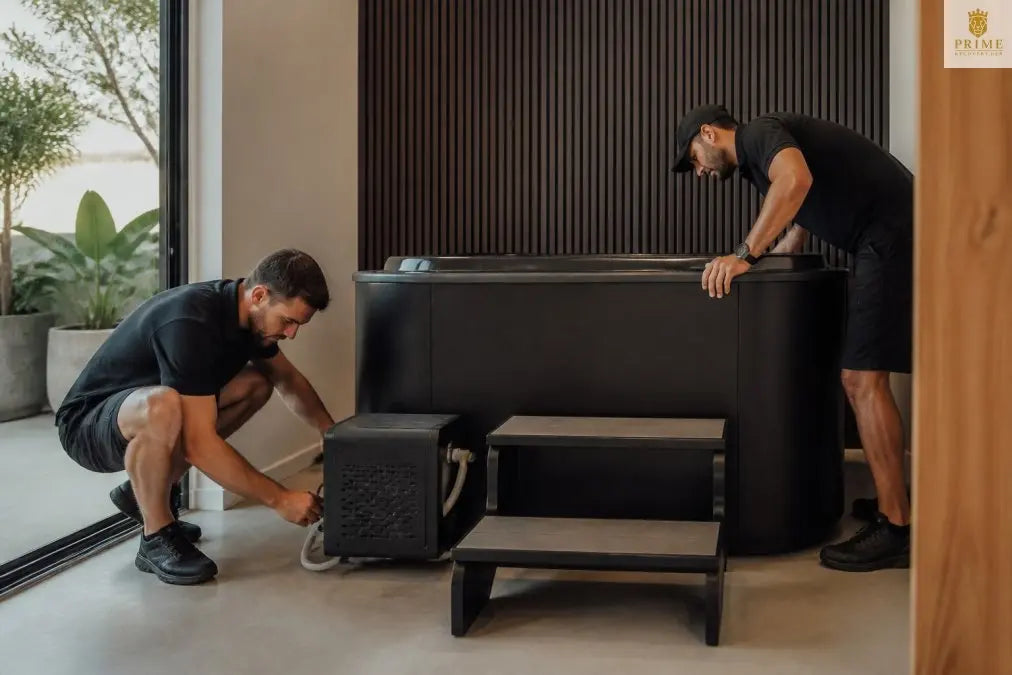
Professional Installation for Home Wellness Equipment: A Complete Guide
Table of Contents
- Why Professional Installation for Home Wellness Equipment Matters
- Types of Home Wellness Equipment That Benefit From Professional Installation
- Home Gym Installation Service: Planning and Space Preparation
- Fitness Equipment Assembly: Step-by-Step Professional Process
- Exercise Machine Installation Cost: DIY vs. Professional
- Treadmill Installation Service and Specialized Equipment
- Smart Home Integration and Environmental Considerations
- Choosing the Right Professional Installer for Your Wellness Equipment
Professional Installation for Home Wellness Equipment: A Complete Guide
Last Updated: July 30, 2026
Professional installation for home wellness equipment determines both performance and longevity. High-end recovery systems, strength training equipment, and wellness devices require precise positioning, electrical integration, and sometimes structural modifications that go far beyond unboxing and assembly. Below, we'll show you exactly what professional installation entails, why it matters for your specific equipment, and how to choose the right installer for your wellness sanctuary.
Why Professional Installation for Home Wellness Equipment Matters
Professional installation for home wellness equipment isn't just about convenience, it's about protecting your investment and ensuring safety. A sauna installed without proper ventilation can damage drywall and create moisture issues. A cold plunge positioned without adequate electrical grounding poses serious safety risks. Treadmills misaligned on improper flooring wear out prematurely and can cause injury. Power racks anchored to inadequate wall studs become unstable under load.
Professional installation also protects your warranty. Most manufacturers explicitly state that DIY installation voids coverage. If something breaks six months after you set it up yourself, you're paying for repairs out of pocket. Professional installers document their work, maintain your warranty, and provide accountability if something goes wrong during setup.
Types of Home Wellness Equipment That Benefit From Professional Installation
Certain equipment categories absolutely demand professional installation. Understanding which equipment in your planned setup needs professional help saves money and prevents costly mistakes.
Recovery Systems and Sauna Installation
Saunas and cold plunges represent the highest-value recovery investments most homeowners make, and they're the most installation-sensitive. These systems require precise environmental control, electrical specifications, and sometimes plumbing integration that DIY installers consistently get wrong.
A traditional sauna needs proper ventilation to prevent moisture damage, dedicated electrical circuits (often 240V), and professional installation to meet building codes. Cold plunges need temperature-control systems, circulation pumps, and drainage integrated with your home's plumbing. Professional sauna installers verify ceiling height (minimum 7 feet), check electrical capacity, ensure ventilation routes don't conflict with HVAC systems, and handle water supply connections and temperature probe calibration for cold plunges.
Strength Training and Cardio Equipment
Power racks, squat racks, functional trainers, treadmills, and ellipticals require different types of professional attention depending on your space and equipment type.
Strength training equipment must be anchored to studs or bolted to concrete floors. Improper anchoring creates instability that worsens over time as bolts loosen under load. Professional installers use stud finders, locate load-bearing studs, and use appropriate fasteners rated for the equipment's weight capacity.
Cardio equipment like treadmills and ellipticals needs level flooring to prevent uneven wear on motors and belts. Treadmill installation specialists will level the equipment, calibrate belt tension, verify electrical connections, and test safety features like emergency stop buttons.
Home Gym Installation Service: Planning and Space Preparation
Before any equipment arrives, your space needs assessment and preparation. Professional installation services begin here, evaluating whether your space can accommodate what you're planning.
Assessing Your Space and Layout Requirements
Your space determines what equipment you can realistically install. A power rack needs 3 feet of clearance on all sides for safety. A treadmill needs 6 feet of space in front for the belt run-out. A sauna occupies floor space but also needs clearance around its door swing.
Professional installers will visit your space and create a layout plan. They'll measure ceiling height, check for obstructions, assess wall condition and stud placement, and evaluate electrical access points. A poorly planned layout means you'll either avoid using equipment or rearrange it repeatedly. The layout also affects installation cost, equipment positioned near existing electrical panels costs less to wire.
Safety Checks and Manufacturer Specifications
Every piece of equipment comes with manufacturer specifications for installation. A sauna manual specifies minimum ceiling height, required ventilation CFM (cubic feet per minute), and electrical circuit requirements. A power rack manual specifies bolt torque specifications and stud grade requirements.
Professional installers verify your space meets these specifications before installation begins. They'll check that your home's electrical panel has available capacity for a sauna's 240V circuit, verify your walls have studs rated for the load, and confirm ceiling height accommodates equipment plus clearance. If your space doesn't meet specifications, they'll recommend modifications or advise against installation.
Fitness Equipment Assembly: Step-by-Step Professional Process
The actual installation process follows a consistent pattern across most equipment types, though specific steps vary by equipment category.
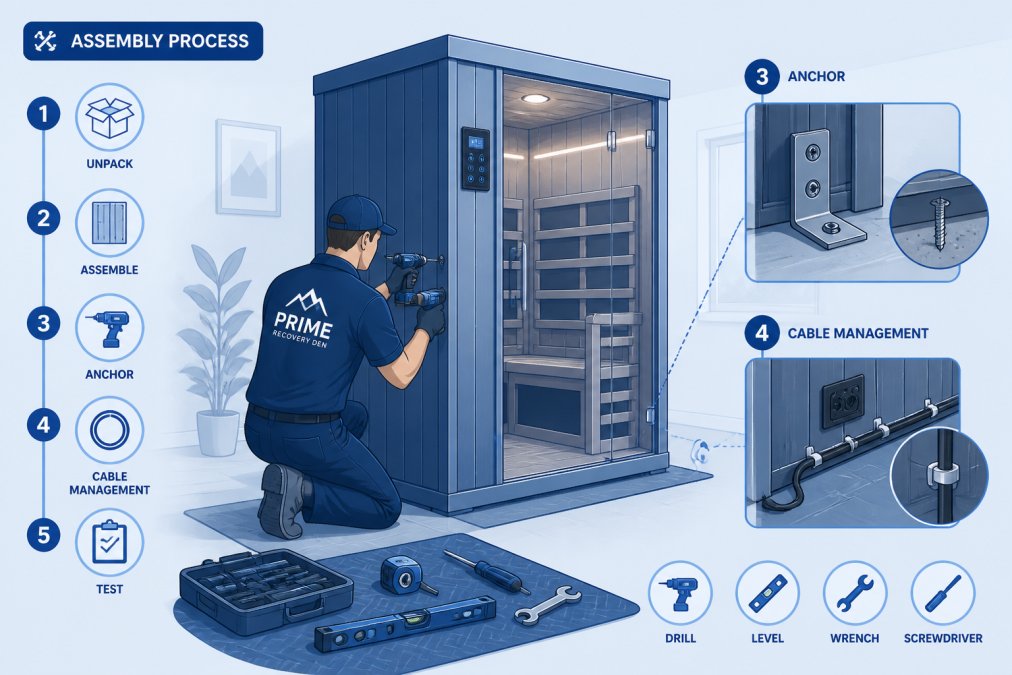
Delivery, Inspection, and Anchoring
Professional installation begins when equipment arrives. The installer inspects everything for shipping damage before assembly starts. Catching damage immediately means the manufacturer can send replacement parts without delaying installation.
Once inspection is complete, the installer prepares the space. For strength equipment, this means locating studs, marking anchor points, and drilling pilot holes. For saunas, it means verifying floor level and marking wall positions. For cardio equipment, it means placing and leveling vibration-dampening mats.
Anchoring is where DIY installations most commonly fail. Professional installers use stud finders to locate solid wood, verify stud grade and spacing, and use fasteners rated for the specific load. They understand that a power rack rated for 1,000 pounds needs anchors rated for 1,500+ pounds of holding capacity.
Calibration, Testing, and Cable Management
After physical assembly, equipment requires calibration and testing. Treadmill installation includes calibrating belt tension, testing incline motors, and verifying safety features. Cold plunge installation includes filling the system, testing temperature controls, and verifying circulation pump pump operation. Sauna installation includes testing heating elements, verifying temperature sensors, and confirming ventilation airflow.
Cable management gets organized during this phase. Professional installers bundle cables away from traffic areas, secure them to walls or equipment frames, and label them for future reference. Testing is the final step, the installer runs the equipment through normal operation, verifies all features work, and walks you through operation and maintenance.
Exercise Machine Installation Cost: DIY vs. Professional
The cost comparison between DIY and professional installation isn't straightforward because it extends beyond the installation fee itself.
Professional fitness equipment assembly costs vary based on equipment type and complexity. A basic treadmill installation might run $200-$400. A full sauna installation with electrical work could run $1,500-$3,000. A complete home gym setup with multiple pieces of strength equipment might run $2,000-$5,000.
DIY installation saves the service fee but introduces hidden costs. If you install a sauna incorrectly and create a moisture problem, remediation costs $5,000-$15,000. If you anchor a power rack to drywall instead of studs and it fails under load, replacement equipment plus medical bills could exceed $10,000. If you void your warranty through improper installation, any repairs are out-of-pocket.
Understanding Service Pricing and Warranty Implications
Most professional installers charge either a flat fee per equipment type or an hourly rate. Flat fees are predictable; hourly rates ($75-$150 per hour) work better for complex custom installations.
Warranty implications matter more than the installation fee. Equipment manufacturers typically void warranty if installation wasn't performed by a certified professional or according to their specifications. When you hire a professional installer, they provide documentation, photos, and signed work orders that prove proper installation. This documentation is what manufacturers require to honor warranty claims.
Treadmill Installation Service and Specialized Equipment
Treadmill installation service represents one of the most common professional installation requests because treadmills have specific requirements that affect longevity and safety.
Treadmills need level flooring to prevent uneven belt wear and motor strain. Professional installers use laser levels to verify flooring is level and recommend concrete leveling or mat adjustments if needed. Vibration-dampening mats reduce noise transmission and protect the treadmill from vibration damage.
Belt tension calibration is critical, too-tight belts strain motors, too-loose belts slip. Professional installers have the tools to tension belts correctly and verify the deck is properly lubricated. They'll also verify that safety features like emergency stop clips work correctly and show you how to use them.
Smart Home Integration and Environmental Considerations
Modern wellness equipment increasingly includes smart home features, app control, WiFi connectivity, and usage tracking. Professional installation now includes integrating these systems with your home network and smart home ecosystem.
Environmental considerations include how equipment affects your home's climate and energy use. A sauna generates heat that can affect adjacent rooms' temperature. A cold plunge generates humidity. Professional installers understand these effects and suggest ventilation or HVAC adjustments to compensate. They might recommend a dedicated circuit breaker for a sauna to prevent electrical overload and assess whether your home's cooling system can handle additional load.
Choosing the Right Professional Installer for Your Wellness Equipment
Not all installers have equal expertise. Choosing the right one affects installation quality, warranty protection, and your long-term satisfaction.
Credentials, Experience, and Customer Support
Look for installers who are certified by equipment manufacturers. Certification means the installer has completed training on that brand's specific installation requirements. Experience matters significantly, an installer who has completed 200 sauna installations understands common pitfalls. Ask how many installations of your specific equipment type they've completed.
Customer support extends beyond installation day. The best installers provide follow-up support if you have questions about operation or maintenance. References and reviews matter, ask for references from recent clients with similar equipment and read detailed reviews that mention specific aspects of installation.
Insurance and licensing are non-negotiable for any installer doing electrical work or structural modifications. Verify they're licensed electricians if electrical work is involved and that they carry liability insurance.
Professional installation for home wellness equipment transforms your equipment investment into a functioning sanctuary. The difference between DIY and professional installation shows up immediately in safety and performance, and compounds over years in equipment longevity and warranty protection. Prime Recovery Den's curated collection of premium recovery systems, from sophisticated saunas to advanced cold plunges, deserves installation that honors that quality. We recommend working with certified installers who understand your specific equipment, verify your space meets manufacturer specifications, and provide documentation that protects your warranty. The installation fee is modest insurance against costly mistakes. SHOP ALL
Frequently Asked Questions
What does professional installation for home wellness equipment typically include?
Professional installation for home wellness equipment includes delivery, site inspection, assembly according to manufacturer specifications, anchoring and safety checks, calibration and testing, electrical setup if required, cable management, and initial training on equipment use. Technicians verify ceiling height, flooring requirements, and ventilation needs before installation. Many services also include a post-installation walkthrough to ensure everything operates correctly and safely.
How much does fitness equipment assembly and installation service cost?
Exercise machine installation cost varies based on equipment type, complexity, and your location. Simple cardio equipment may cost less than professional sauna or cold plunge installation, which require specialized setup. Pricing depends on the number of pieces, delivery distance, and whether electrical or plumbing work is needed. Contact Prime Recovery Den for a personalized quote based on your specific wellness equipment needs and installation requirements.
What are the warranty implications of professional installation versus DIY?
Most manufacturers require professional installation to honor warranty coverage on high-end wellness equipment like saunas, cold plunges, and functional trainers. DIY installation often voids warranties if damage occurs during assembly or setup. Professional installation protects your investment by ensuring equipment is installed to manufacturer specifications, which maintains warranty validity. Additionally, professional technicians can identify installation issues early, preventing costly repairs later.
How long does treadmill installation service and other equipment setup typically take?
Installation timelines vary by equipment type and complexity. Simple fitness equipment assembly may take 1-3 hours, while recovery systems like saunas or cold plunges can require 4-8 hours depending on site preparation needs, electrical requirements, and ventilation setup. Professional installers can provide estimated timeframes during consultation. Scheduling flexibility and advance preparation of your space help ensure efficient, timely installation of your home wellness equipment.

Leave a comment
This site is protected by hCaptcha and the hCaptcha Privacy Policy and Terms of Service apply.