

Indoor Sauna vs Outdoor Sauna Pros and Cons: 2026 Guide
Table of Contents
- Indoor Sauna vs Outdoor Sauna Pros and Cons at a Glance
- Indoor Sauna Pros and Cons
- Outdoor Sauna Pros and Cons
- Home Sauna Installation Requirements: Electrical, Space, and Permits
- Infrared vs Traditional Sauna Benefits: Which Heat Suits Your Space
- Sauna Maintenance Tips for Indoor and Outdoor Units
- Cost, Resale Value, and Smart Home Integration: The Hidden Factors
- Conclusion: Matching Your Sauna Choice to Your Lifestyle
- Frequently Asked Questions
Last Updated: September 10, 2026
Indoor Sauna vs Outdoor Sauna Pros and Cons at a Glance
The indoor sauna vs outdoor sauna pros and cons come down to one trade-off: indoor units win on convenience, climate control, and cost, while outdoor units win on space, atmosphere, and resale appeal. For most homeowners, an indoor infrared model delivers the fastest path to daily recovery.

Here's the short version before the details:
| Factor | Indoor Sauna | Outdoor Sauna |
|---|---|---|
| Installation | Plug-and-play or hardwired, minimal build | Foundation, weatherproofing, permits |
| Climate control | Full control, year-round comfort | Exposed to ambient temperature swings |
| Space needed | Corner footprint, 60"-73" wide | Dedicated yard or deck area |
| Maintenance | Low, humidity managed indoors | Higher, weather and mold checks |
| Resale impact | Adds a finished wellness room | Adds a backyard amenity |
| Best for | Daily recovery, small homes | Hosting, atmosphere, large lots |
Indoor Sauna Pros and Cons
Indoor saunas are the practical choice for consistent use: they install in a corner, often run on a standard dedicated circuit, and stay protected from the elements. The trade-off is footprint and moisture.
Why Indoor Saunas Win on Convenience and Climate Control
An indoor sauna is a self-contained wellness room you can step into in under a minute, any season, without weatherproofing or a foundation. Because the surrounding room is climate-controlled, ambient temperature stays stable and heat loss drops.
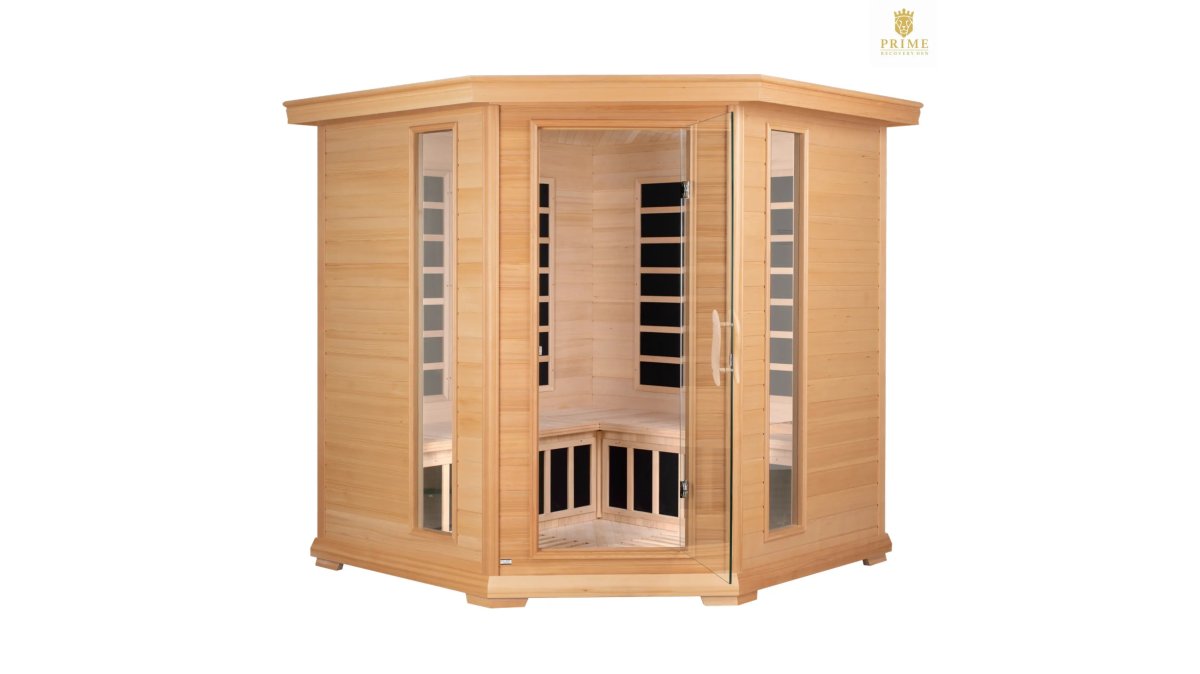
Prime Recovery Den's indoor lineup reflects this. The Maxxus 4-Person Low EMF FAR Infrared Sauna runs on a dedicated 120V / 20A circuit and heats a full family session in a 74" × 42" × 75" footprint. The Blisspod Vienna Corner Spacious Far Infrared Sauna takes the same idea further with a space-saving corner design for 4-5 people, so you reclaim a dead corner instead of a whole room.

Where Indoor Saunas Fall Short: Footprint and Moisture
The honest downside is moisture. Infrared cabins produce far less steam than traditional units, but humidity still builds, and without air circulation it can feed mold behind benches and along the moisture barrier. Budget for a roof vent and a maintenance schedule from day one. Footprint is the second constraint: a 4-person unit needs roughly six feet of wall.
Outdoor Sauna Pros and Cons
Outdoor saunas trade convenience for atmosphere and space. They free up interior square footage, create a destination, and often read as a landscaping feature rather than an appliance. The cost is weather exposure, permitting, and more maintenance.
The Case for an Outdoor Sauna: Space, Atmosphere, and Resale
An outdoor sauna is a backyard retreat, and that framing changes how you use it. Sessions become social: a cold plunge, a deck chair, and a sauna cabin turn a corner of the yard into a recovery circuit guests want to join. It also adds an amenity buyers recognize, supporting home value where outdoor living is prized.
The SaunaLife Model G3 Outdoor Home Sauna Kit shows what this looks like done well. Its parabolic arched roof improves heat circulation and sheds weather, the Thermo-Spruce exterior resists decay, and the recessed front terrace gives you a place to cool down between rounds. The trade-off is real: it ships at 1,900 lbs, needs a level foundation, and a compatible heater is sold separately.
What Outdoor Saunas Demand: Weatherproofing and Permits
Weatherproofing is the entry fee: a moisture barrier, treated or thermally modified wood, and a foundation that won't heave with frost. Ventilation still matters, air circulation keeps the cabin dry so condensation doesn't sit on benches overnight.
Then there's paperwork. Many jurisdictions treat a permanent outdoor structure with electrical service as a permitted accessory building. Check your local code office before you pour a foundation, a permit you didn't pull can force a teardown later.
Home Sauna Installation Requirements: Electrical, Space, and Permits
Home sauna installation requirements break into three buckets: electrical capacity, space, and permits.
Electrical load. Most infrared home saunas run on a dedicated 120V / 20A non-GFCI circuit, though larger or traditional units may need 240V. Check your panel's spare capacity first; a full breaker box means an electrician's upgrade.
Space and footprint. Indoor units need a level floor, roughly 60"-73" of width for a 3-4 person cabin, and door-swing clearance. Outdoor units need a foundation, drainage, and weatherproofing clearance.
Permits and zoning. A hardwired indoor unit may only need an electrical permit; a permanent outdoor structure usually triggers a building permit and must satisfy setback rules. Confirm both before ordering.
| Requirement | Indoor | Outdoor |
|---|---|---|
| Circuit | 120V / 20A dedicated typical | 120V-240V, often subpanel |
| Foundation | Existing level floor | Poured pad or deck footing |
| Permit type | Electrical only, often | Building + electrical |
| Ventilation | Roof vent or exhaust fan | Air intake and exhaust vents |
Infrared vs Traditional Sauna Benefits: Which Heat Suits Your Space
Infrared vs traditional sauna benefits differ in heat delivery, and that difference drives which room you can use. Traditional saunas heat the air with a steam generator, reaching higher temperatures and producing steam. Infrared saunas warm the body directly with carbon panels, so the air stays cooler while you sweat at lower ambient temperatures.
For indoor spaces, infrared usually wins: it runs on standard household current, heats faster, and doesn't demand plumbing or drainage. For outdoor cabins where atmosphere is the point, traditional heat and steam deliver the classic experience.
Prime Recovery Den carries both ends of that spectrum. The Maxxus S-Line 3-Person Full Spectrum Infrared Sauna pairs far-infrared and near-infrared emitters with chromotherapy and Bluetooth audio, while the S-Line Ultra Low EMF model uses eight PureTech emitters for buyers who want the lowest possible EMF exposure. Both suit an indoor installation.

Sauna Maintenance Tips for Indoor and Outdoor Units
Sauna maintenance tips start with one habit: dry the cabin after every session. Wipe benches, leave the door cracked, and run ventilation until the interior is dry. That routine prevents most mold and wood damage, but details diverge by climate.
Indoor Maintenance: Humidity Is the Only Real Enemy
Indoor cabins skip UV, rain, and freeze-thaw, so nearly every problem traces back to trapped moisture. Sweat, ambient humidity, and body heat push moisture into bench slats, the moisture barrier, and the wall cavity behind the cabin. Without air circulation, that moisture feeds mold behind benches, the spot most owners never inspect.
Mold needs sustained relative humidity above roughly 60% and a food source (wood dust, skin cells, and cellulose in the paneling all qualify). Running an exhaust fan or roof vent for 15-20 minutes after each session drops interior humidity fast enough to break that cycle; a cheap hygrometer tells you whether your routine is working.
- After every session: Wipe benches and backrests, leave the door cracked, run ventilation until the interior is dry to the touch.
- Weekly: Check the hygrometer, confirm air circulation, inspect the moisture barrier seam behind the lower bench.
- Monthly: Vacuum heater elements and reflector panels, check the control panel and door seal, look for dark spots on cedar or hemlock.
- Annually: Have an electrician inspect wiring and the heater; confirm the dedicated circuit and GFCI are still functioning.
Outdoor Maintenance: Weather, Freeze-Thaw, and UV
Outdoor cabins face everything indoor units avoid, and the failure modes are seasonal. In cold climates, freeze-thaw cycles work water into every seam; a foundation that heaves even a quarter inch can rack the door frame and break the seal. In humid climates, the cabin never fully dries between sessions, so condensation sits on benches overnight and mold colonizes the roof and floor deck.
Climate-specific routines look different:
- Cold climates: Inspect the foundation and footings before the first freeze, clear snow off the roof (the parabolic arch on a well-designed cabin sheds most of it), and check door and window seals for ice damage in spring.
- Humid climates: Run ventilation longer, consider a small dehumidifier between sessions, and inspect the underside of benches and the roof deck monthly during the wet season.
- All climates: Re-oil or re-seal exterior wood annually, inspect roof shingles or membrane, test the GFCI or breaker, and check structural integrity on the foundation.
Thermo-Spruce and cedar hold up well because their natural oils resist decay, but UV still grays the surface and rain still finds every gap. A maintenance schedule beats reactive repairs and protects your investment.
How Our Cabins Are Built to Make Maintenance Easier
Prime Recovery Den selected cabins with maintenance in mind, so the routine stays short and the payoff stays high. The SaunaLife Model G3 Outdoor Home Sauna Kit uses a parabolic arched roof that sheds weather and improves heat circulation, and its Thermo-Spruce exterior resists decay, meaning less re-sealing, fewer surprises, and more evenings where you simply step in and exhale. The Blisspod Vienna Corner Spacious Far Infrared Sauna and the Maxxus 4-Person Low EMF FAR Infrared Sauna use tight-fitting panels and digital controls that make dry-down easy, so the cabin stays fresh and you stay consistent.
That consistency is the point. When maintenance is simple, you use the sauna more; when you use it more, you feel the difference, calmer evenings, looser muscles, better sleep, and a ritual that belongs to you.
Cost, Resale Value, and Smart Home Integration: The Hidden Factors
Cost, resale value, and smart home integration are the factors buyers underestimate most, and they behave very differently for indoor and outdoor units.
The Hidden Costs of Ownership
Installation cost is rarely just the unit. For an indoor cabin, the hidden line items are electrical (a dedicated 120V / 20A non-GFCI circuit, or a panel upgrade), ventilation, and floor protection. For an outdoor cabin, the list is longer: foundation, weatherproofing, a longer electrical run (trenching and a subpanel if the cabin sits far from the house), and permits.
On an outdoor project, the electrical run and foundation together can approach or exceed the cost of the heater itself, which is why pricing the electrical run before you buy the cabin is the single most useful pre-purchase step. Permitting adds another layer: a hardwired indoor unit may only need an electrical permit, while a permanent outdoor structure usually triggers a building permit and must satisfy setback rules.
Resale Value: What Actually Moves the Number
Resale value cuts both ways. An indoor sauna reads as a finished wellness room, a permanent, move-in-ready amenity that appeals to buyers who want a spa at home. An outdoor sauna reads as a lifestyle feature and can lift a backyard's perceived value, particularly where outdoor entertaining sells homes.
The nuance most guides miss is climate. In cold climates, an outdoor cabin's resale appeal depends on whether it's usable year-round, a well-insulated, properly heated cabin reads as a four-season asset, while a poorly built one reads as a summer-only novelty. In warm, humid climates, buyers worry about mold and maintenance, so documented upkeep and a dry, well-ventilated cabin protect value. Neither type guarantees a dollar-for-dollar return, so treat resale as a bonus.
Smart Home Integration: Indoor vs. Outdoor Is a Real Difference
Smart home integration is where the category is moving, and the indoor-vs-outdoor split matters more than most buyers realize. Indoor cabins integrate easily because they sit inside your existing WiFi and climate envelope: app-based temperature presets, WiFi-controlled lighting, and scheduling let you warm the cabin before you get home.
Outdoor cabins face two extra variables: signal range and temperature. A cabin at the far end of the yard may sit at the edge of your WiFi coverage, and cold ambient temperatures mean the heater works harder to reach setpoint, so pre-heat scheduling becomes more valuable, not less. App control and a handheld remote let you start the warm-up from inside the house.
Prime Recovery Den's lineup covers both ends of that spectrum. The SaunaLife G3's LED system runs through a WiFi app and handheld remote, so you can prep the cabin from the kitchen. The Maxxus S-Line 3-Person Full Spectrum Infrared Sauna pairs far-infrared and near-infrared emitters with chromotherapy and Bluetooth audio, and the S-Line Ultra Low EMF model uses eight PureTech emitters for buyers who want the lowest possible EMF exposure. Both suit an indoor installation and include digital control panels with Bluetooth audio, so your session starts with a tap, not a chore.

That ease changes how the sauna feels in your life. Instead of a project you plan around, it becomes a ritual you look forward to: warm light, quiet music, and a few minutes entirely yours.
Conclusion: Matching Your Sauna Choice to Your Lifestyle
The right answer depends on how you'll actually use it. If you want a five-minute walk from workout to recovery, an indoor infrared sauna removes every excuse. If you want a backyard retreat that doubles as a hosting space, an outdoor cabin earns its keep.
Prime Recovery Den built its sauna collection around that split. The Blisspod Vienna Corner Sauna fits a 4-5 person session into a corner you already own, with 12 heaters, chromotherapy, and an oxygen ionizer for air that stays fresh. The Maxxus 4-Person Low EMF Sauna brings the whole family in on a standard 120V circuit. And the SaunaLife G3 turns a yard into a destination, with a parabolic roof and terrace built for cool-down rounds.
Picture stepping into warm hemlock after a long day, or hosting friends around a steaming cabin on a cool evening. That's the feeling these pieces are designed to create: calm, connection, and a space that's genuinely yours.
Get started with Prime Recovery Den and turn an unused corner or a quiet patch of yard into a sanctuary you'll use every week.
Frequently Asked Questions
Is it better to have a sauna inside or outside?
It depends on your priorities. An indoor sauna offers year-round convenience, stable ambient temperature, and no weatherproofing costs, making it ideal for daily recovery routines. An outdoor sauna provides a distinct atmosphere, frees up interior square footage, and can boost home value through a unique backyard feature. If you live in a colder climate, an indoor unit avoids the heat loss and long warm-up times an outdoor cabin faces in winter. For warmer regions, an outdoor sauna lets you alternate between heat and fresh air easily.
What are the primary home sauna installation requirements?
Most indoor infrared saunas need a dedicated 120V or 240V circuit depending on the model, a level floor, and at least a few inches of clearance around the cabin for air circulation. Outdoor units add foundation requirements, weatherproofing, and often a building permit or zoning check. For example, the Maxxus 4-Person Low EMF FAR Infrared Sauna requires a dedicated 120V/20A non-GFCI circuit and indoor placement only, while the SaunaLife Model G3 Outdoor Home Sauna Kit is a cabin kit that ships with a heater sold separately and needs a prepared outdoor base.
Do outdoor saunas require more maintenance than indoor units?
Yes, generally. Outdoor saunas face rain, humidity swings, and UV exposure, so the exterior wood needs periodic sealing or oiling, and the roof and door seals should be inspected each season. Indoor saunas stay protected from the elements, but they still need ventilation checks, bench wiping after sessions, and occasional deep cleaning to prevent mold. Following a consistent sauna maintenance schedule, such as airing out the cabin after each use and checking the moisture barrier annually, extends the life of either type.
What is the difference between infrared and traditional sauna benefits?
Infrared saunas use carbon or ceramic heaters to warm your body directly at lower air temperatures, often 118-132°F, which many people find more comfortable for longer sessions. Traditional saunas heat the air to 160-190°F using a steam generator or heater over rocks, producing a more intense sweat and a classic Nordic experience. Infrared models tend to heat up faster and use less energy, while traditional saunas offer the humid, high-heat environment some users prefer. Your choice depends on whether you value gentle, dry heat or the traditional steam ritual.
How do I determine if my home can support a sauna installation?
Start by measuring your available footprint, including clearance for the door swing and ventilation. Then check your electrical panel for spare capacity; most residential infrared saunas need a dedicated circuit, and some larger models require 240V. If you plan an outdoor unit, verify local zoning ordinances and building permit rules for accessory structures. A certified electrician can confirm whether your panel can handle the electrical load before you buy, saving you from costly surprises after delivery.

Leave a comment
This site is protected by hCaptcha and the hCaptcha Privacy Policy and Terms of Service apply.