

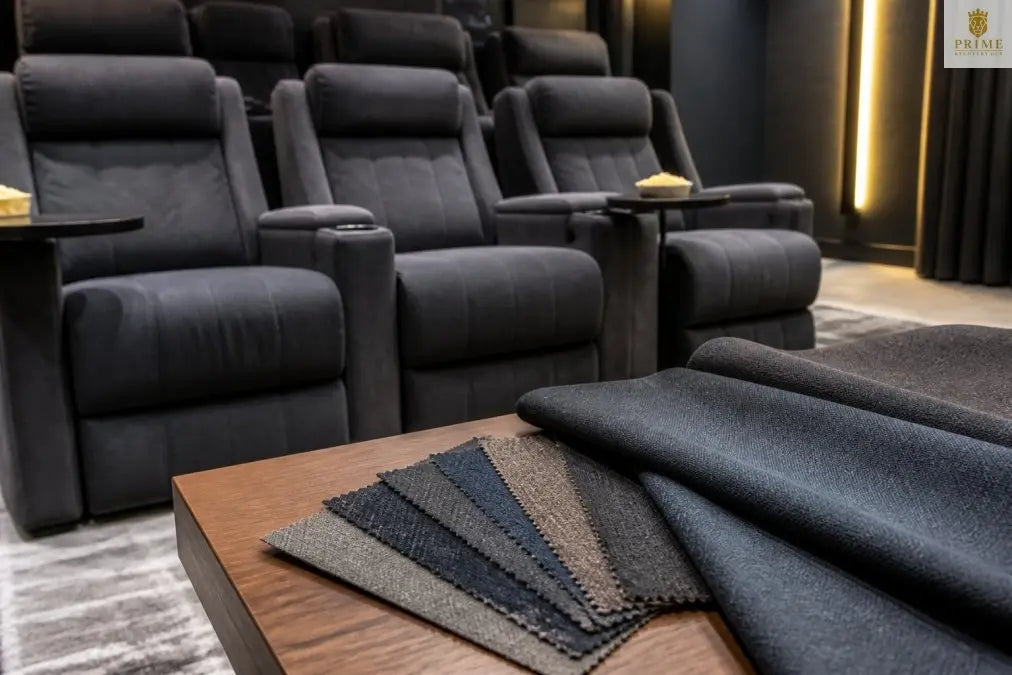
How to Choose Durable Theater Furniture Fabric
Table of Contents
- Understanding Fabric Durability for Theater Seating
- Double Rub Count for Upholstery: What It Means for Theater Furniture
- Performance Fabric Benefits vs. Standard Upholstery
- Comparing Fabric Types: Leather, Microfiber, and Performance Textiles
- Cleaning Codes for Theater Seating: What Each Rating Means
- Key Durability Factors: Abrasion Resistance, Pilling, and Colorfastness
- Pet-Friendly and Hypoallergenic Fabric Options
- Sustainability and Eco-Friendly Textile Certifications
Last Updated: August 13, 2026
Understanding Fabric Durability for Theater Seating
Theater seating endures constant use, friction, spills, and varying humidity and temperature conditions. The fabric you choose determines whether your investment delivers years of reliable performance or deteriorates within months.
Durability maintains aesthetics, comfort, and functionality while managing maintenance costs. Durability rests on three core factors: fiber composition, weave density, and finish treatments. Natural fibers like leather offer inherent durability; synthetic performance fabrics are engineered to resist common damage mechanisms. Microfiber splits the difference, offering stain resistance with a luxurious feel.
Double Rub Count for Upholstery: What It Means for Theater Furniture
Double rub count measures fabric durability through standardized abrasion testing, typically using the Wyzenbeek or Martindale test method. A double rub represents one complete forward-and-backward cycle of the testing machine rubbing a standardized material against the fabric under controlled pressure.
Theater furniture experiences significant abrasion from repeated repositioning, clothing friction, and constant armrest contact. A fabric rated at 15,000 double rubs tolerates moderate residential use. Fabrics rated 30,000+ double rubs withstand commercial-grade wear suitable for high-occupancy theaters. Premium performance fabrics often exceed 100,000 double rubs, guaranteeing durability across any scenario.
When evaluating theater furniture, request the specific double rub rating and testing standard used, this transparency signals manufacturer confidence.
Performance Fabric Benefits vs. Standard Upholstery
Performance fabrics are engineered to resist staining, fading, and abrasion through synthetic fibers combined with specialized finish treatments. Standard upholstery prioritizes aesthetics and comfort but lacks these protective treatments.
Standard upholstery develops visible pilling after moderate use and absorbs spills; performance fabrics resist pilling and shed spills, giving you time to blot before staining occurs. Standard fabrics fade noticeably under sunlight or bright theater lighting; performance fabrics use colorfast dyes and UV-resistant finishes that maintain appearance for years.
Performance fabrics typically cost 20-40% more than standard upholstery. Over five years, a performance fabric that maintains appearance and resists staining delivers better value than cheaper upholstery requiring replacement.
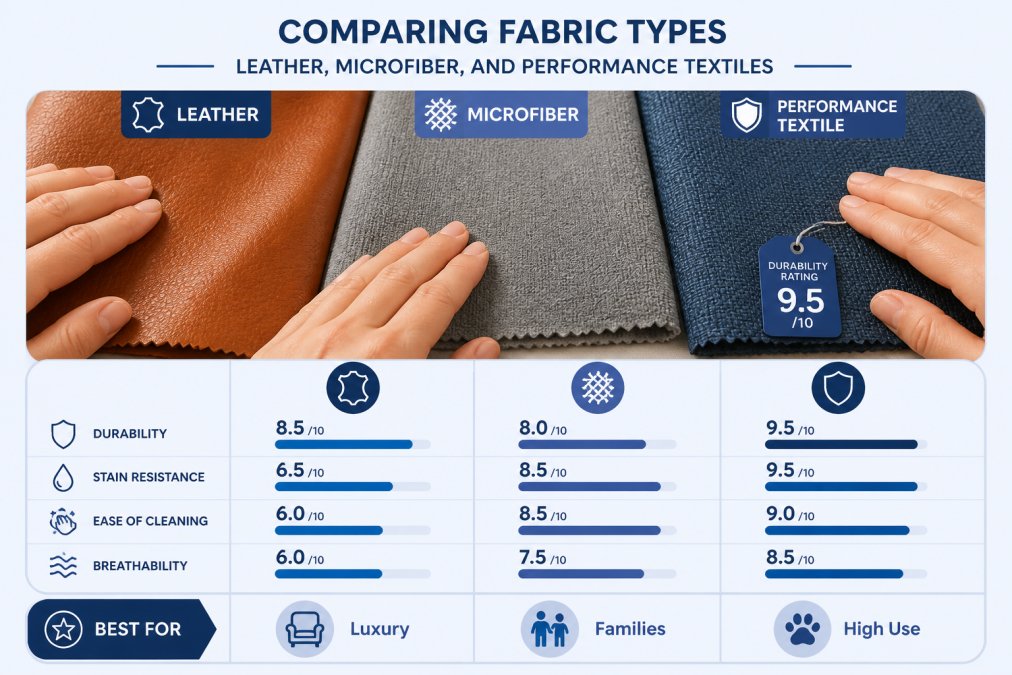
Comparing Fabric Types: Leather, Microfiber, and Performance Textiles
Top-Grain Leather: Luxury and Longevity
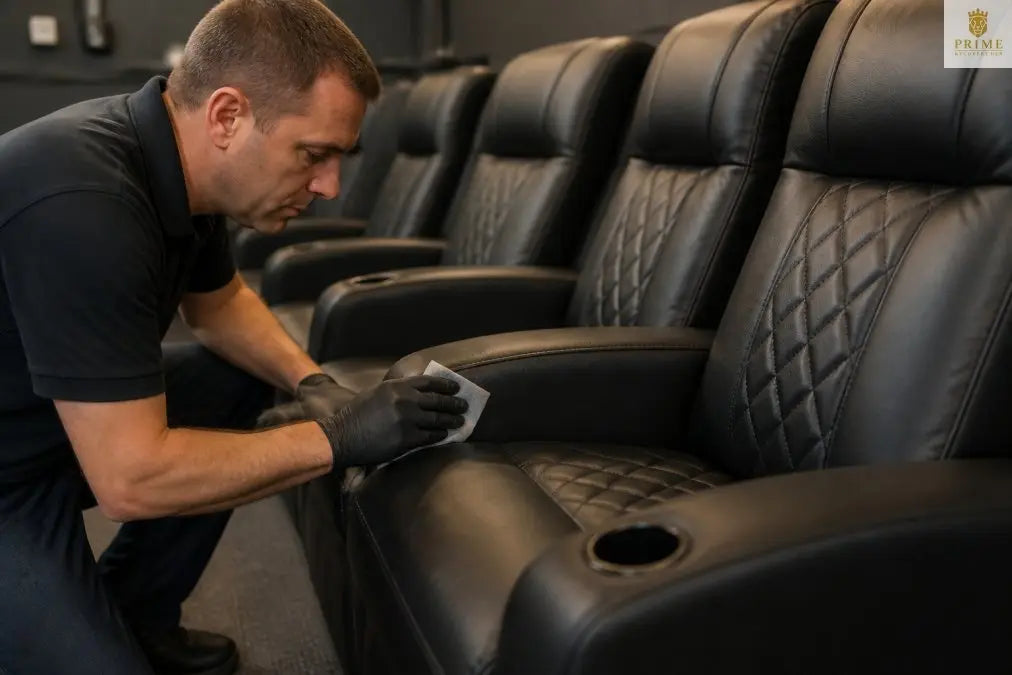
Top-grain leather is the highest quality leather available for upholstery. It retains the hide's natural grain pattern, develops character over time, and offers exceptional durability when properly maintained. Top-grain leather resists abrasion naturally and lasts 15-20 years or longer with proper care. It doesn't pill and resists staining better than most textiles.
Leather requires regular conditioning to prevent drying and cracking. Spills must be addressed promptly, and scratches are visible. In humid environments, leather can develop mold without proper ventilation. Top-grain leather costs significantly more than performance textiles or microfiber. For luxury home theaters or high-end recovery spaces where durability and aesthetic refinement matter equally, the investment aligns with Prime Recovery Den's intentional design philosophy.
Microfiber: Stain Resistance and Easy Maintenance
Microfiber is a synthetic material made from ultra-fine polyester and polyamide fibers woven into an exceptionally dense structure. This density creates a fabric that resists staining and cleans easily with minimal effort.
Microfiber's primary advantage is practical maintenance. Water-based and oil-based spills resist absorption due to fiber structure. Most spills require only a damp cloth and mild soap to remove. Microfiber typically rates 20,000-40,000 double rubs, suitable for residential and light commercial use. It resists pilling better than standard upholstery and costs less than top-grain leather but more than basic polyester upholstery. For budget-conscious buyers prioritizing stain resistance and ease of cleaning, microfiber delivers solid value.
Performance Fabrics: Engineered for High-Traffic Use
Performance fabrics combine synthetic fibers with advanced finish treatments that repel liquids, resist staining, and prevent pilling. These fabrics are tested to 30,000+ double rubs and often exceed 100,000 in premium grades.
Performance fabrics use solution-dyed fibers, meaning color is added during fiber production rather than applied afterward. This eliminates surface dyes that fade under UV exposure, delivering colorfastness that rivals natural fibers. Stain resistance comes from finish treatments that create a protective barrier repelling water-based and oil-based substances. Spills remain on the surface long enough for cleanup, dramatically reducing permanent staining risk.
Cost typically runs 15-30% higher than standard upholstery but often less than top-grain leather. For theater furniture where durability, maintenance ease, and long-term value matter, performance fabrics represent the most practical choice.
| Fabric Type | Double Rub Range | Stain Resistance | Maintenance | Lifespan | Best For |
|---|---|---|---|---|---|
| Top-Grain Leather | 40,000+ | Excellent | High (conditioning required) | 15-20 years | Luxury spaces, low-traffic areas |
| Microfiber | 20,000-40,000 | Very Good | Low (damp cloth) | 8-12 years | Budget-conscious, moderate traffic |
| Performance Textile | 30,000-100,000+ | Excellent | Low (damp cloth) | 12-15+ years | High-traffic, demanding environments |
Cleaning Codes for Theater Seating: What Each Rating Means
Fabric cleaning codes indicate which cleaning methods are safe for specific materials. The standard system uses letters: W, S, WS, and X.
W (Water-based cleaning): The fabric can be cleaned with water-based cleaners, detergents, and steam cleaning. Most performance fabrics and microfiber carry this rating. For theater seating, W-rated fabrics offer practical maintenance.
S (Solvent-based cleaning): Only dry-cleaning solvents should be used. Water can damage the fabric or cause dye bleeding. This rating often appears on natural fibers and delicate textiles. For theater applications, S-rated fabrics require professional cleaning for significant soiling, increasing long-term maintenance costs.
WS (Water or solvent): The fabric tolerates both water-based and solvent-based cleaning methods. This dual rating offers flexibility and is common on premium performance fabrics and high-quality leather.
X (Vacuuming only): No liquid cleaners should be applied. X-rated fabrics are typically delicate and unsuitable for high-traffic theater seating.
For theater furniture where durability and ease of maintenance are priorities, W or WS ratings are strongly preferred. When evaluating theater furniture, always request the cleaning code and factor maintenance requirements into your decision.
Key Durability Factors: Abrasion Resistance, Pilling, and Colorfastness
Abrasion resistance determines how fabric withstands friction and repeated contact. Measured through double rub testing, it directly correlates to lifespan in high-traffic applications.
Pilling occurs when short fibers work loose from the fabric surface and ball up, creating a fuzzy, worn appearance. Tightly woven fabrics with long fiber lengths resist pilling. Top-grain leather doesn't pill. Performance fabrics and quality microfiber resist pilling through engineered fiber structure and finish treatments.
Colorfastness measures how well fabric retains color under light exposure and washing. Solution-dyed performance fabrics offer superior colorfastness because color is integral to the fiber itself. Natural leather ages gracefully, developing patina rather than fading.
These three factors interconnect. A fabric with high abrasion resistance but poor colorfastness will look worn despite physical durability. When evaluating specific fabrics, request data on all three metrics.
Pet-Friendly and Hypoallergenic Fabric Options
Pet owners face unique challenges with upholstered theater furniture. Claws puncture fabric, shedding embeds in fibers, and accidents create permanent stains.
Microfiber excels for pet-friendly applications. Its tight weave resists claw penetration better than loosely woven textiles. Pet hair doesn't embed as deeply, making vacuuming more effective. Spills and accidents clean easily with water and mild soap.
Performance fabrics engineered for pet resistance combine durability with stain protection. Look for fabrics specifically marketed as pet-resistant or pet-proof. These feature tighter weaves, solution-dyed fibers, and finish treatments optimized for claw resistance and stain prevention.
Top-grain leather offers surprising benefits for pet owners. Claws puncture leather but don't unravel it like woven fabrics. Shedding doesn't embed in leather. Accidents wipe clean easily. The downside: leather scratches from claws, and repairs are expensive.
For pet-friendly theater spaces, microfiber or performance fabrics rated for pet resistance offer the best combination of durability, stain resistance, and practical maintenance.
Sustainability and Eco-Friendly Textile Certifications
Sustainability in upholstery involves fiber sourcing, manufacturing processes, chemical treatments, and end-of-life disposal. Several certifications verify environmental and social responsibility standards.
Global Organic Textile Standard (GOTS) certifies organic fiber production and processing without synthetic pesticides or harmful chemicals. Cradle to Cradle Certified evaluates entire product lifecycle, ensuring fabrics are designed to be recycled or safely decomposed. OEKO-TEX Standard 100 certifies that textiles are free from harmful substances. Bluesign® focuses on chemical management during textile manufacturing, reducing water pollution and worker exposure to hazardous substances.
Performance fabrics with eco-certifications are increasingly available, combining durability engineering with sustainable practices. They cost more than conventional performance fabrics but align with values-driven purchasing priorities. Evaluate sustainability across the entire lifecycle, not just fiber origin.
Your Step-by-Step Guide to Selecting the Right Fabric
Step 1: Assess Your Usage Pattern
Determine how frequently your theater space will be used. Light residential use can tolerate 15,000 double rubs; frequent entertaining demands 30,000+; commercial applications require 50,000+.
Step 2: Define Your Aesthetic Priorities
Consider the visual and tactile experience you want. Do you prefer the luxury of top-grain leather? The softness and stain resistance of microfiber? The engineered sophistication of performance textiles? Prime Recovery Den's team can guide you toward fabrics that balance durability with refined, intentional aesthetics.
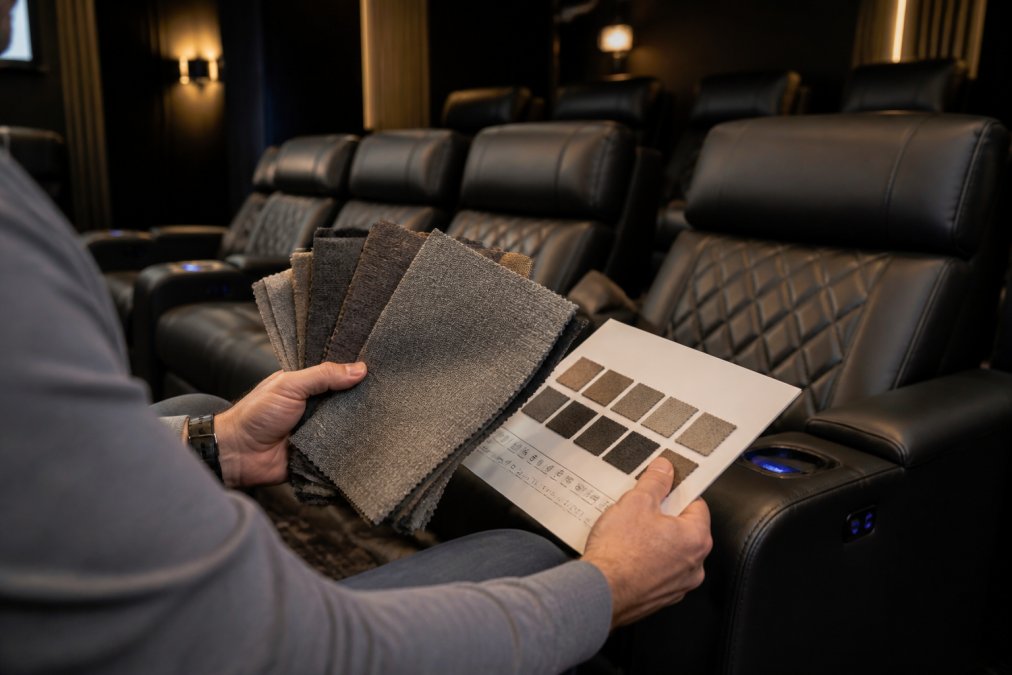
Step 3: Request Fabric Swatches and Test Them
Never choose fabric from photos alone. Request physical swatches and test them in your space under actual lighting conditions. Evaluate texture, color, and how light plays across the surface. Test stain resistance by applying water and oil-based substances to see how quickly they bead or absorb.
Step 4: Verify Durability Metrics
Request specific data: double rub count, testing standard used, pilling resistance rating, and colorfastness grade. Ask about finish treatments and how long they typically remain effective.
Step 5: Confirm Cleaning Codes and Maintenance Requirements
Verify the fabric's cleaning code (W, S, WS, or X) and understand your maintenance commitment. Calculate long-term maintenance costs; a cheaper fabric requiring frequent professional cleaning may cost more over five years than a premium fabric you can maintain yourself.
Step 6: Consider Environmental and Health Factors
If sustainability or chemical sensitivity matters, ask about certifications. For pet-owning households, specify pet-resistant fabrics. For households with allergies, prioritize tightly woven fabrics and ask about antimicrobial treatments.
Step 7: Make Your Decision and Protect Your Investment
Request written specifications confirming durability ratings, cleaning codes, and warranties. Ask about protection plans that extend fabric life.
Selecting durable theater furniture fabric requires balancing durability metrics, aesthetic preferences, practical maintenance, and long-term value. The fabric you choose determines whether your theater seating remains refined and functional for years or deteriorates into visible wear within months.
At Prime Recovery Den, we understand that theater furniture is more than functional seating, it's a cornerstone of the intentional spaces where you gather, relax, and connect. Our curated selection combines engineering-backed durability with the sophisticated aesthetic that defines premium home retreats. We're committed to helping you choose fabrics that withstand real-world use while maintaining the refined character your space deserves. Explore our collection and discover how the right fabric transforms your theater experience into something truly lasting.
Frequently Asked Questions
What is the minimum double rub count for durable theater furniture fabric?
Theater seating typically requires a minimum of 15,000 double rubs for residential use, though 25,000+ double rubs is ideal for high-traffic entertainment spaces. Performance fabrics rated at 50,000+ double rubs offer exceptional longevity. Check the Wyzenbeek or Martindale test results provided by your furniture manufacturer to verify durability standards before purchasing.
Are performance fabric benefits worth the extra cost for home theater seating?
Yes. Performance fabrics offer stain resistance, spill-proof properties, superior colorfastness, and lower maintenance requirements compared to standard upholstery. For a room where you'll host gatherings and serve food or drinks, performance fabrics prevent permanent damage from common accidents, ultimately protecting your investment over 10+ years of use.
What do cleaning codes for theater seating tell me about maintenance?
Cleaning codes (W, S, WS, X) indicate which cleaning methods are safe. W means water-based cleaners, S means solvent-based, WS means both, and X means vacuuming only. Understanding your fabric's code helps you maintain its appearance without causing damage. Performance fabrics often carry W or WS codes, making them easier to clean than delicate natural fibers.
How do I test durability before committing to a fabric choice?
Request fabric swatches and test them at home for at least a week. Check for pilling by rubbing vigorously, test stain resistance with water and mild spills, and assess how the fabric feels under repeated use. Also verify the abrasion resistance rating (double rub count) and ask your furniture provider about their warranty coverage for delamination or fabric deterioration.

Leave a comment
This site is protected by hCaptcha and the hCaptcha Privacy Policy and Terms of Service apply.