

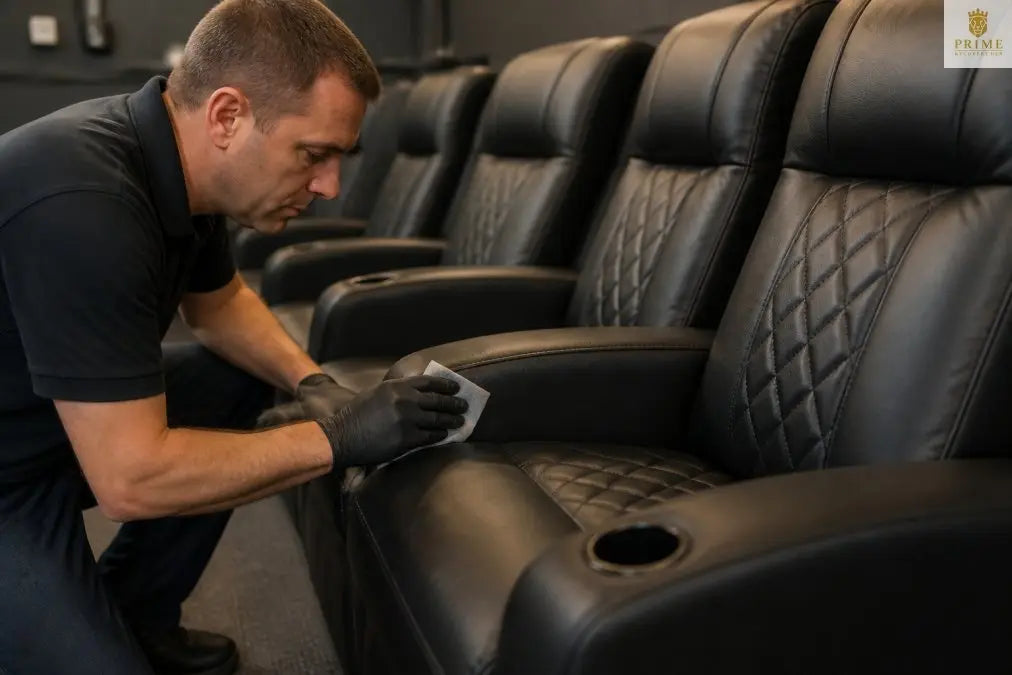
How to Prevent Theater Seating Delamination
Table of Contents
- What Causes Theater Seating Delamination
- Identify Your Theater Seating Material
- Faux Leather Maintenance Tips to Stop Peeling Before It Starts
- Leather Conditioner for Home Theater Seating
- Climate Control and Environmental Management
- How to Repair Peeling Theater Seats
- Preventative Care for High-Traffic Theater Seating
- Conclusion
Last Updated: August 14, 2026
What Causes Theater Seating Delamination
Theater seating delamination occurs when the layers of synthetic upholstery materials separate from each other, typically starting with the bonded leather or polyurethane coating peeling away from the underlying fabric or vinyl backing. This breakdown happens because the adhesive bond between materials weakens over time, especially under stress from regular use and environmental exposure.
The root cause isn't usually a manufacturing defect, it's a combination of material fatigue and environmental factors working together. Bonded leather, which consists of leather fibers bonded to a fabric base with polyurethane coating, is inherently more vulnerable to hydrolysis than genuine leather. When moisture penetrates the surface finish, it breaks down the polymer bonds that hold the layers together. Add heat, UV exposure, and constant friction from sitting, and the delamination process accelerates dramatically.
Bonded Leather and Synthetic Material Breakdown
Bonded leather sounds premium, but it's fundamentally different from genuine leather. The polyurethane coating that protects bonded leather is designed to last, but it's not permanent. When the coating begins to fail, whether from scratches, cleaning products, or simply age, moisture seeps into the material layers beneath. This triggers hydrolysis, a chemical process where water breaks down the polymer chains holding the layers together.
Synthetic upholstery materials like vinyl and faux leather face similar challenges. These materials are composed of a plastic film applied over a fabric base, and the adhesive connecting them can degrade when exposed to heat, humidity, and abrasion. The problem intensifies in high-traffic seating where friction is constant. Over time, the surface film loses its flexibility, cracks form, and peeling begins.
The material quality difference matters significantly here. Lower-grade bonded leather uses cheaper adhesives and thinner coatings, which fail faster. Premium theater seating uses better-quality polyurethane and stronger bonding agents, but even these have a lifespan. Understanding what you're working with, whether it's true bonded leather, vinyl, or fabric upholstery, determines how aggressively you need to protect it.
Environmental Factors: Humidity, Temperature, and UV Exposure
Theater seating lives in a hostile environment. Humidity fluctuations cause materials to expand and contract, stressing the bonds between layers. If your home theater sits in a basement or humid climate, moisture constantly works against the adhesive holding your seating together. Temperatures above 75°F accelerate the breakdown of polyurethane coatings, while temperature swings create stress on material bonds.
UV damage is equally destructive, even in indoor home theaters. If windows let in direct sunlight, UV rays degrade the polymer surface, making it brittle and prone to cracking. Once the surface cracks, water infiltration accelerates hydrolysis. Low humidity can be problematic too, it causes materials to dry out and lose elasticity, making them more susceptible to tearing and peeling.
The seam stress from constant use compounds these environmental pressures. Every time someone sits, stands, or reclines the seat, the material stretches. The seams and bonded edges bear the most stress, making them the first places where delamination typically starts. In high-traffic theater seating, this mechanical stress combined with environmental exposure creates the perfect conditions for material degradation.
Identify Your Theater Seating Material
Before you can prevent delamination, you need to know exactly what material you're protecting. Theater seating comes in three main types: genuine leather, bonded leather, and synthetic (vinyl or polyurethane-coated fabric). Each requires different care strategies.
Genuine leather is the easiest to identify, it has a natural grain, smells distinctly of leather, and feels warm to the touch. It's also the most expensive and the most durable when properly maintained. Bonded leather looks and feels similar to genuine leather but is actually leather fibers glued to a fabric base. Run your finger along a seam or corner; if you see fabric peeking through, it's bonded. Synthetic materials feel plastic-like and uniform; they won't have the natural variation of genuine leather.
Check your documentation or contact the manufacturer if you're unsure. The care approach differs based on material type, and using the wrong conditioner or cleaning product on bonded leather can actually accelerate delamination. At Prime Recovery Den, we recommend checking your seating's care manual before applying any products, the manufacturer's guidance is your baseline, and preventative maintenance builds from there.
Faux Leather Maintenance Tips to Stop Peeling Before It Starts
Faux leather maintenance tips are your first line of defense against theater seating delamination. The goal is simple: keep moisture out, protect the surface finish, and minimize stress on the bonds between material layers. Consistent, gentle care prevents the small problems from becoming expensive repairs.
Weekly Cleaning and Dust Removal
Dust and debris don't just make seating look worn, they trap moisture against the surface and create abrasive particles that scratch the protective coating. Weekly cleaning removes these contaminants before they cause damage.
Use a soft microfiber cloth slightly dampened with distilled water. The key word is slightly, excess moisture is your enemy. Wipe the seating gently, following the grain of the material if visible. Pay special attention to seams, creases, and the recline mechanism area, where dust accumulates and moisture can hide.
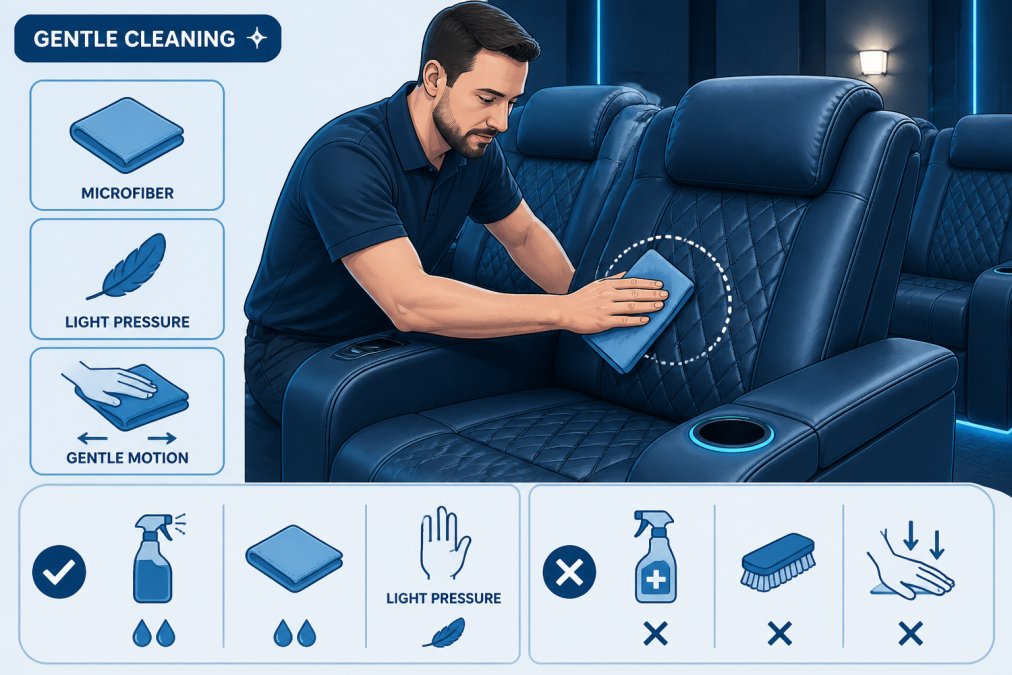
For stubborn dirt, mix a small amount of mild soap with distilled water, but test it on a hidden area first. Some cleaning products contain chemicals that degrade polyurethane coatings. Avoid anything with harsh solvents, alcohol, or bleach. After cleaning, dry the seating immediately with a clean, dry cloth. Never let moisture sit on the surface, that's when hydrolysis begins.
Monthly Deep Cleaning Protocol
Monthly deep cleaning goes beyond dust removal. It removes oils from skin contact, addresses minor stains, and ensures the protective coating stays intact.
Start with the weekly cleaning process, then apply a specialized faux leather cleaner designed for theater or automotive seating. Apply it with a soft brush or cloth in circular motions, working in small sections. Let it sit for 2-3 minutes to break down oils and grime, then wipe clean with a damp cloth. Dry thoroughly.
This is also when you inspect for early signs of peeling. Look at seams, corners, and high-stress areas where the material gets the most friction. Tiny cracks or lifting edges are early warning signs. Catching delamination at this stage, before it spreads, makes repair much simpler and less expensive.
Leather Conditioner for Home Theater Seating
A quality leather conditioner for home theater seating does two things: it replenishes oils lost to cleaning and environmental exposure, and it maintains the flexibility of the material. Without conditioning, faux leather becomes brittle and prone to cracking, which accelerates delamination.
Selecting the Right Conditioner for Your Material
Not all conditioners are equal. Genuine leather needs a different product than bonded leather or vinyl. Using the wrong conditioner can actually damage your seating.
For genuine leather, choose a conditioner specifically formulated for leather furniture. These contain oils and waxes that penetrate the leather and restore its natural moisture balance. For bonded leather, you need a conditioner that protects the polyurethane coating without softening it excessively. For vinyl and synthetic materials, use a vinyl conditioner that adds UV protection and maintains surface flexibility.
Read the product label carefully. Avoid conditioners with silicone, which can leave a slippery residue. Avoid oil-based products on bonded leather, they can seep under the coating and weaken adhesive bonds. The best conditioners for theater seating are water-based, with UV inhibitors to protect against sun damage.
Test any new product on a hidden area first. Apply a small amount, let it dry for 24 hours, and check that the material still looks and feels right. This small step prevents expensive mistakes.
Application Schedule and Technique
Apply conditioner every 3-6 months, depending on use and environmental conditions. High-traffic seating in humid climates needs more frequent conditioning. Rarely-used seating in climate-controlled rooms can go longer between applications.
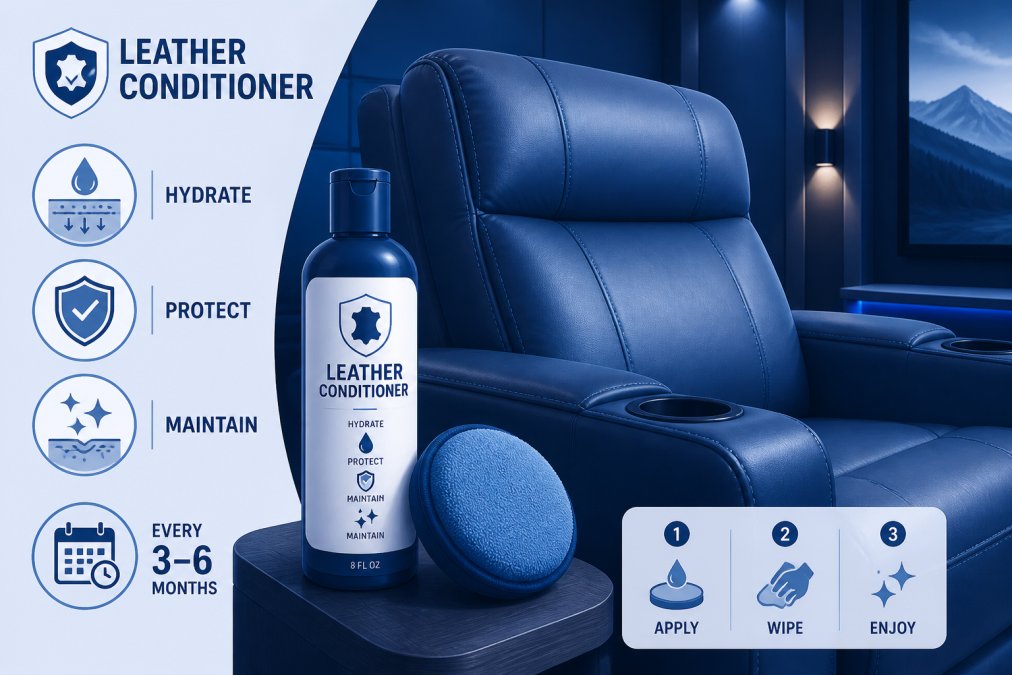
Apply conditioner with a soft cloth or applicator pad, working in small circular motions. Use a light touch, you're not trying to soak the material, just add a protective layer. Apply thin, even coats. A little goes a long way; excess conditioner can make the seating feel sticky and attract dust.
Let the conditioner dry completely before using the seating. Most products need 24 hours. During this time, keep the room well-ventilated and avoid temperature extremes. Once dry, the seating should feel slightly softer and more supple, with a subtle sheen. If it feels greasy or sticky, you applied too much.
Climate Control and Environmental Management
Theater seating delamination accelerates in poor environmental conditions. Managing humidity, temperature, and light in your theater room is as important as direct maintenance.
Maintain humidity between 35-55 percent. Below 35 percent, materials dry out and crack. Above 55 percent, moisture infiltration and hydrolysis accelerate. Use a humidifier in dry climates and a dehumidifier in humid ones. A simple hygrometer (humidity meter) costs under $20 and tells you exactly what you're dealing with.
Temperature should stay between 65-75°F. Avoid placing seating near heating vents, air conditioning units, or direct sunlight. Rapid temperature swings stress material bonds. If your theater room has windows, use UV-blocking curtains or window film to protect against sun damage.
Air circulation matters too. Stagnant air traps moisture. A small ceiling fan or portable air circulation unit helps, but avoid pointing it directly at the seating. Good ventilation prevents moisture buildup in seams and crevices where delamination starts.
How to Repair Peeling Theater Seats
If delamination has already started, early intervention can save your seating.
DIY Protective Coatings and Adhesive Solutions
For minor peeling at seams or edges, a flexible adhesive designed for upholstery can reattach the material. Look for contact cement or flexible fabric adhesive specifically rated for bonded leather or vinyl. These products are different from standard glues, they need to flex with the material as the seating is used.
Clean the peeling area thoroughly and let it dry completely. Apply adhesive to both the lifted material and the base, following the product instructions. Press the material back down firmly and hold for the time specified (usually 30 seconds to 2 minutes). Use a roller or flat tool to ensure good contact. Let the adhesive cure fully before using the seating, typically 24 hours.
This approach works for small areas. If peeling covers more than a few inches or affects multiple seams, professional repair becomes more cost-effective.
For prevention in already-damaged areas, apply a protective sealant after repair. These thin, flexible coatings protect the surface from moisture and UV damage. They won't stop existing delamination, but they slow progression and protect repaired areas.
When to Call a Professional
If peeling affects large areas, multiple seams, or the recline mechanism, professional upholstery restoration is your best option. A professional can re-upholster the seating completely, replacing the damaged material with new bonded leather or synthetic upholstery. This is expensive but extends the life of your seating significantly.
Professional restoration also allows for material upgrades. If bonded leather has repeatedly failed, switching to higher-grade synthetic material or genuine leather prevents future delamination. If you are looking for new seating options built with materials designed to resist specific environmental conditions, consider exploring collections that prioritize craftsmanship and atmosphere.
Preventative Care for High-Traffic Theater Seating
High-traffic seating, the kind that gets used multiple times per week, needs aggressive preventative care. The constant friction and stress on material bonds accelerates delamination, so your maintenance schedule should be more frequent and thorough.
Increase weekly cleaning to twice weekly in high-traffic areas. Pay extra attention to seams and edges where stress concentrates. Monthly deep cleaning should happen every 3-4 weeks instead of monthly. Conditioning should happen every 3 months instead of 6.
Use seat covers or throws for active use periods. A quality microfiber or cotton cover protects the underlying seating from direct friction and moisture from skin contact. Remove covers regularly to allow the seating to breathe and prevent moisture accumulation underneath.
Manage the recline mechanism carefully. Mechanical stress on the frame and seams increases when the recline is used frequently. Ensure the mechanism moves smoothly, stiffness puts extra strain on material bonds. Lubricate moving parts according to the manufacturer's specifications.
Monitor environmental conditions more closely in high-traffic rooms. These spaces tend to accumulate humidity from body moisture and breathing. Run a dehumidifier more aggressively, and ensure air circulation is excellent. The extra effort prevents expensive repairs down the road.
Theater seating delamination is preventable with consistent, intentional care. The key is understanding what causes material breakdown, moisture infiltration, environmental stress, and material fatigue, and addressing each factor systematically. Weekly cleaning, regular conditioning, climate control, and early intervention on minor peeling keep your seating in excellent condition for years.
When you're investing in premium theater seating, protecting that investment through proper maintenance is essential. Prime Recovery Den's collection of home theater seating is built with quality materials and craftsmanship designed to last, but even the finest seating requires intentional care. Start with a maintenance routine today, your seating will reward you with years of comfortable, damage-free use.
Frequently Asked Questions
What causes faux leather theater seating to peel and delaminate?
Faux leather peeling results from hydrolysis, a chemical breakdown of the polyurethane coating that bonds synthetic material to its backing. This accelerates with moisture exposure, high humidity levels, temperature fluctuations, and UV damage. Bonded leather is especially vulnerable because the adhesive layer deteriorates over time, causing the top surface to separate from the vinyl backing. Poor ventilation and direct sunlight speed up material degradation significantly.
How often should you condition theater seating to prevent delamination?
Condition faux leather theater seats every 3 to 6 months under normal use, or monthly in high-traffic areas or humid climates. Regular conditioning maintains the protective surface finish and prevents the material from becoming brittle and prone to cracking. Use a leather conditioner specifically formulated for synthetic upholstery, not genuine leather products. Consistent preventative maintenance extends seating longevity by years and stops surface wear before it leads to peeling.
Can you stop theater seating from delaminating once it starts?
Early-stage peeling can be halted with protective sealants and careful moisture management, but once extensive delamination begins, the damage is difficult to reverse. Addressing the root cause, humidity, temperature swings, or UV exposure, stops further deterioration. Minor peeling may respond to DIY adhesive solutions, but significant material fatigue typically requires professional re-upholstery. Prevention is far more effective and cost-efficient than attempting repairs after delamination is underway.
What humidity and temperature levels protect theater seating from delamination?
Maintain indoor humidity between 30% and 50% and temperatures between 65°F and 75°F to protect synthetic upholstery. Humidity above 60% accelerates hydrolysis and polymer breakdown, while dry conditions below 30% cause material brittleness and cracking. Temperature swings wider than 15°F daily stress seams and adhesive bonds. Use a dehumidifier or air conditioning to stabilize your theater environment, and avoid placing seating in direct sunlight or near heat sources like vents or radiators.

Leave a comment
This site is protected by hCaptcha and the hCaptcha Privacy Policy and Terms of Service apply.