

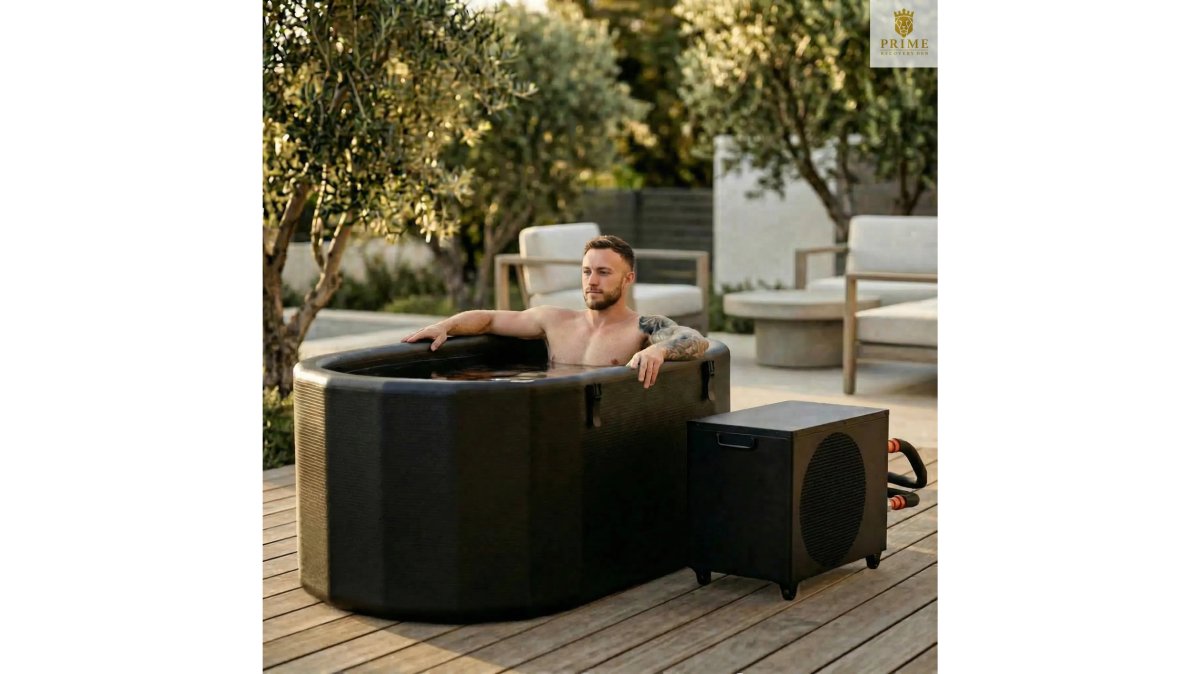
How Long to Stay in a Cold Plunge for Recovery
Table of Contents
- How Long to Stay in a Cold Plunge for Recovery: The Short Answer
- Cold Plunge Temperature for Recovery: Matching Degrees to Minutes
- How to Start a Cold Plunge Routine Without Overdoing It
- Timing Your Plunge Around Workouts and Sleep
- The After-Drop: Rewarming Rules Most Guides Skip
- Best Cold Plunge for Home Use in 2026
- Safety Risks, Warning Signs, and When to Cut It Short
- Conclusion
- Frequently Asked Questions
Last Updated: September 13, 2026
How Long to Stay in a Cold Plunge for Recovery: The Short Answer
The answer most people need is simple: 2 to 3 minutes at 50 to 55°F, two to four times per week. That range captures the benefits of cold water immersion without pushing your body into the territory where cold shock response, cardiovascular strain, and hypothermia risk start to outweigh the upside.
If you have been searching for how long to stay in a cold plunge for recovery, you have probably noticed the advice ranges from 30 seconds to 15 minutes. Both extremes have a place. Neither is right for a beginner walking into their first session. This guide from Prime Recovery Den covers the duration guidelines that actually matter, the water temperature that pairs with each one, and the after-drop most articles skip entirely.


Here is the part most guides get wrong: duration and temperature are not separate decisions. They are one decision with two dials.
The 11-Minute Weekly Threshold
Total weekly immersion time matters more than any single session. A common approach is to accumulate 8 to 11 minutes of cold exposure per week, split across three or four shorter sessions rather than one long one. This is where the research on cold water immersion tends to converge, and it is why a 3-minute plunge four times a week beats a single 12-minute ordeal.
The reason comes down to hormetic stress. Short, controlled cold exposure triggers vasoconstriction, reduces inflammation, and supports muscle soreness recovery without overwhelming the circulatory system. Longer sessions do not multiply the benefit. They multiply the risk.
Cold Plunge Temperature for Recovery: Matching Degrees to Minutes
Cold plunge temperature for recovery works on a sliding scale: colder water means less time. At 50 to 55°F, 2 to 3 minutes is a solid target. At 45°F, drop to 60 to 90 seconds. At 39°F and below, 30 to 60 seconds is enough for most people.

| Water Temperature | Session Duration | Best For |
|---|---|---|
| 55-60°F | 3-5 minutes | Beginners, first two weeks |
| 50-55°F | 2-3 minutes | Standard recovery protocol |
| 45-50°F | 90 sec-2 min | Experienced, post-workout |
| 39-45°F | 30-90 seconds | Advanced, acclimatized users |
| Below 39°F | Not recommended | Medical supervision only |
Cold shock response is the reason for the floor on time, not the ceiling on cold. The first 30 to 60 seconds of immersion trigger a sympathetic nervous system surge: gasping, rapid heart rate, and a spike in blood pressure. That response fades as you acclimatize, which is why beginners should start warm and short rather than cold and brave.
Why 50°F Is the Practical Floor for Most People
Fifty degrees Fahrenheit is cold enough to produce the vasoconstriction and inflammation reduction that make cold plunging worth doing, but warm enough that a healthy adult can control their breathing within the first minute. Below that, the cold shock response intensifies sharply and the therapeutic window narrows. You are no longer recovering. You are enduring.
For anyone with cardiovascular conditions, uncontrolled blood pressure, or a history of cold-related health events, talk to a physician before your first plunge. Cold water immersion is a cardiovascular stressor, and that is the entire point, but it is also why it is not a universal recommendation.
How to Start a Cold Plunge Routine Without Overdoing It
Learning how to start a cold plunge routine comes down to one principle: progress by time before you progress by temperature. Most beginners do the opposite, chasing colder water while their body is still learning to handle the first 30 seconds.

Start at 60°F for 2 minutes. Stay there for a full week. Then drop the temperature by 3 to 5 degrees or add 30 seconds, never both at once.
A Four-Week Beginner Progression
- Week 1: 60°F, 2 minutes, three sessions. Focus on slow exhales.
- Week 2: 57°F, 2.5 minutes, three sessions. Add a 10-second hold at the end.
- Week 3: 54°F, 3 minutes, three sessions. Practice box breathing before entry.
- Week 4: 50-52°F, 3 minutes, four sessions. You are now at a standard recovery protocol.
Acclimatization is real, and it is the reason this progression works. Your cold shock response weakens with repeated exposure, your shivering threshold drops, and your cold tolerance rises. What felt brutal in week one becomes manageable by week four.
Timing Your Plunge Around Workouts and Sleep
Post-workout recovery is where cold plunging earns its reputation, but the timing is more specific than most people assume. For strength and hypertrophy goals, wait at least four hours after lifting before you plunge. Cold water blunts the inflammatory signaling that drives muscle adaptation, so plunging immediately after a heavy session can reduce the very gains you trained for.
For endurance athletes and anyone chasing soreness relief, the window is wider. A plunge 1 to 3 hours after a hard run or ride reduces delayed onset muscle soreness, or DOMS, without interfering with the training stimulus. If your priority is feeling better tomorrow rather than growing bigger this month, plunge sooner.
Sleep is the other lever. A late-evening plunge can work in your favor because the drop in core body temperature after immersion mirrors the natural cooling that precedes sleep. The catch is the after-drop, which we will get to next. Plunge too close to bedtime without rewarming properly and you will lie awake shivering instead of sleeping.
The After-Drop: Rewarming Rules Most Guides Skip
After-drop is the continued fall in core body temperature that happens after you exit the water, sometimes for 20 to 40 minutes. It is the single most underestimated risk in home cold plunging, and it is why people who feel fine climbing out can be shivering uncontrollably ten minutes later.
The fix is active rewarming, not passive. Towel dry immediately, dress in layers including a hat, and move. A brisk walk, light calisthenics, or a warm shower all raise core temperature faster than sitting under a blanket.
- Dry off completely before dressing, damp skin accelerates heat loss
- Layer up including extremities, hands and feet lose heat fastest
- Drink something warm, not hot, to avoid sweating
- Avoid alcohol entirely, it dilates blood vessels and accelerates core cooling
Post-plunge rewarming techniques are where individualized protocols based on body composition matter most. People with lower body fat percentages lose core heat faster and need more aggressive rewarming. If you are lean and you finish a plunge feeling fine but shaky 15 minutes later, that is after-drop, and it means your rewarming routine needs work, not your plunge.
Best Cold Plunge for Home Use in 2026
The best cold plunge for home use in 2026 is one that holds temperature reliably, fits your space, and makes daily use easy enough that you actually do it. Recovery only works if the routine sticks, and a tub that requires hauling ice every morning will not stick.
For most households, the Nicebeam Cryo Pro XXL Inflatable Cold Plunge Tub is the practical starting point. It holds 216 gallons, fits users up to 6'9", and connects to any water chiller for ice-free operation. Setup takes minutes, it works indoors or outdoors, and it brings that first cold shock response under your control rather than your guesswork.
If you want a permanent fixture, the Fire Cold Plunge All-In-One cools to 33°F with a built-in compressor, uses chlorine-free ozone disinfection, and stays weatherproof down to -20°F. No external chiller, no plumbing. There is a real difference between a tub you assemble and a tub that becomes part of the room, and this one makes cold plunging feel less like a chore and more like a ritual you look forward to.
The RevX Acrylic X Tub with LUX Chiller is the deepest option, over 34" tall for full above-the-shoulder submersion in an upright position. Three-inch insulated walls hold the cold, adjustable jets break the thermal barrier, and the acrylic finish looks like it belongs in a designed space rather than a garage. If you have been worried that recovery equipment will make your home look industrial, this is the piece that answers that concern.
For a portable, lower-commitment entry, the FCP Premium XL Cold Plunge Tub Kit includes a 120-gallon tub, a 1/3 HP chiller, insulated lid and hoses, and a travel bag. It moves between home and gym without a permanent installation.
| Model | Capacity | Temperature Range | Best For |
|---|---|---|---|
| Nicebeam Cryo Pro XXL | 216 gal | Chiller-dependent | Beginners, flexible placement |
| Fire Cold Plunge All-In-One | Residential | Down to 33°F | Permanent outdoor setups |
| RevX Acrylic X Tub + LUX | 34"+ deep | 34-104°F | Designed indoor spaces |
| FCP Premium XL Kit | 120 gal | Chiller-dependent | Portable, travel-friendly |
What most reviews miss is that the tub matters less than the routine. A $7,500 acrylic plunge you use twice a month delivers less recovery than a $1,099 kit you use four times a week. Buy for the habit you will actually keep.
Safety Risks, Warning Signs, and When to Cut It Short
Hypothermia risk begins when core body temperature drops below 95°F, and it does not announce itself loudly. The early signs are subtle: uncontrolled shivering that does not stop after you exit, numbness in fingers and toes, slurred speech, and a sudden feeling of warmth that makes you want to stay in longer. That last one is a warning, not a comfort.
Get out immediately if you experience:
- Shivering you cannot control within 2 minutes of exiting
- Numbness that persists past 10 minutes of rewarming
- Dizziness, confusion, or difficulty speaking
- Chest pain or irregular heartbeat at any point
Cardiovascular strain is highest in the first 60 seconds. If you have a heart condition, high blood pressure, or are pregnant, get medical clearance first. Never plunge alone if you are new to it, and never combine cold immersion with alcohol.
Beginners should also watch for the trap of ego. The person who stays in 8 minutes on day three is not tougher than the person who stops at 3. They are just closer to an after-drop they are not prepared for.
Conclusion
The duration question has a real answer: 2 to 3 minutes at 50 to 55°F, most days, with a total weekly target near 10 minutes. What makes that protocol work is not the number itself but the environment you build around it, one where a plunge fits into your day without friction and rewarming is treated as part of the routine rather than an afterthought.
At Prime Recovery Den, we built our cold plunge collection around that idea. The Nicebeam Cryo Pro XXL makes daily immersion effortless with chiller-ready operation and room for two. The Fire Cold Plunge All-In-One turns a corner of your home into a permanent recovery space with ozone disinfection and no plumbing. The RevX Acrylic X Tub gives you full above-the-shoulder submersion in a piece that looks intentional in any room.
Recovery is not about enduring the cold. It is about creating a space you return to, session after session, because it makes you feel sharper, calmer, and more in control of your own body. Shop all and build the sanctuary your recovery deserves.
Frequently Asked Questions
Does cold plunge duration vary based on water temperature?
Yes, and temperature is the first variable to adjust. At 50-55°F, a 3-5 minute session delivers the same cold stimulus as 60-90 seconds at 39-45°F. Most home owners set their chiller between 45-50°F and hold sessions to 2-3 minutes. If you drop below 45°F, shorten the plunge and never stack a long duration on top of near-freezing water.
What are the risks of staying in a cold plunge too long?
Extended exposure drives core body temperature down and raises the risk of hypothermia, especially in water below 50°F. Warning signs include uncontrolled shivering, numbness in the fingers and toes, slurred speech, and confusion. Cardiovascular strain is real too: cold shock response spikes heart rate and blood pressure in the first 30 seconds. Exit immediately if shivering becomes uncontrollable.
What not to do after a cold plunge?
Skip the hot shower immediately after. Rapid rewarming widens blood vessels fast and can cause a dizzy spell. Instead, towel dry, layer on warm clothing, and let your body rewarm gradually over 15-20 minutes. Avoid driving until shivering stops, and do not jump straight into another intense workout. A warm drink and light movement help circulation return to normal.
How often should you use a cold plunge for muscle recovery?
Two to four sessions per week covers most recovery needs. Research on cold water immersion points to roughly 11 minutes of total cold exposure per week, split into short sessions, as the threshold where benefits show up. Daily plunging is fine if sessions stay short, but give yourself one or two rest days if you are new to cold exposure.

Leave a comment
This site is protected by hCaptcha and the hCaptcha Privacy Policy and Terms of Service apply.