

Cold Plunge Routine for Better Sleep: 2026 Guide
Table of Contents
- Why Cold Water Immersion Before Bed Changes Your Sleep
- Cold Plunge Duration for Sleep: How Long Is Enough
- Home Cold Plunge Setup for Beginners: What You Actually Need
- Cold Plunge Safety Protocols Every Beginner Should Follow
- Your First Four Weeks: A Cold Plunge Routine for Better Sleep
- Cold Plunge Routine Mistakes That Sabotage Sleep
- Frequently Asked Questions
Last Updated: September 18, 2026
Why Cold Water Immersion Before Bed Changes Your Sleep
Cold water immersion before bed works because of a simple temperature shift. Your body sleeps best when its core temperature drops. A cold plunge routine forces that drop early, then lets the rebound happen while you're already under the covers.

The catch is timing. Plunge too late and you'll lie awake wired. Plunge too early and the effect fades before bedtime.
The Physiology: Core Body Temperature and Sleep Latency
Cold water hits your skin and triggers vasoconstriction. Blood vessels near the surface tighten. Blood moves inward to protect your organs. This is the cold shock response, and it's why your first ten seconds feel like a slap.
Then comes the rebound. When you step out, vasodilation opens those vessels again. Warm blood returns to your skin. Your core temperature settles lower than it started. That lower baseline is what your brain reads as a signal to wind down.
Sleep latency, the time it takes to fall asleep, shortens when core temperature drops at the right moment. Your circadian rhythm expects this dip. A plunge mimics it.
Cold exposure also nudges the parasympathetic nervous system into gear. That's the rest-and-digest branch. Your heart rate slows. Breathing deepens. Some researchers link this to vagus nerve stimulation, which supports the calm state you want before bed.
What the Research Says About Cold Exposure and Sleep Quality
The evidence here is promising but not settled. Many small studies link cold exposure to better subjective sleep quality, but results vary by timing, water temperature, and the person.
What's clearer is the mechanism. Cold water immersion affects core body temperature, cortisol regulation, and the autonomic nervous system. All three play a role in deep sleep and REM cycle quality.
A common mistake is expecting one plunge to fix years of poor sleep. It won't. Think of it as one lever among several: light exposure, caffeine timing, and a consistent bedtime still matter.
Cold Plunge Duration for Sleep: How Long Is Enough
The best cold plunge duration for sleep is often suggested to be 2 to 3 minutes at 50 to 55°F for most beginners. Longer isn't necessarily better; past a certain point, it may add stress rather than improve sleep.
Start shorter than you think you need. Here's a sensible progression:
- Week 1: 30 to 60 seconds at 55 to 60°F
- Week 2: 90 seconds at 52 to 57°F
- Week 3: 2 minutes at 50 to 55°F
- Week 4: 2 to 3 minutes at 48 to 52°F
Water temperature regulation matters more than duration. A 90-second plunge at 48°F hits harder than 4 minutes at 60°F.
Timing Your Plunge: How Long Before Bed to Immerse
Plunge 2 to 4 hours before bed. That window lets your core temperature drop, then stabilize, without leaving you buzzed at lights-out.
Plunge at 6 p.m. for a 10 p.m. bedtime. Plunge at 5 p.m. for a 9 p.m. bedtime. If you can only plunge right before bed, use warmer water and shorter sessions.
Home Cold Plunge Setup for Beginners: What You Actually Need
A home cold plunge setup for beginners needs four things: a tub, cold water, a way to keep it cold, and a safe place to step out. Everything else is optional.

You don't need a built-in unit to start. You need something you'll actually use on a Tuesday night.
Choosing Your First Tub: Inflatable, Acrylic, or All-in-One
Inflatable tubs cost the least and store easily. Acrylic tubs hold temperature better and look like furniture. All-in-one units skip the ice bags entirely.
Nicebeam Cryo Pro XXL Inflatable Cold →
| Setup | Best For | Chiller Needed | Feel |
|---|---|---|---|
| Inflatable tub | Renters, tight spaces | Yes, or ice | Light, portable, easy to move |
| Acrylic tub + chiller | Daily users, permanent spot | Yes, included | Solid, spa-like, built to stay |
| All-in-one unit | Low-maintenance households | No, built in | Seamless, quiet, always ready |
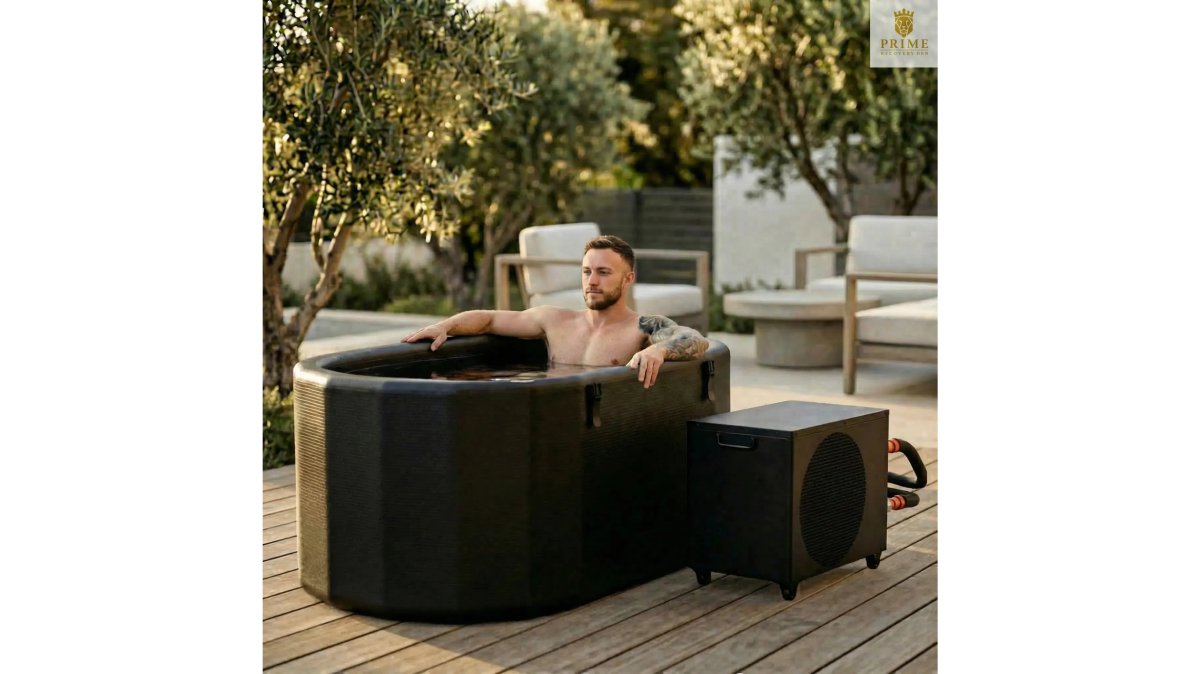
The Nicebeam Cryo Pro XXL Inflatable Cold Plunge Tub holds 216 gallons and fits people up to 6'9". It connects to any chiller and folds into a carry bag.
Cold Plunge Safety Protocols Every Beginner Should Follow
Cold plunge safety protocols come down to three rules: never plunge alone, never push past shivering, and never ignore a health condition.
Watch for these warning signs:
- Numbness in fingers or toes
- Uncontrollable shivering that won't stop
- Dizziness or confusion
- Chest pain or shortness of breath
Your First Four Weeks: A Cold Plunge Routine for Better Sleep
Build a cold plunge routine for better sleep by changing one variable at a time. Don't add colder water and longer sessions in the same week. The four-week frame below is a starting template, not a prescription, your chronotype and your wearable data should shape how you run it.
Match the Protocol to Your Chronotype
Most guides treat every sleeper the same. They shouldn't. Morning types and evening types respond to cold exposure on opposite schedules.
- Morning chronotypes (early risers): A morning plunge tends to boost alertness and cortisol, which is useful for waking but can flatten the natural evening temperature dip. If you're a morning type, keep your plunge in the morning and let your evening wind-down do the sleep work. An evening plunge may leave you wired.
- Evening chronotypes (night owls): An early-evening plunge 2 to 4 hours before bed tends to work with your delayed circadian rhythm rather than against it. Night owls often report the strongest sleep-latency improvements from evening sessions.
- Intermediate types: Test both windows for two weeks each and compare sleep latency, not how the plunge felt.
Use Your Wearable to Tune the Protocol
If you wear a sleep tracker, watch your deep sleep and resting heart rate, not just total hours. Integration with wearable sleep tracking turns guesswork into feedback.
A simple framework:
- Baseline first. Log 7 nights without plunging. Record sleep latency, deep sleep minutes, and resting heart rate.
- Change one variable. Add the plunge at a fixed time and temperature for 7 nights.
- Compare, don't guess. If sleep latency drops and resting heart rate trends down, hold the protocol. If resting heart rate climbs or you wake more often, shorten the session or move it earlier.
- Adjust one thing per week. Colder water, longer duration, or a new time slot, never two at once.
Beat the Dread Before It Beats You
The psychological barrier stops more people than the cold does. The dread before a plunge is real, and it peaks in the 10 minutes before you get in, not in the water itself.
What works:
- Shrink the ask. Commit to 60 seconds, not 3 minutes. You can always stay longer once you're in.
- Fix the time. A scheduled plunge removes the daily decision. Motivation fades; a calendar reminder doesn't.
- Pair it with something you like. A podcast, a specific playlist, or a warm robe waiting on a hook turns the plunge into a ritual instead of a test.
- Reframe the shock. The first 10 seconds are supposed to feel like a slap. That's the cold shock response doing its job, not a sign you're doing it wrong.
Cold Plunge Routine Mistakes That Sabotage Sleep
The biggest mistake is plunging too close to bedtime. Cold water is a stressor. It wakes the sympathetic nervous system before it calms it.
Other common errors:
- Skipping the warm-up and going straight to bed cold and shivering
- Using water so cold you tense up the whole time
- Plunging every night before your body adapts
- Ignoring post-plunge warming protocols
SHOP ALL
Frequently Asked Questions
How long should I cold plunge before bed to improve sleep?
Start with 1 to 3 minutes at 50 to 59 degrees Fahrenheit, roughly 1 to 2 hours before bed. This gives your core body temperature time to drop naturally, which supports sleep latency. As you acclimatize over several weeks, you can extend to 5 minutes. Going longer than 10 minutes close to bedtime can trigger a cold shock response that leaves you wired instead of relaxed.
Does cold plunging actually improve sleep quality?
Cold water immersion triggers vasoconstriction, then vasodilation as you rewarm. That cycle helps regulate core body temperature, which is tied to your circadian rhythm. Many people report falling asleep faster and staying in deep sleep longer, though individual results vary with timing, water temperature, and how consistently you practice. A cold plunge routine works best when paired with a consistent pre-sleep wind-down.
What is the proper cold plunge safety protocol for beginners?
Never plunge alone, keep sessions under 5 minutes at first, and exit immediately if you feel numb, dizzy, or short of breath. Avoid alcohol beforehand, and skip cold immersion if you have heart conditions, uncontrolled blood pressure, or Raynaud's syndrome without clearing it with your doctor. Always warm up gradually afterward with dry layers and movement, not a hot shower immediately.
Can I start a cold plunge routine at home without a chiller?
Yes. Beginners can use a 120-gallon inflatable tub with ice, though a chiller keeps temperatures consistent and cuts the ice runs. A chiller-ready tub like the Nicebeam Cryo Pro XXL connects to any ice bath chiller and holds 216 gallons, so you can add cooling later. For a fully self-contained option, an all-in-one unit with a built-in compressor maintains 33 degrees Fahrenheit without external equipment.

Leave a comment
This site is protected by hCaptcha and the hCaptcha Privacy Policy and Terms of Service apply.