

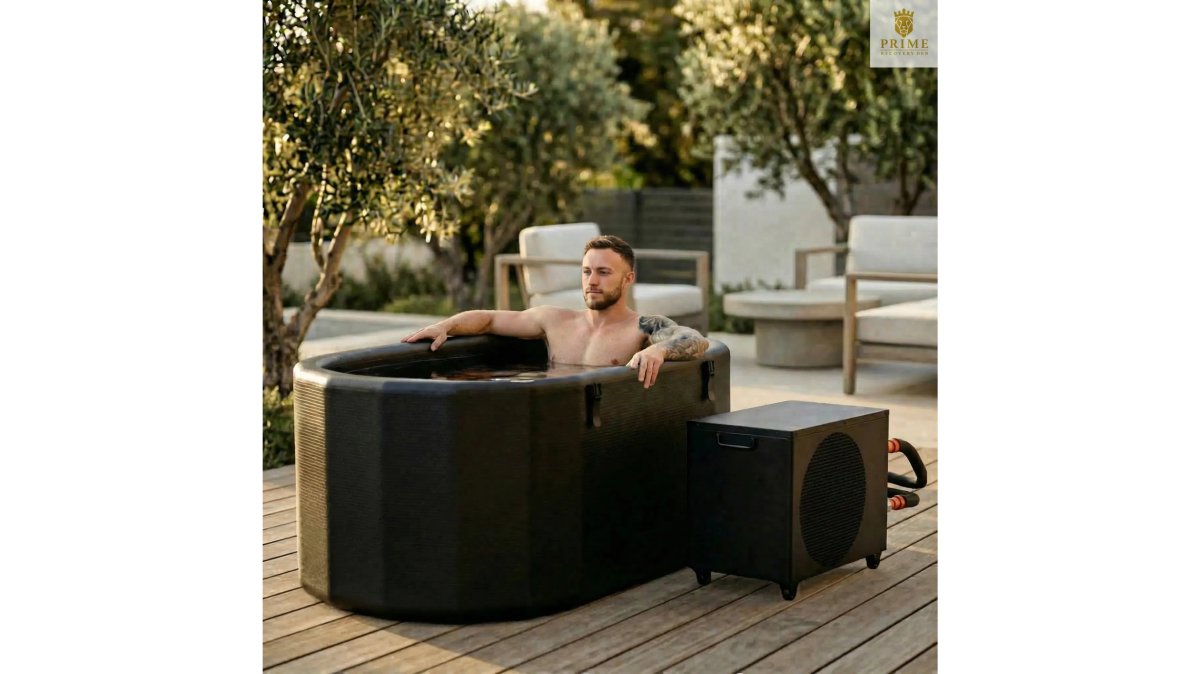
Cold Plunge Temperature for Beginners: A 2026 Guide
Table of Contents
- What Temperature Should Beginners Start At?
- Cold Plunge Duration for Beginners: How Long Is Enough?
- Cold Plunge Safety Tips Every Beginner Should Know
- Psychological Preparation for Your First Plunge
- Best Cold Plunge for Home Use 2026: What to Look For
- How to Progress Your Cold Plunge Temperature Over Time
- Frequently Asked Questions
Last Updated: September 16, 2026
What Temperature Should Beginners Start At?
For most beginners, the right cold plunge temperature is 50-59°F. That range delivers the benefits of cold water immersion without pushing your body past what it can safely handle in the first few weeks.

The first plunge is a nervous event. Your breath catches, your shoulders tense, and every instinct says climb out. Choosing a gentler temperature is how you turn that moment into something you actually look forward to.
What temperature for cold plunge beginners is the question that decides whether this becomes a habit or a one-time experiment. Start at the warm end of the range, around 57-59°F, and let your body tell you when to go colder.

Why 50-59°F Is the Sweet Spot
Cold water immersion triggers a cascade: peripheral blood vessels narrow (vasoconstriction), your sympathetic nervous system fires, and your core body temperature begins to shift. All of that happens at 59°F just as it does at 45°F. The difference is how violently your body reacts.
At 50-59°F, you get a controlled physiological stress response you can breathe through. Below 50°F, the thermal shock intensifies sharply, and the hypothermia risk climbs with every minute you stay in. Beginners who start too cold rarely build cold tolerance. They build dread.
How to Measure Water Temperature Accurately
A floating or probe thermometer beats guessing every time. Water feels colder than its actual reading, especially on a humid day, so trust the instrument.
Check the temperature before you step in, not after. If you're using a chiller, verify the set point matches what the water actually reads. A 3-4°F drift between the display and the tub is common and worth catching early.
Cold Plunge Duration for Beginners: How Long Is Enough?
Start with 30-60 second sessions. That's the entire answer for your first two weeks. Cold plunge duration for beginners matters far more than hitting a target temperature, and stacking minutes too early is the fastest route to a bad experience.
Build gradually: 30 seconds for sessions one through three, 45 seconds for the next few, then 60 seconds. Once a full minute feels manageable at your current temperature, you can either extend the time or drop the temperature, but not both at once.
Starting with 30-60 Second Sessions
The shivering reflex is your body's attempt to generate heat. In short sessions, it's a normal adaptive response. In long ones, it's a warning.
A common mistake is treating the plunge like a competition. Nobody is timing you. A disciplined 45 seconds at 55°F does more for your recovery protocol than a grim three minutes you spend fighting panic.
Signs You Should Get Out
Leave the water immediately if you experience numbness in your fingers or toes, uncontrolled heavy shivering, dizziness, or a sudden drop in mental clarity. These signal that your core body temperature is falling faster than is safe.
Mild shivering in the first 30 seconds is expected. Shivering you can't control after a minute means the session is over. Get out, dry off, and layer up.
Cold Plunge Safety Tips Every Beginner Should Know
Never plunge alone, always know your exit route, and never combine cold exposure with alcohol. Those three cold plunge safety tips prevent the majority of incidents. Everything else is refinement.
Cold water immersion is genuinely safe for most healthy adults when temperature and immersion time stay within sensible limits. The risks come from ego, isolation, and ignoring what your body is telling you.
Managing Afterdrop After You Exit
Afterdrop is the continued fall of your core body temperature after you leave the water. It's the most under-discussed part of cold plunging and the reason you can feel colder five minutes out than you did in the tub. The phenomenon occurs because cold blood from your extremities returns to your core, lowering your internal temperature even as you shiver.
Dry off completely, dress in warm layers, and move around. A slow walk or light stretching restores circulation. Skip the hot shower immediately after; a gradual rewarm is gentler on your circulatory system than a sudden blast of heat. A common pattern is to feel fine for two minutes, then start shivering uncontrollably. That's afterdrop, and it's why you should never plunge right before bed or when you can't rewarm properly.
Nicebeam Cryo Pro XXL Inflatable Cold →
Health Conditions That Require Medical Clearance
Talk to a physician before your first plunge if you have a heart condition, uncontrolled high blood pressure, a history of stroke, Raynaud's phenomenon, or you're pregnant. Cold water immersion places real demand on your cardiovascular system.
This isn't a formality. The sympathetic nervous system response to cold is intense, and for some conditions that surge is the risk, not the temperature itself. The sympathetic nervous system response to cold is intense, and for some conditions that surge is the risk, not the temperature itself.
If you're unsure, start with a doctor's visit. It's a small step that makes your plunge routine safer and more sustainable. And when you're ready, Prime Recovery Den offers chiller-ready tubs and all-in-one units that let you control temperature precisely, so you can stay within your safe range. Our products are designed to make cold plunging accessible and enjoyable, helping you feel confident and refreshed after every session.
Psychological Preparation for Your First Plunge
The mental side decides more outcomes than the thermometer does. The mental side decides more outcomes than the thermometer does. The psychological preparation is what most guides skip entirely.
Before you step in, spend 60 seconds on controlled breathing. Slow, deliberate exhales through the mouth. This blunts the gasp reflex and gives your parasympathetic activation something to work with.
Then commit. Hesitating with one foot in the water is worse than a clean entry. Step in, sit down, and start your breathing immediately. The first 15 seconds are the hardest, and they always pass.
Best Cold Plunge for Home Use 2026: What to Look For
For home use, prioritize chiller compatibility, insulation, and depth over brand names. A tub that holds temperature without ice is the difference between a daily habit and a chore you abandon.
| Setup | Temperature Range | Best For | Maintenance |
|---|---|---|---|
| Inflatable tub + external chiller | Chiller-dependent | Renters, flexible spaces | Drain and refill |
| All-in-one compressor unit | Down to 33°F | Year-round outdoor use | Ozone or filter |
| Acrylic tub + chiller | 34-104°F | Dedicated recovery rooms | Filtration system |
| DIY tub + separate chiller | Chiller-dependent | Custom builds | Full system setup |
How to Progress Your Cold Plunge Temperature Over Time
Drop the temperature by 2-3°F only after two full weeks at your current setting feel routine. Gradual progression is the whole game, and acclimatization rewards patience.
Signs You're Ready to Go Colder
Your body gives clear signals when it's adapted. You're ready to drop the temperature when:
- You can step in without gasping or tensing your shoulders.
- Your breathing stays slow and controlled for the full session.
- You finish the plunge feeling energized rather than drained.
- You no longer dread the next session.
How to Adjust When You Plateau
Plateaus are normal. If you've been at the same temperature for three weeks and it still feels hard, you have two options: extend your session by 15 seconds (up to a maximum of 3 minutes), or drop the temperature by just 1-2°F. Never increase both time and cold at once.
Tracking Your Progress
Track two things: the temperature and how you felt afterward. If your sleep, mood, and muscle soreness improve, you're at a good working temperature. If you're dreading sessions, you went too cold too fast. Back up one stage and stay there.
Cold tolerance is built through repetition, not intensity.
Frequently Asked Questions
What is the safest starting temperature for a cold plunge?
Most beginners do best starting between 50°F and 59°F. This range delivers the benefits of cold water immersion without overwhelming your system. Water below 50°F triggers a stronger thermal shock response, making it harder to control your breathing and stay calm. Start at the warmer end, around 55-59°F, and gradually lower the temperature as your cold tolerance improves over several weeks.
How long should a beginner stay in a cold plunge?
Start with 30 to 60 seconds per session. The goal is to let your body experience the cold and practice controlled breathing, not to endure maximum time. Once you can stay calm for a full minute at your starting temperature, add 15-30 seconds per week. Most beginners reach 2-3 minutes within four to six weeks. Never push past shivering that you cannot control.
Does the water temperature need to be freezing for benefits?
No. Research on cold water immersion shows that temperatures between 50°F and 59°F still activate the adaptive response, including vasoconstriction, reduced inflammation, and vagus nerve stimulation. You do not need ice-cold water to support muscle recovery, mood, or circulation. Consistency at a moderate temperature delivers more benefit than occasional extreme cold exposure.
What equipment do I need to maintain a consistent cold plunge temperature?
A chiller-compatible tub is the most reliable option. The Nicebeam Cryo Pro XXL Inflatable Cold Plunge Tub connects to any water chiller through dedicated ports, so you set a temperature and it stays there without adding ice. For a more permanent setup, the RevX Acrylic X Tub with LUX 1.5HP Chiller holds temperatures from 34°F to 104°F. Both options remove the guesswork of manual ice management.

Leave a comment
This site is protected by hCaptcha and the hCaptcha Privacy Policy and Terms of Service apply.