
Best Cold Plunge for Home Use 2026: Top 7 Models Reviewed
Table of Contents
- Best Cold Plunge for Home Use 2026: Quick Comparison
- How We Tested and Selected These Cold Plunges
- 1. The Plunge All-In Gen 2: Premium All-in-One System
- 2. Modtub 2.0: Best Value for Comfort and Insulation
- 3. Edge Theory Labs Elite: Portable Cold Plunge with Heat Therapy
- 4. Polar Monkeys Brainpod 2.0: Luxury Design Cold Plunge
- 5. Ice Barrel 400: Space-Efficient Vertical Plunge
- 6. The Ice Pod: Budget-Friendly Entry-Level Option
Best Cold Plunge for Home Use 2026: Top 7 Models Reviewed
Last Updated: July 24, 2026
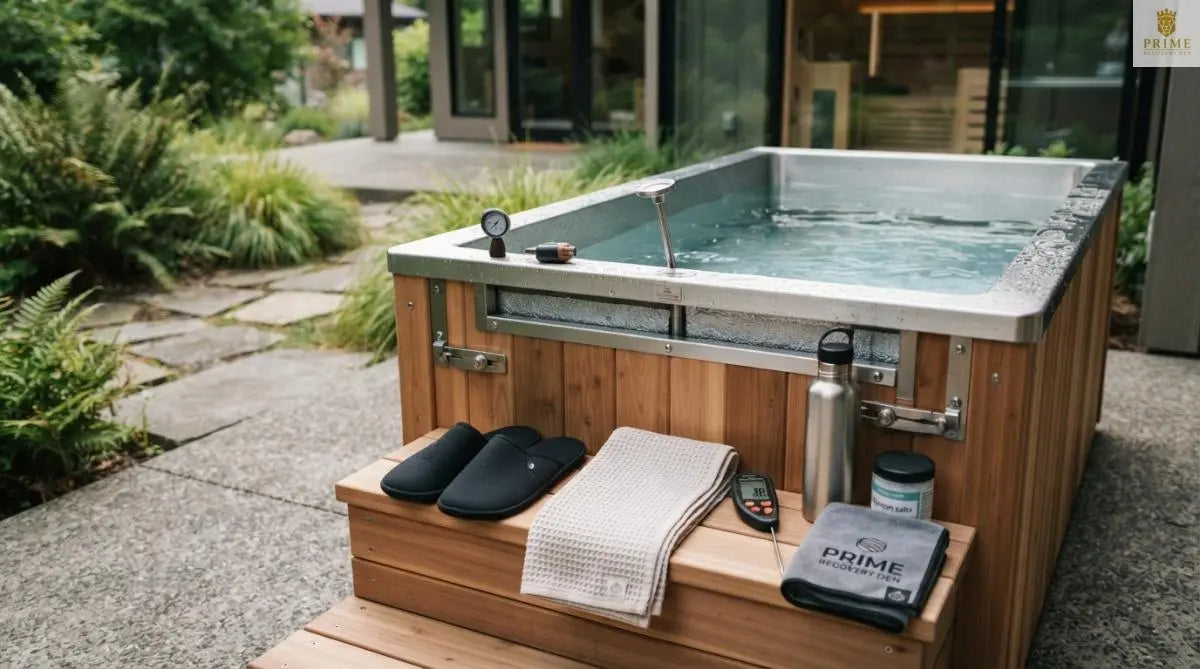
Finding the best cold plunge for home use requires balancing performance, durability, and integration into your living space. Cold water immersion therapy has moved beyond elite athletic recovery into mainstream wellness. At Prime Recovery Den, we've tracked the evolution of home cold plunge technology across chiller power, insulation efficiency, water filtration, and long-term operational costs.
Best Cold Plunge for Home Use 2026: Quick Comparison
| Model | Starting Price | Key Advantage | Best For | Chiller Power |
|---|---|---|---|---|
| The Plunge All-In Gen 2 | $4,990 | Premium integration, app control | All-in-one convenience seekers | 1.5 HP |
| Modtub 2.0 | $2,495 (on sale) | Ergonomic design, insulation | Comfort-focused users | 1 HP |
| Edge Theory Labs Elite | $4,990 | Portability + heat therapy | Athletes and renters | 1 HP |
| Polar Monkeys Brainpod 2.0 | $10,990 | Luxury aesthetics | Design-conscious homes | Variable |
| Ice Barrel 400 | $1,149.99 | Space-efficient vertical design | Budget-conscious beginners | Manual ice |
| The Ice Pod | $149 | Ultra-portable entry point | Testing the practice | Manual ice |
| Prime Recovery Den Selection | Contact for pricing | Curated premium options | Sophisticated home integration | Varies |
How We Tested and Selected These Cold Plunges
Our evaluation focused on five measurable criteria: temperature control precision, water filtration effectiveness, insulation quality, installation complexity, and post-purchase support responsiveness. Long-term operational costs matter more than upfront price, a chiller running 4 hours daily for a year adds significant electricity expense. Water circulation systems that fail silently create stagnation problems. Aesthetic integration determines whether your cold plunge becomes a treasured recovery ritual or an eyesore.
1. The Plunge All-In Gen 2: Premium All-in-One System
The Plunge All-In Gen 2 delivers the most integrated cold plunge experience. Temperature control reaches 37°F with a 1.5 HP chiller, and continuous multi-stage filtration keeps water clean for daily immersion without manual intervention. The smart app provides real-time temperature monitoring and scheduling.
The 1.5 HP chiller cools water faster than 1 HP competitors, reducing wait time between sessions by roughly 30 minutes. The circulation pump handles mineral-heavy water without cavitation, and filtration cartridges last 6-8 months with daily use, double the lifespan of budget competitors. Setup takes approximately 6-8 hours for electrical connection and initial water circulation testing.
2. Modtub 2.0: Best Value for Comfort and Insulation
Modtub 2.0 prioritizes user comfort through ergonomic design and exceptional insulation. The reclined ends cradle your head and neck, reducing tension during cold immersion. The 2-inch thick foam-injected walls retain temperature more effectively than thin-walled competitors, heat loss over 24 hours measures at 3-4 degrees Fahrenheit compared to 6-8 degrees for standard acrylic designs.
The chiller cools water to 39°F and maintains that temperature through continuous circulation. For most practitioners, the 2-degree difference from 37°F is imperceptible, yet the lower power requirement reduces electricity costs by roughly 15% annually. Users report significantly higher session completion rates with the reclined design compared to straight-sided tubs.
3. Edge Theory Labs Elite: Portable Cold Plunge with Heat Therapy
Edge Theory Labs Elite solves portability without sacrificing performance. The military-grade drop-stitch PVC material packs into travel bags, yet the 1 HP chiller delivers cooling speeds comparable to rigid competitors. The dual-function heating and cooling capability (37°F to 104°F) enables contrast therapy, alternating cold and heat to amplify circulation benefits.
Setup takes 15 minutes: unfold, fill, connect the chiller, and you're ready. The ozone sanitation system reduces chemical dependency. This system appeals to athletes, renters, and anyone without permanent installation capacity. The trade-off is durability, inflatable walls likely require replacement after 5-7 years, whereas rigid tubs often last 15+ years.
4. Polar Monkeys Brainpod 2.0: Luxury Design Cold Plunge
Polar Monkeys Brainpod 2.0 prioritizes aesthetic sophistication, transforming the cold plunge into a design statement. The modern acrylic construction comes in multiple finishes and accommodates full-body immersion without cramped feeling. The design fits naturally into high-end home environments.
Polar Monkeys Brainpod 2.0 works best for homeowners who see the cold plunge as part of a curated wellness environment.
5. Ice Barrel 400: Space-Efficient Vertical Plunge
Ice Barrel 400 uses vertical immersion in a space-efficient barrel design. The lightweight construction (50 pounds dry) allows relocation without professional help, and the recycled material construction appeals to environmentally conscious users. The critical limitation is the absence of automated cooling, you add ice manually before each session at approximately $8-12 per session depending on your region.
The vertical design fits in 12-15 square feet compared to 40-50 square feet for standard plunges, making it ideal for apartment dwellers. The insulation keeps ice effective for 45-60 minutes before significant temperature rise. Ice Barrel 400 is the entry point for practitioners testing whether cold plunge therapy delivers value before investing in automated systems.
6. The Ice Pod: Budget-Friendly Entry-Level Option
The Ice Pod strips cold plunge to its essence: an insulated, portable tub that works with ice. At $149, it's the lowest barrier to entry for testing cold water immersion. Setup happens in minutes, and the lightweight design (8 pounds) means portability.
The trade-off is obvious: manual ice management and limited temperature precision. An optional chiller can be paired with The Ice Pod, transforming it into a semi-automated system at lower total cost than purchasing a full integrated unit. The Ice Pod works for casual experimentation; if you discover cold plunge therapy delivers genuine recovery benefits, you'll outgrow this system within 2-3 months.
Cold Plunge Benefits: Why Home Recovery Matters
Cold water immersion triggers measurable physiological responses. Vasoconstriction reduces blood flow to muscles, decreasing inflammation markers associated with delayed-onset muscle soreness. The parasympathetic nervous system activation that follows rewarming enhances recovery and sleep quality.
Regular cold exposure improves stress resilience, your body's ability to handle discomfort without triggering panic responses. Temperature matters for outcomes: research shows that 39-41°F water for 2-3 minutes produces measurable anti-inflammatory effects. Frequency matters more than temperature precision. Three to four plunges weekly produces noticeable improvements in recovery metrics.
Cold Plunge Chiller for Home: Power, Performance, and Long-Term Costs
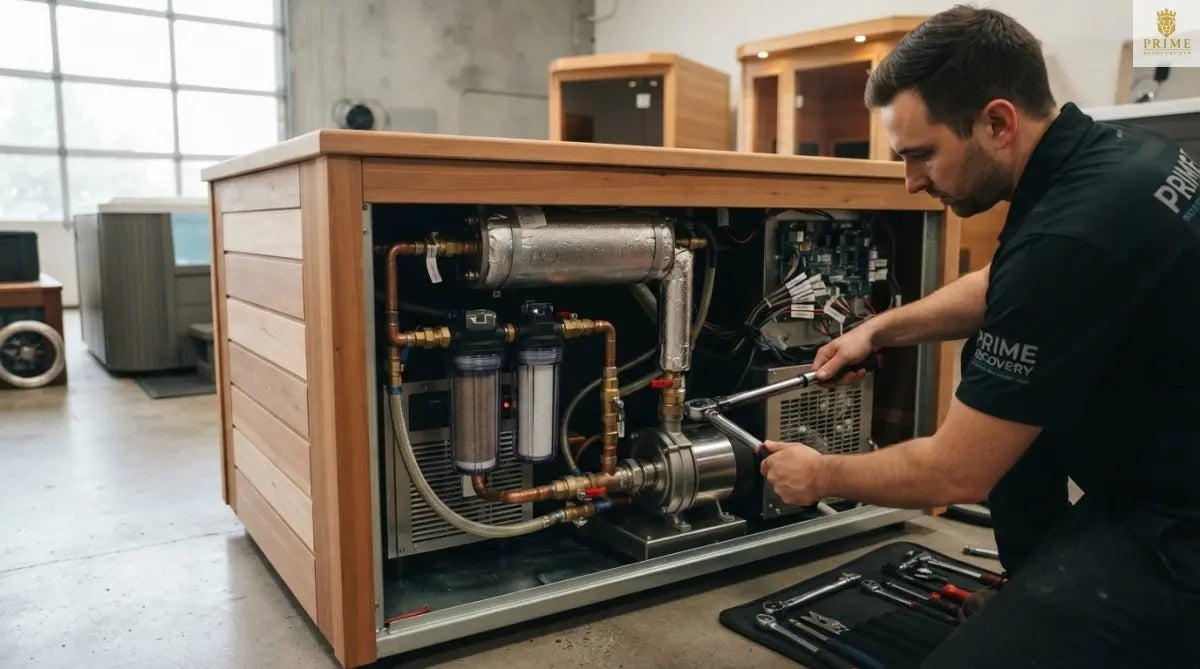
(/products/the-endurance-plunge-chiller) for Home: Power, Performance, and Long-Term Costs]Chiller power determines cooling speed and long-term operational efficiency. A 1 HP chiller cools a 250-gallon plunge from 70°F to 40°F in approximately 4-6 hours. A 1.5 HP chiller accomplishes the same in 2.5-3.5 hours. For daily users, faster cooling means your plunge reaches target temperature before your morning routine.
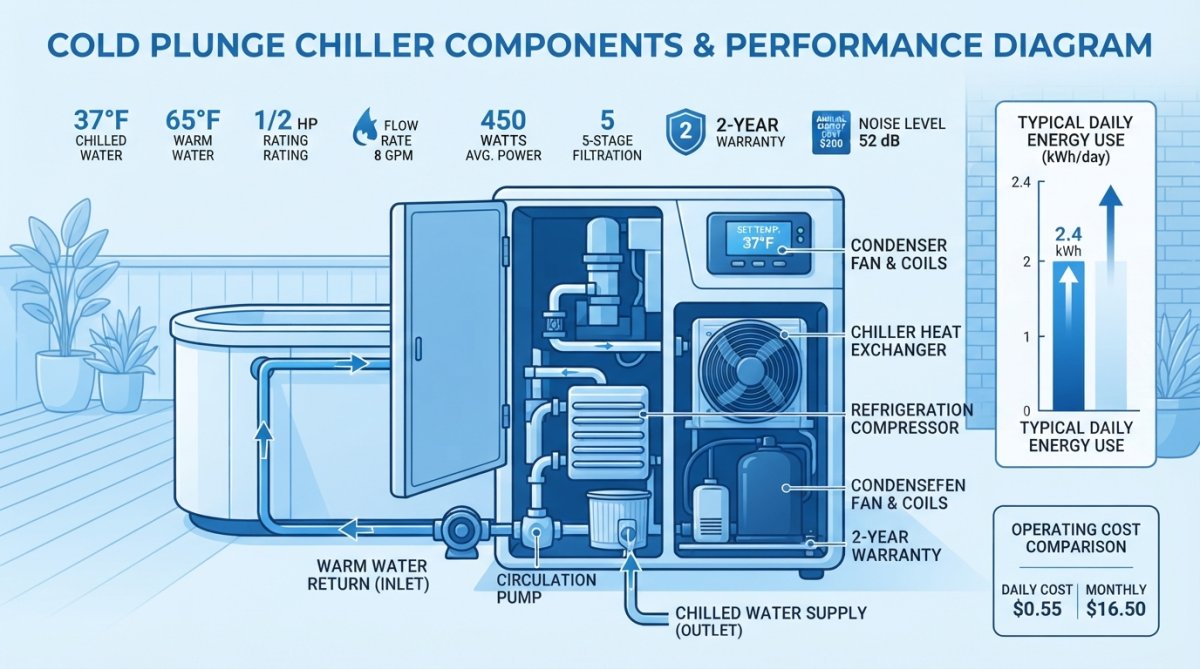
Electricity costs accumulate silently. A 1 HP chiller running 4 hours daily consumes approximately 3 kilowatt-hours, costing $30-50 monthly. Over a year, that's $360-600 in cooling costs alone. A 1.5 HP chiller increases this to $450-750 annually.
Water filtration quality determines maintenance burden. Ozone-based systems reduce chemical dependency and keep water cleaner longer. UV sterilization kills bacteria but requires mechanical filtration alongside it. Verify that seals and gaskets are marine-grade or equivalent, as cheap components fail within 3-5 years.
Cold Plunge vs. Ice Bath: Which Is Right for Your Home
An ice bath uses manual ice addition to achieve cold temperatures. A cold plunge uses an automated chiller to maintain consistent temperatures. Ice baths require active management, you purchase ice, monitor temperature, and manage water chemistry manually. Cold plunges automate the process, with water filtration running continuously.
Research shows that consistency matters more than temperature precision. A person using an ice bath three times weekly at 38°F sees better outcomes than someone using a cold plunge once weekly at 37°F. For home use, a cold plunge makes sense if you'll use it 3+ times weekly.
Maintenance and Water Filtration: Long-Term System Health
Water filtration quality directly impacts maintenance burden and system longevity. A system with poor filtration requires more frequent water changes. A system with excellent filtration can maintain the same water for 4-8 weeks with proper chemical balancing.
Cartridge filtration is the standard approach. Most cartridges last 3-6 months with daily use before flow rate drops significantly. Ozone generators oxidize organic compounds at the molecular level, keeping water cleaner longer and reducing chlorine or bromine dependency. The combination of mechanical filtration plus UV or ozone produces the best water quality.
Water chemistry monitoring requires basic testing. pH should stay between 7.2-7.8, and alkalinity between 80-120 ppm. Test strips cost $10-15 for a bottle of 50. Drain and refill frequency depends on filtration quality and usage, a system with excellent filtration might go 6-8 weeks; a system with basic filtration needs water changes every 2-3 weeks.
Installation and Plumbing Requirements: Getting Setup Right
Installation complexity varies dramatically between models. Some systems require dedicated 220V electrical service; others work with standard 110V outlets. Some need drain plumbing; others allow manual water changes.
The Plunge All-In Gen 2 and Modtub 2.0 require 220V dedicated circuits. Hiring a licensed electrician costs $300-600 depending on distance from your electrical panel. Edge Theory Labs Elite works with standard outlets, simplifying installation dramatically.
Drain plumbing is optional for most systems. You can drain manually using a pump or siphon, which takes 20-30 minutes but requires no permanent installation. Automatic drainage costs $400-800 depending on proximity to existing drainage. Most homeowners underestimate installation time and cost. Budget an extra $500-1,500 for professional help if you're not comfortable with electrical work or plumbing.
Smart Home Integration and App Control
Cold plunge systems with app connectivity allow remote temperature adjustment, scheduling, and performance monitoring. The Plunge All-In Gen 2 leads in this category, offering granular control through its smartphone app. The practical value of app control depends on usage patterns. If you plunge at the same time daily, automation is genuinely useful. If your schedule varies, the convenience diminishes.
For most users, app control is a nice-to-have feature rather than a necessity.
Customer Support and Warranty: Post-Purchase Protection
Warranty coverage varies significantly between manufacturers. The Plunge All-In Gen 2 offers comprehensive coverage on all components for 2 years. Modtub 2.0 provides 1-year coverage but charges a 10% cancellation fee if you need to return the unit after shipping.
Response time to support inquiries matters more than warranty length. Research customer reviews specifically for support experience before purchasing. Spare parts availability determines long-term repairability. Prime Recovery Den prioritizes thoughtful customer support and focuses on craftsmanship, meaning you're working with a team that understands the importance of post-purchase reliability.
Final Thoughts: Building Your Recovery Sanctuary
The best cold plunge for home use 2026 depends on three factors: your usage frequency, your budget, and your aesthetic priorities. A daily user with space and budget constraints should choose The Plunge All-In Gen 2 for its reliability and automation. A comfort-focused user should choose Modtub 2.0 for its ergonomic design and insulation. A renter or traveling athlete should choose Edge Theory Labs Elite for its portability.
Cold plunge therapy works best when integrated into a broader wellness practice that includes recovery, sleep optimization, and stress management. Consistency determines whether you actually experience the physical benefits. Choose a system that removes friction from your daily routine, because the best cold plunge is the one you'll actually use.
At Prime Recovery Den, we understand that recovery infrastructure should reflect your values around health and intentionality. Our curated selection of premium cold plunges and complementary wellness products transforms your personal space into a sanctuary where recovery becomes a daily ritual. Explore our collection to find the system that matches your vision for an intentional, restorative home environment. Cold plunge therapy research and clinical applications shows that consistent practitioners see measurable improvements in recovery metrics and stress resilience.
Frequently Asked Questions
What is the best cold plunge for daily use at home?
The best choice depends on your priorities. The Plunge All-In Gen 2 excels for consistent daily use with reliable temperature control, filtration, and app monitoring. For those prioritizing comfort and insulation, the Modtub 2.0 offers ergonomic design and efficient cooling at a mid-tier price. Your ideal cold plunge should have a reliable chiller unit, effective water filtration system, and temperature stability to support regular immersion therapy and muscle recovery.
How much does a good cold plunge for home cost, and what affects pricing?
Cold plunge pricing varies significantly based on features and construction. Budget options like The Ice Pod start at entry-level costs for manual ice-based systems. Mid-range models with built-in chillers and filtration range higher, while premium systems with advanced insulation, 316 stainless steel construction, and smart app integration command premium pricing. Long-term operational costs also matter, systems with efficient chillers and effective water filtration reduce ongoing maintenance expenses. For current pricing on Prime Recovery Den's curated selection, visit their website for quotes tailored to your specific needs.
What are the main benefits of having a cold plunge at home?
Home cold plunge therapy offers multiple wellness benefits including reduced inflammation, enhanced muscle recovery after exercise, and improved vasoconstriction response. Cold water immersion supports athletic performance and general recovery. Beyond physical benefits, having a dedicated cold plunge in your home creates a sanctuary for intentional wellness practices, eliminates travel time to recovery facilities, and enables consistent, regular cold therapy sessions. The convenience of at-home access encourages more frequent use and integration into your personal wellness routine.
How do I maintain a cold plunge tub at home to keep water clean?
Proper cold plunge maintenance requires a multi-stage approach. Effective water filtration systems remove debris and contaminants during circulation. Many modern plunges include ozone generators and UV sterilization options to maintain water quality without excessive chemical use. Regular water circulation, periodic draining, and filter cleaning are essential maintenance tasks. The frequency depends on usage, daily plungers need more rigorous maintenance. Premium systems like The Plunge include continuous multi-stage filtration, while budget models may require manual ice addition and more frequent water changes. Always follow your specific model's maintenance guidelines.
Are DIY cold plunges worth it compared to buying a pre-built system?
DIY cold plunges can work but involve significant trade-offs. Building your own requires sourcing a tub, chiller unit, filtration system, and handling installation, often complex plumbing work. Pre-built systems like those offered by Prime Recovery Den provide engineered integration, warranty support, customer service, and proven thermal efficiency. While DIY may seem cost-effective initially, hidden expenses in chiller performance, water circulation issues, and maintenance complications often exceed savings. Pre-built cold plunges offer reliability, proper insulation, and simplified setup that justify the investment for most home users.

Leave a comment
This site is protected by hCaptcha and the hCaptcha Privacy Policy and Terms of Service apply.