


Which Sustainable Materials Suit an Eco-Friendly Sanctuary?
Quick Summary
The best sustainable materials for an eco-friendly sanctuary match each zone's demands: naturally rot-resistant Eastern White Cedar for outdoor saunas, removable cedar platforms and sealed tile in wet areas, cork or solid hardwood in dry rooms, and low-VOC finishes for healthier air.
- Map each zone's moisture, foot traffic, air quality and temperature demands before buying anything.
- Eastern White Cedar naturally resists decay and insects, making it a strong choice for outdoor saunas.
- Skip wood flooring in sauna and steam areas and use removable platforms that lift off for cleaning.
- Choose low-VOC or zero-VOC paints and finishes, and ventilate well during application and curing.
- Use reclaimed wood for accents to add character and keep existing timber out of landfill.
Table of Contents
- Why Material Choice Shapes Your Home Sanctuary
- Step 1: Define Your Sanctuary Zones and Their Demands
- Step 2: Choose Sustainable Building Materials for Structure and Shell
- Step 3: Select Natural Flooring Materials That Hold Up Over Time
- Step 4: Pick Low-VOC Paints and Finishes for Healthier Air
- Step 5: Add Reclaimed Wood Interior Design Accents
- Booking Your Sanctuary Materials Plan With Prime Recovery Den
- Frequently Asked Questions
Which Sustainable Materials Suit an Eco-Friendly Sanctuary?
Last Updated: October 31, 2026
Why Material Choice Shapes Your Home Sanctuary
Your sanctuary should feel calm the moment you step inside. At Prime Recovery Den, we believe the materials you choose do most of that work. Wood that holds warmth, surfaces that feel good underfoot, and air that stays clean all shape how restful a space feels.
Sustainable materials are building and finishing products that come from renewable sources, recycled content, or reclaimed stock, and that are kept safe and durable over their life. Choosing them is about more than the planet. It is about a space you want to spend time in, year after year.
Here is the core idea we will return to: match each material to the job it has to do. A sauna wall needs different properties than a living room floor. Once you see that, the choices get much simpler.
- Pick materials for how the space will be used, not just how it looks.
- Favor natural and recycled content where performance holds up.
- Plan for maintenance from day one so the space stays beautiful.
Step 1: Define Your Sanctuary Zones and Their Demands
Start by mapping the zones you plan to create. A cold plunge area, a sauna, a quiet reading nook, and a game room all ask different things of your materials.
Think through each zone's demands before you buy anything:
- Moisture level: Saunas and outdoor areas face steam, rain, and snow.
- Foot traffic: High-use floors need more wear resistance.
- Air quality: Enclosed rooms benefit from low-emission finishes.
- Temperature: Heat-exposed surfaces must handle warmth without warping.
Outdoor sanctuary spaces face weather year-round, so they need materials built to shed water and resist decay. Indoor spaces prioritize comfort, air quality, and a finish that suits your décor. Many homeowners find that listing these demands on paper makes the material choice clear within an afternoon.
Step 2: Choose Sustainable Building Materials for Structure and Shell
The structure of your sanctuary is where durability matters most. Look for wood that resists rot naturally and metal that will not corrode. The sustainable building materials you pick here will set the foundation for every other choice.
Eastern White Cedar for Outdoor Saunas
Eastern White Cedar is a strong choice for outdoor saunas. It naturally resists decay and insects, and it carries a pleasant aroma.
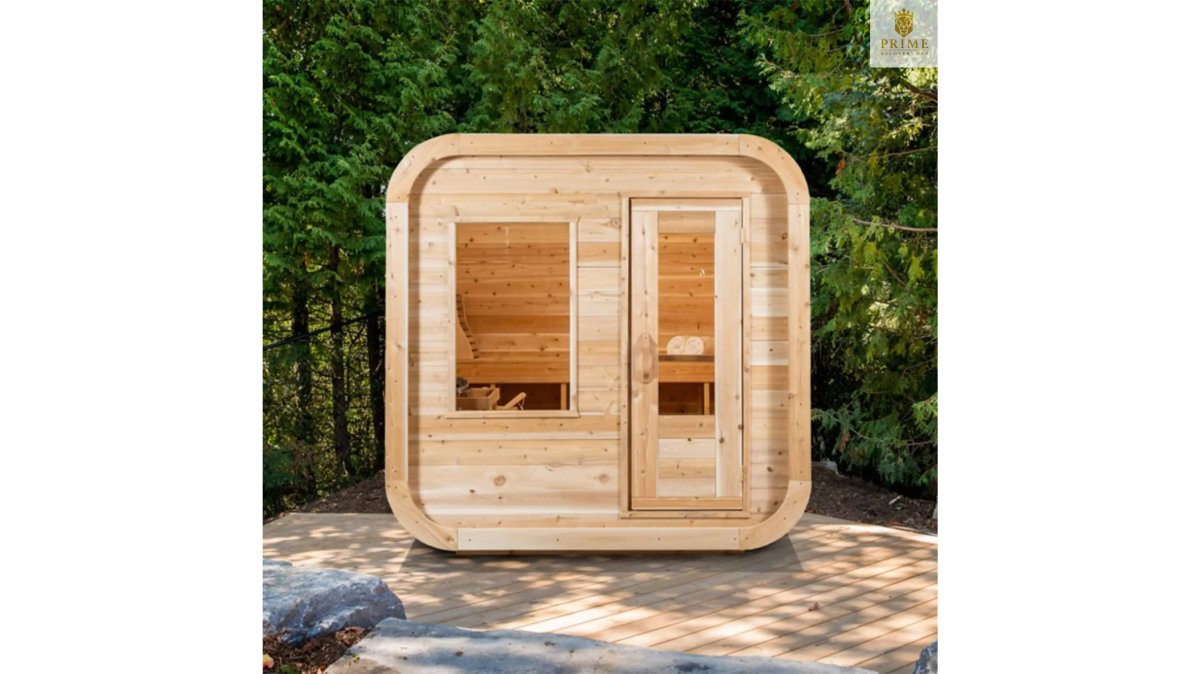
Our Dundalk Leisurecraft cedar saunas bring this material to life. The Luna 4-Person Outdoor Cube Sauna pairs Eastern White Cedar with a bronze glass window and an EPDM rubber roof membrane, so rain and snow run off while you relax inside. Its large bronze glass front offers views without giving up privacy or heat.
For a shared sanctuary, the Tranquility 6-Person Barrel Sauna offers Eastern White Cedar construction, a front porch, and two windows, giving you a dedicated cool-down spot between sessions. The barrel shape circulates heat evenly, so every seat feels warm.

Our Dundalk Leisurecraft Serenity 4-Person Barrel Sauna adds a bronze glass door and spacious front porch, so you can step out, breathe, and step back in. For a four-person cedar barrel sauna with a bronze glass door, this option lets you unwind in a calm, unhurried rhythm. The solid wood benches make each session feel calm and unhurried.

If you want a compact option, the Harmony 4-Person Barrel Sauna is built from the same cedar with a flat floor for comfortable standing and stretching.
These saunas are ready-to-assemble kits. Plan your base first: a level, well-drained pad, pavers, or a deck rated for the weight. Read the indoor vs outdoor sauna pros and cons to decide whether an outdoor placement fits your sanctuary zone. Barrel saunas ship by freight, so confirm truck access before you order.
Recycled Metal and Durable Hardware
Metal parts are easy to overlook, yet they decide how long a structure lasts. Marine-grade aluminum bands with stainless steel bolts resist corrosion in damp conditions.
Dundalk Leisurecraft Luna 4-Person Outdoor Cube Sauna – Eastern White Cedar →
Check fasteners and bands on any outdoor build. Rust is a sign that a material is not suited to its location, so choose hardware rated for outdoor use from the start.
Step 3: Select Natural Flooring Materials That Hold Up Over Time
Flooring takes the most daily wear in any sanctuary, and it is also where the wrong choice shows up fastest. Natural options such as solid wood, cork, and bamboo bring warmth underfoot and a calming look, but each behaves differently under moisture, heat, and cleaning. The practical move is to match the floor to the zone rather than pick one material for the whole property.
Compare the Main Natural Flooring Options
- Solid hardwood (oak, maple, hickory): Durable and refinishable, with a timeless look. It handles foot traffic well but expands and contracts with humidity, so it needs stable indoor conditions and a protective finish. Expect to refinish every 7 to 10 years in high-use rooms.
- Cork: Soft underfoot, naturally resilient, and warm to the touch. It is comfortable for bare feet and quiet underfoot, but it dents under heavy point loads and needs sealing against spills. Best for bedrooms, reading nooks, and low-moisture lounging areas.
- Bamboo: Fast-renewing and hard-wearing when properly sealed. Strand-woven bamboo is denser than many hardwoods, but it is sensitive to standing water and prolonged humidity. Use it in dry indoor zones, not in sauna or plunge areas.
- Reclaimed hardwood: Salvaged oak, heart pine, and similar species bring character and keep existing timber out of landfill. Check for lead paint on very old stock and have it tested before sanding.
Match the Floor to the Zone
- Sauna and steam areas: Skip wood flooring entirely. Use removable flat floors, duckboards, or slatted platforms that lift off for cleaning and drying. Cedar and thermally modified wood resist moisture better than standard hardwood, and removable sections let you scrub underneath.
- Cold plunge and wet zones: Choose slip-resistant tile, sealed concrete, or removable composite decking. Prioritize drainage and a textured surface over warmth.
- Living, reading, and sleeping areas: Solid hardwood, cork, or bamboo work well here. Add area rugs for comfort and to reduce wear on high-traffic paths.
- Entry and transition zones: Use a hard, sweepable surface such as sealed tile or reclaimed brick to catch grit before it reaches softer floors.
Plan for Moisture, Sanitation, and Maintenance
Moisture is the deciding factor. Wood floors in humid rooms cup, crown, and grow mold if water sits; sealed tile and removable platforms dry faster. In any space that sees steam, spills, or animal traffic, favor floors you can sweep, mop, and dry completely. A routine of sweeping daily, wiping up standing water promptly, and oiling or resealing wood every 12 to 24 months keeps natural floors in good shape.
If your sanctuary includes animals, avoid soft flooring that traps hair, dander, and waste. Hard, sealed, easily disinfected surfaces are easier to keep hygienic and reduce odor. EPA indoor air quality and moisture guidance
Where Our Saunas Fit
Our Dundalk Leisurecraft cedar saunas feature solid wood benches and Eastern White Cedar construction, which resists decay and insects naturally. Step in, sit down, and let the day go.
The right floor depends on the zone, so here is how the main natural options compare for each job.
| Flooring | Best for | Key limit |
|---|---|---|
| Solid hardwood | Living and high-use rooms | Expands with humidity |
| Cork | Bedrooms and reading nooks | Dents under heavy loads |
| Bamboo | Dry indoor zones | Sensitive to standing water |
| Reclaimed hardwood | Character accents and floors | Test old stock for lead paint |
| Removable cedar platforms | Sauna and steam areas | Lift off for cleaning |
Step 4: Pick Low-VOC Paints and Finishes for Healthier Air
Paints and finishes release gases called volatile organic compounds (VOCs) as they dry and cure. Low-VOC products release fewer of these gases, which helps keep indoor air fresher. This matters most in enclosed rooms where you spend hours at a time.
Look for paints and finishes labeled low-VOC or zero-VOC, and check the product data sheet. Ventilate well during application and curing. Give freshly finished rooms time to air out before you move in.
Step 5: Add Reclaimed Wood Interior Design Accents
Reclaimed wood brings character to a sanctuary while keeping existing timber out of landfill. Use it for accent walls, shelving, a bench, or a headboard. Its grain and patina give a room warmth that new lumber rarely matches.
Pair reclaimed pieces with the cedar and natural finishes you chose earlier. Keeping your palette consistent makes the whole space feel intentional.
Booking Your Sanctuary Materials Plan With Prime Recovery Den
Your materials plan works best when it starts with your zones, moves through structure, flooring, and finishes, and ends with maintenance. Shopping the Dundalk Leisurecraft cedar saunas is a practical first step once you know your base and access. Prime Recovery Den offers free standard shipping to the contiguous U.S. on most orders, and you can call 316-667-0098 with questions about fit, delivery, or setup before you order.
Frequently Asked Questions
What are sustainable building materials for a home sanctuary?
Sustainable building materials are those that come from renewable or recycled sources, last a long time, and limit environmental harm during harvesting, manufacturing and disposal. For a home sanctuary this often means responsibly sourced wood, recycled metal hardware, and finishes with low emissions. Eastern White Cedar, which naturally resists decay and insects, is one example used in Prime Recovery Den's outdoor saunas, where a long service life keeps replacement and waste low.
Are reclaimed materials a good choice for a home sanctuary?
Yes, reclaimed wood can add character and reduce demand for newly harvested timber. It works well for accent walls, shelving, and statement pieces in a sanctuary. Check that reclaimed boards are dry, straight, and free of active pests before installing them indoors.
What are eco-friendly alternatives to conventional flooring?
Natural options include solid hardwood, cork, and bamboo, each suited to different rooms and conditions.
How can I tell whether a building material is sustainable?
Look for third-party certifications, a stated recycled or renewable content, and a manufacturer willing to explain its sourcing. Durability matters too, because a material that lasts decades usually has a smaller footprint than one replaced every few years. Ask about low-VOC content for paints, finishes and adhesives, since emissions affect how a room feels as much as its environmental impact.



Leave a comment
This site is protected by hCaptcha and the hCaptcha Privacy Policy and Terms of Service apply.