

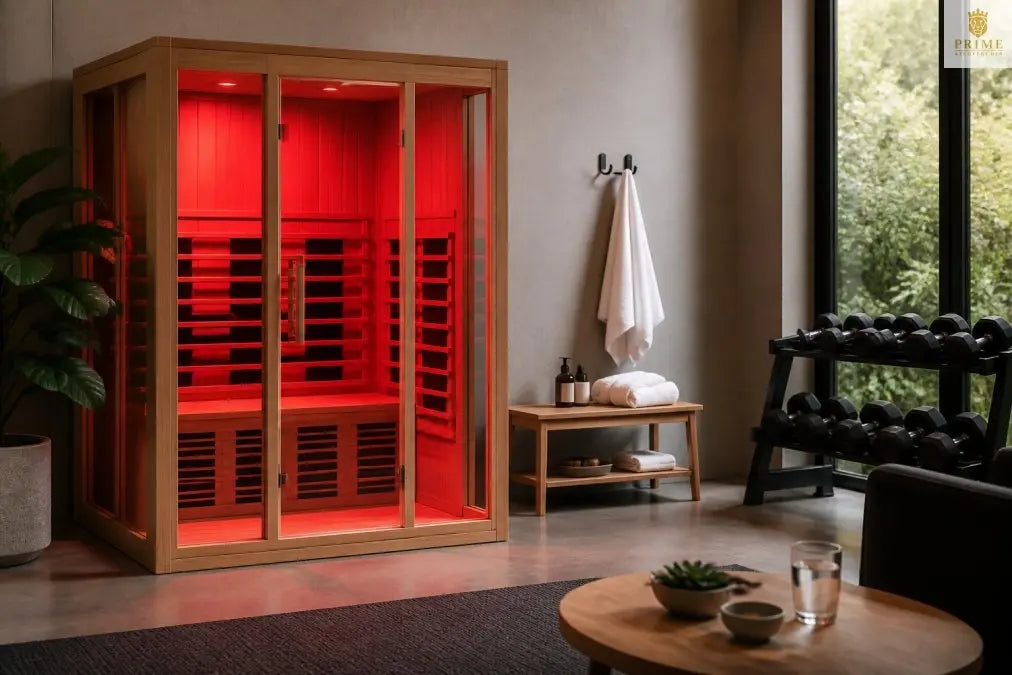
Red Light Therapy in Saunas: Benefits & Protocol Guide
Table of Contents
- How Red Light Therapy Works Inside a Sauna Environment
- Red Light Therapy Wavelengths: Choosing the Right Range
- Key Health Benefits of Red Light Therapy in Saunas
- Red Light Therapy Devices for Sauna Integration
- How Often to Use Red Light Therapy in a Sauna
- Red Light Therapy for Skin Health and Rejuvenation
- Safety, Long-Term Maintenance, and When to Avoid
- Conclusion
Red Light Therapy in Saunas: Benefits & Protocol Guide
Last Updated: August 2, 2026
Red light therapy combined with sauna heat creates a powerful synergy for recovery. When your body is exposed to elevated temperatures, cellular metabolism accelerates and mitochondria become more receptive to photon energy. Red light wavelengths in the 600-1000 nanometer range penetrate deep enough to reach muscle tissue, where they stimulate ATP production, your cells' energy currency. This "stacked stimulus" effect primes cells to respond to light therapy precisely when they're most metabolically active.
How Red Light Therapy Works Inside a Sauna Environment
Photobiomodulation is how light energy triggers cellular changes at the mitochondrial level. Inside a sauna, this mechanism accelerates dramatically. Your core temperature rises, vasodilation increases blood flow, and cells shift into heightened metabolic states. When red light photons arrive, they're absorbed by cytochrome c oxidase in the mitochondrial electron transport chain, directly boosting ATP synthesis.
Heat and light compound each other's effects. Thermal stress alone activates heat shock proteins and detoxification pathways. Red light therapy alone stimulates mitochondrial function and collagen production. Combined, your cells produce energy faster and more efficiently. Muscle tissue recovers from microtears more quickly, and systemic inflammation markers decline more steeply than from either modality alone.
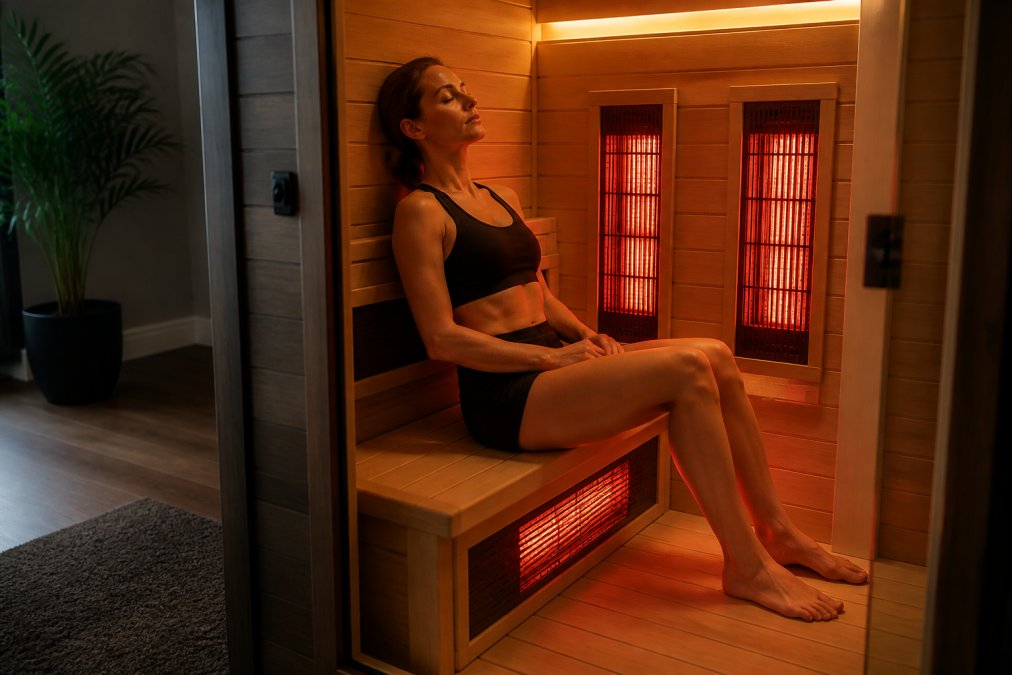
Red Light Therapy Wavelengths: Choosing the Right Range
Wavelength determines which tissues absorb photon energy and how deep light penetrates. Near-infrared wavelengths (700-1000 nanometers) penetrate deepest into tissue, reaching muscle, bone, and fascia, ideal for muscle recovery and joint health. Far-infrared wavelengths (3000-50,000 nanometers) penetrate only skin and superficial tissues, excelling at skin rejuvenation.
Inside a sauna, near-infrared is the practical choice. The sauna itself already provides far-infrared exposure, making additional far-infrared redundant. Near-infrared wavelengths in the 800-880 nanometer range offer the best bioavailability, your cells absorb and use photon energy most efficiently. This range also carries minimal eye strain risk.
Wavelengths between 630-700 nanometers (visible red) and 800-880 nanometers (near-infrared) show the highest ATP production in research. If a device specifies only "red light" without nanometer precision, ask for the exact wavelength range before purchasing.
Key Health Benefits of Red Light Therapy in Saunas
The documented benefits cluster around four primary areas: muscle and tissue recovery, skin health, pain management, and nervous system regulation. Each traces back to improved cellular energy production and reduced oxidative stress.
Muscle Recovery and Tissue Repair Acceleration
Muscle damage from exercise triggers inflammation. Red light therapy accelerates resolution by boosting ATP production in muscle cells, allowing them to repair microtears more efficiently. Inside a sauna, where blood flow is already elevated, this effect compounds. Muscle protein synthesis increases measurably within 24-48 hours of combined heat and light exposure.
Athletes using red light therapy in sauna protocols report reduced delayed-onset muscle soreness (DOMS) and faster return to full strength, especially when applied within 2-4 hours post-workout.
Skin Health, Collagen Production, and Cellular Rejuvenation
Red light wavelengths stimulate fibroblasts, the cells responsible for collagen synthesis. Inside a sauna, where skin blood flow is maximized and skin temperature is elevated, collagen production accelerates further. Visible results typically emerge after 8-12 weeks of consistent use: finer lines become less pronounced, skin texture improves, and overall radiance increases.
Pain Management and Systemic Inflammation Reduction
Chronic pain often stems from systemic inflammation and reduced blood flow. Red light therapy addresses both mechanisms by boosting mitochondrial function (reducing inflammatory markers like TNF-alpha and IL-6) and improving vasodilation. Inside a sauna, this effect extends beyond localized pain. People with joint pain, back pain, or chronic muscle tension often report significant improvement after 4-6 weeks of consistent sauna-based red light therapy.
Nervous System Regulation and Stress Relief
Heat exposure activates the parasympathetic nervous system. Red light therapy amplifies this effect by reducing cortisol and increasing endorphin production. Regular users report improved sleep quality, reduced anxiety, and better emotional resilience, with measurable shifts in heart rate variability and cortisol rhythms.
Red Light Therapy Devices for Sauna Integration
Your choice between built-in sauna panels and standalone portable units depends on your space, budget, and long-term commitment.
Built-in Sauna Panels
Integrated red light panels are installed directly into sauna walls or ceilings, offering seamless aesthetics and optimal positioning. Built-in systems eliminate external wiring and maintenance concerns. The trade-off is cost and inflexibility. If panels fail, professional repair is required, and you're locked into a specific wavelength and power output.
Standalone Portable Units
Portable red light therapy panels offer flexibility and lower upfront cost. You can position them inside the sauna, adjust distance to control intensity, and remove them if desired. Most are plug-and-play. The downside is aesthetic and practical, panels take up space, create visible wiring, and typically last 3-5 years before LED efficiency degrades noticeably.
For most home users, a high-quality portable unit is the practical choice. Prime Recovery Den offers integrated sauna solutions that combine heat and light therapy.
How Often to Use Red Light Therapy in a Sauna
Frequency and duration determine whether red light therapy delivers results.
Optimal Frequency: Daily, Weekly, or Session-Based Protocols
For muscle recovery and athletic performance, 3-4 sessions per week produces measurable results within 4-6 weeks. Each session should last 10-15 minutes, with red light therapy introduced 10-15 minutes into your sauna time.
For skin health and anti-aging, 4-5 sessions per week is more effective. Collagen production benefits from consistent stimulus, with noticeable changes after 8-12 weeks.
For stress relief and nervous system regulation, even 1-2 sessions per week produces measurable improvements in sleep quality and anxiety levels.
Session Duration and Thermal Stress Management
The total sauna session should last 20-30 minutes, with red light therapy comprising the final 10-15 minutes. This sequencing allows your core temperature to rise adequately before introducing light stimulus, maximizing the synergistic effect.
Thermal stress accumulates with duration. Sessions exceeding 30 minutes increase your risk of dehydration, electrolyte imbalance, and cardiovascular strain. For most users, 20-30 minutes total is optimal.
Sequencing and Timing Relative to Workouts and Recovery
Post-workout sessions (within 2-4 hours after exercise) maximize muscle recovery benefits. Your muscles are primed for stimulus, blood flow is elevated, and your body is in a heightened metabolic state.
For skin health or stress relief, timing relative to workouts matters less. However, evening sessions may improve sleep quality due to parasympathetic activation, while morning sessions can boost energy and mental clarity.
Avoid sauna sessions immediately after intense strength training if your primary goal is muscle growth. Wait 4-6 hours post-workout to avoid pushing your body into a catabolic state.
Red Light Therapy for Skin Health and Rejuvenation
Skin aging is driven by collagen breakdown, oxidative stress, and reduced blood flow. Red light therapy addresses all three mechanisms simultaneously.
Collagen Synthesis and Skin Barrier Enhancement in Heat
Collagen production peaks when fibroblasts are exposed to red light wavelengths in the 600-700 nanometer range, combined with elevated skin temperature. Inside a sauna, skin temperature reaches 40-42°C (104-108°F), creating an optimal environment for collagen synthesis. Red light photons trigger signaling pathways that upregulate collagen genes, leading to increased Type I and Type III collagen production.
Collagen remodeling requires 6-8 weeks of consistent stimulus. Once you reach that threshold, visible improvements emerge: skin appears firmer, fine lines become less pronounced, and overall texture improves. The skin barrier also strengthens, becoming more resilient and improving hydration retention.
Visible Results: Timeline and Realistic Expectations
| Timeline | Visible Changes | Session Frequency | Expected Outcome |
|---|---|---|---|
| Weeks 1-2 | None | 4-5x/week | Cellular signaling begins |
| Weeks 3-4 | Subtle radiance | 4-5x/week | Slight line softening |
| Weeks 5-8 | Texture improvement | 4-5x/week | Noticeable firmness increase |
| Weeks 9-12 | Significant aging reversal | 4-5x/week | Visible wrinkle reduction |
| 12+ weeks | Plateau with maintenance | 2-3x/week | Long-term collagen preservation |
This timeline assumes 4-5 sessions per week with 10-15 minutes of red light exposure per session. Sporadic use produces minimal visible change.
Safety, Long-Term Maintenance, and When to Avoid
Red light therapy in saunas is generally safe when protocols are followed correctly. However, certain conditions warrant caution or complete avoidance.
Heat Stress Management and Contraindications
Sauna exposure carries inherent cardiovascular stress. For most healthy adults, this stress is manageable and even beneficial. However, certain populations should avoid sauna-based red light therapy entirely:
- Uncontrolled hypertension (blood pressure above 180/110 mmHg)
- Acute heart conditions or recent heart attack (within 6 months)
- Severe dehydration or electrolyte imbalance
- Pregnancy
- Fever or acute infection
- Certain medications that impair heat tolerance
Consult your healthcare provider before beginning sauna-based red light therapy if you're on medications or have chronic health conditions.
Hydration is non-negotiable. Drink electrolyte-rich fluids before, during, and after sauna sessions. For sessions exceeding 20 minutes, consume 500-750 mL of electrolyte solution before entering.
Equipment Longevity and Professional-Grade Durability
Red light therapy devices degrade over time. LEDs lose efficiency, typically declining 10-15% per year. Professional-grade devices use medical-grade LEDs with lifespans of 50,000+ hours and maintain 80%+ of original output after 5 years. Consumer-grade devices often use standard LEDs rated for 30,000-40,000 hours.
A device used 30 minutes per day, 5 days per week, consumes roughly 1,200 hours per year. A professional-grade device will last 40+ years; a consumer device may need replacement after 8-10 years.
For sauna integration, Prime Recovery Den recommends professional-grade panels. Maintenance is minimal, dust panels monthly and ensure electrical connections remain dry.
Conclusion
The benefits of red light therapy in saunas emerge from a simple biological reality: your cells produce energy more efficiently when exposed to specific light wavelengths during periods of elevated metabolic activity. Muscle recovery accelerates, skin rejuvenates, inflammation decreases, and nervous system function improves, all from a protocol that takes 20-30 minutes per session.
Prime Recovery Den's integrated sauna solutions combine high-efficiency red light panels with precision temperature control, allowing you to dial in the exact protocol your body needs. Whether your goal is athletic recovery, skin rejuvenation, or stress relief, our systems deliver measurable results within 4-12 weeks. SHOP ALL to explore configurations that fit your space and recovery goals.
Frequently Asked Questions
What are the main benefits of combining red light therapy with a sauna?
Red light therapy and sauna heat create synergistic effects that amplify each other's benefits. The thermal environment increases blood flow and vasodilation, allowing photons from red light to penetrate deeper into tissues. This combination accelerates muscle recovery, enhances collagen production for skin health, reduces systemic inflammation, and improves mitochondrial function through ATP production. The heat also opens pores and increases cellular permeability, making light therapy more bioavailable at the cellular level.
How often should you use red light therapy in a sauna?
Most protocols recommend 3 to 5 sessions per week, with each session lasting 20 to 30 minutes. Frequency depends on your recovery goals and baseline fitness level. Athletes in heavy training may benefit from daily use, while general wellness seekers see results with 2 to 3 sessions weekly. Start conservatively and monitor your response. Consistency matters more than intensity; regular moderate use produces better long-term results than sporadic intense sessions. Allow at least one rest day per week to prevent thermal stress accumulation.
What wavelengths of red light therapy work best in a sauna?
Near-infrared wavelengths between 700 and 1100 nanometers penetrate deepest into muscle and bone tissue, making them ideal for recovery and pain management. Red light in the 600 to 700 nanometer range targets skin and superficial tissues, supporting collagen production and skin rejuvenation. In a sauna, the combination of both ranges is most effective: near-infrared for systemic cellular repair and red light for visible skin benefits. The heat environment increases photon penetration depth, so even standard wavelength outputs become more bioavailable than in room-temperature settings.
Can red light therapy in a sauna help with weight loss or detoxification?
Red light therapy and sauna heat both increase metabolic rate and blood flow, which supports natural detoxification through improved circulation and sweating. However, claims of direct 'detoxification' or weight loss should be viewed cautiously. The real benefit is improved metabolic health and cellular function, which supports your body's natural processes. Regular use may enhance recovery from exercise, reduce inflammation, and improve energy levels, all of which indirectly support fitness goals. Results depend on pairing sauna sessions with consistent exercise and proper nutrition.
Are there any risks or side effects of using red light therapy in a sauna?
Red light therapy is generally safe, but combining it with sauna heat requires caution. Excessive heat exposure can cause dehydration, dizziness, or heat stress. Start with shorter sessions (15 to 20 minutes) and increase gradually. Avoid saunas if you have cardiovascular conditions, are pregnant, or take medications that increase heat sensitivity. Protect your eyes from direct light exposure. Some people experience mild skin sensitivity initially. Always hydrate before and after sessions, and consult a healthcare provider if you have underlying health concerns or take medications that interact with heat or light therapy.
What is the difference between red light therapy and infrared saunas?
Infrared saunas use infrared heat (far-infrared wavelengths) to warm the body directly, while red light therapy uses visible red and near-infrared photons to stimulate cellular processes. Infrared saunas focus on thermal benefits: detoxification, muscle relaxation, and cardiovascular support. Red light therapy targets photobiomodulation at the mitochondrial level, enhancing ATP production and cellular repair. They work through different mechanisms but complement each other. A sauna with integrated red light therapy combines both benefits: the deep penetrating heat of infrared plus the cellular signaling power of photobiomodulation.
How long before you see results from red light therapy in a sauna?
Acute benefits like reduced muscle soreness and improved blood flow appear within 1 to 3 sessions. Skin improvements (increased firmness, reduced fine lines) typically emerge after 4 to 8 weeks of consistent use, as collagen synthesis accelerates. Deeper benefits like improved mitochondrial function and sustained inflammation reduction require 8 to 12 weeks of regular sessions. Results vary based on age, baseline health, session frequency, and wavelength quality. Consistency is critical; sporadic use delays visible results. Keep a simple log to track energy levels, recovery speed, and skin appearance over time.
External Sources
[EXTERNAL_LINK: Photobiomodulation in Exercise Performance and Recovery research overview | ncbi.nlm.nih.gov]
[EXTERNAL_LINK: Sauna Use and Cardiovascular Health clinical evidence | americanheart.org]
[EXTERNAL_LINK: Collagen Synthesis and Light Therapy mechanisms | pubmed.ncbi.nlm.nih.gov]


Leave a comment
This site is protected by hCaptcha and the hCaptcha Privacy Policy and Terms of Service apply.