


Luxury Home Sauna Assembly: A Complete Service Guide
Table of Contents
- Understanding Luxury Home Sauna Assembly Service Requirements
- Site Preparation and Foundation for Sauna Installation
- Sauna Electrical Requirements and NEC Compliance
- Sauna Building Permits by State: What You Need to Know
- Hiring Professional Sauna Installers: What to Expect
- DIY vs. Professional Installation: Making the Right Choice
- Conclusion
Last Updated: August 5, 2026
Understanding Luxury Home Sauna Assembly Service Requirements
Luxury home sauna assembly service requirements have become increasingly complex as high-end residential installations demand precision, compliance, and expertise that go far beyond basic carpentry. When you're investing in a premium sauna for your home, understanding what professional sauna assembly service entails, and whether you need it, becomes critical to protecting that investment.
The distinction between a DIY installation and professional sauna assembly service isn't merely about convenience. It's about safety, warranty validity, electrical compliance, and structural integrity. A luxury sauna isn't just a wooden box with a heater; it's a system that must interface with your home's electrical infrastructure, manage moisture and ventilation, and meet local building codes. Miss any of these elements, and you risk voiding warranties, creating fire hazards, or facing costly remediation.
At Prime Recovery Den, we've worked with countless homeowners navigating this decision. The ones who succeed are those who understand upfront what a proper sauna assembly service requires, and what corners they absolutely cannot cut. This guide walks you through the technical and logistical requirements that separate a professional installation from an amateur one.
Site Preparation and Foundation for Sauna Installation
Before a single panel is assembled, your space must be prepared to handle the demands of a luxury sauna. This is where most DIY projects falter. Site preparation isn't glamorous, but it's non-negotiable.
Floor Leveling and Load-Bearing Capacity
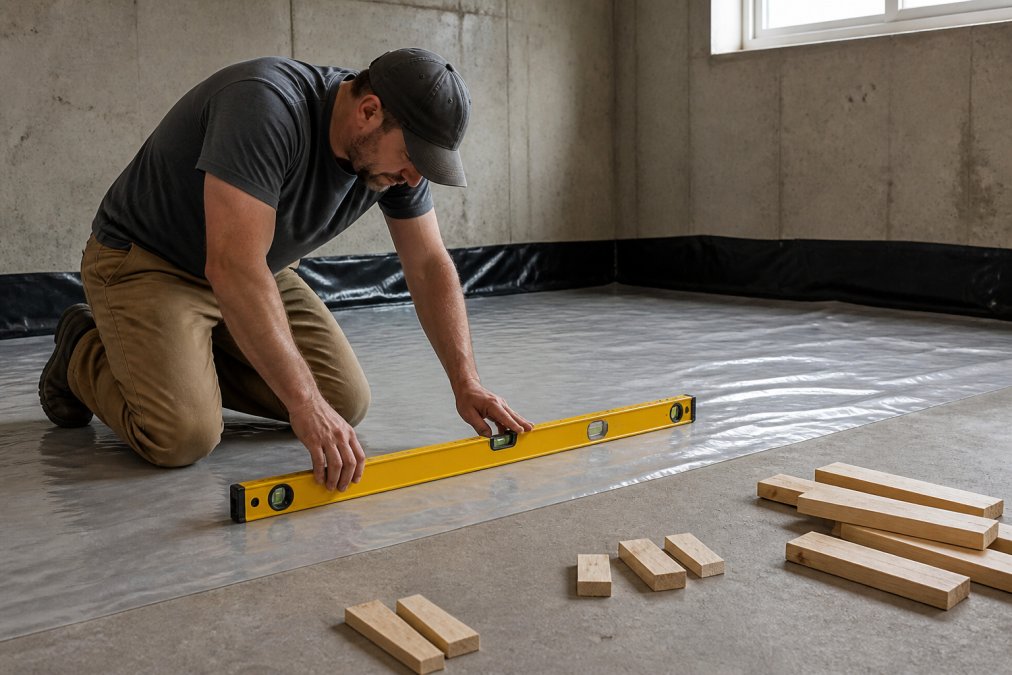
A sauna's structural integrity depends entirely on a level, stable foundation. Even minor slopes, a quarter-inch over six feet, can cause door misalignment, uneven panel stress, and long-term warping. Professional installers use precision leveling tools and shims to achieve true level, which is why this step cannot be skipped.
Load-bearing capacity matters more than most homeowners realize. A traditional wooden sauna can weigh 2,000 to 4,000 pounds depending on size and construction. Infrared saunas are lighter but still substantial. Your floor must support this concentrated weight without deflection. Basement concrete floors typically handle this without issue, but upper-level rooms, decks, or older homes with compromised joists may require reinforcement.
A professional sauna assembly service includes structural assessment. Installers evaluate floor condition, check for rot or water damage, and verify load-bearing capacity before committing to placement. They'll identify if floor reinforcement is needed, something a homeowner might miss until problems emerge.
Moisture Barriers and Ventilation Planning
Moisture is a sauna's silent enemy. Without proper moisture barriers, water vapor penetrates walls, damages framing, promotes mold, and compromises structural integrity. A sauna assembly service that skips moisture barriers is cutting corners dangerously.
Professional installers install vapor barriers, typically heavy-duty polyethylene or specialized foil barriers, before panels are assembled. This creates a moisture envelope that prevents condensation from escaping into your home's walls. The barrier must be continuous, sealed at seams, and properly positioned between the sauna interior and your home's structure.
Ventilation planning happens during site prep, not after assembly. A properly functioning sauna requires air intake and exhaust paths. Without adequate ventilation, humidity builds, temperature becomes unstable, and the heater works inefficiently. Professional sauna assembly service includes designing ventilation routes that don't compromise your home's thermal envelope or create moisture problems elsewhere in the house.
Sauna Electrical Requirements and NEC Compliance
This is where amateur installations most often fail, and where the stakes are highest. Sauna heaters are high-amperage devices that demand specialized electrical infrastructure. The National Electrical Code (NEC), published by the National Fire Protection Association, establishes minimum safety standards for sauna electrical installations across all U.S. jurisdictions.
Dedicated Circuit and Voltage Specifications
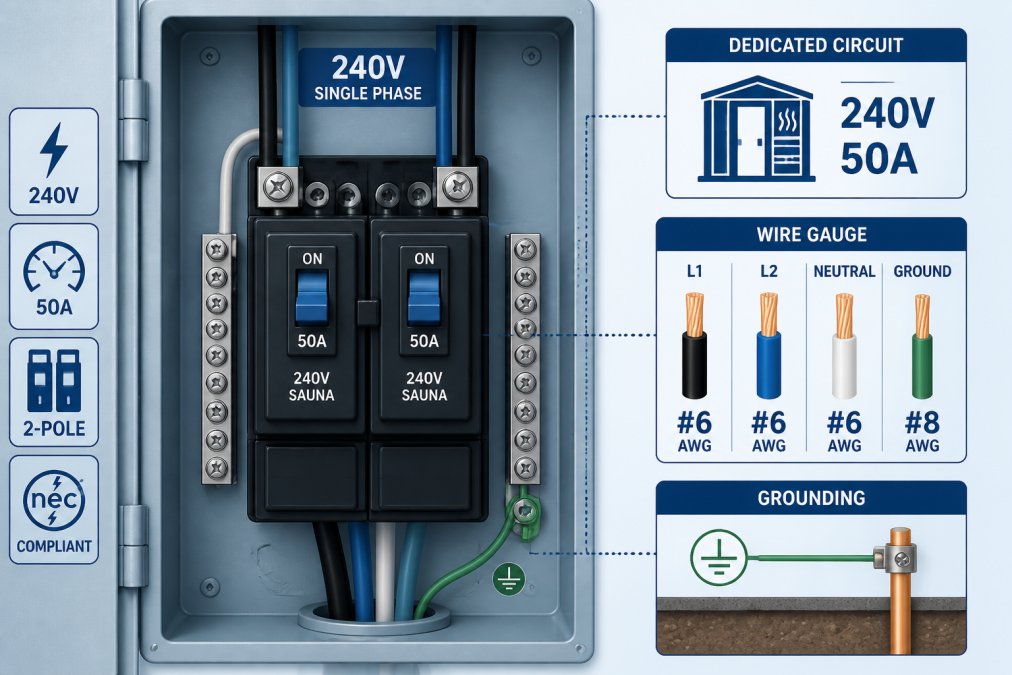
A sauna heater cannot share a circuit with other appliances. It requires a dedicated circuit, meaning the circuit breaker, wiring, and conduit serve only the sauna heater. This is not optional; it's an NEC requirement and a core component of any professional sauna assembly service.
Most residential saunas operate on 240-volt circuits, which require heavy-duty wire rated for the heater's amperage draw. A typical sauna heater draws 30 to 60 amps, depending on size and type. This means running specialized wiring from your main electrical panel to the sauna location. The wire must be rated for continuous use at high temperatures, standard household wire will overheat and create fire risk.
The circuit breaker protecting the sauna circuit must be properly sized to the wire gauge and heater amperage. An undersized breaker won't trip when it should; an oversized one won't protect the wire from overheating. Professional installers verify these specifications against the heater manufacturer's documentation and local electrical codes.
Hardwiring vs. Plug-In Options
Some sauna manufacturers offer plug-in options, claiming they eliminate the need for hardwiring. This is misleading. Even plug-in saunas that use standard outlets still require a dedicated circuit rated for the heater's amperage. A standard household outlet cannot safely deliver the power a sauna heater needs.
True hardwiring, where the heater is permanently connected to dedicated wiring, is the professional standard. It eliminates extension cord hazards, ensures proper voltage delivery, and meets all NEC requirements. Hardwired installations also maintain warranty coverage; many manufacturers void warranties on saunas using extension cords or inadequate outlet solutions.
A professional sauna assembly service includes hardwiring the heater to a dedicated 240-volt circuit with proper disconnect switch, grounding, and bonding. This work must be performed by a licensed electrician in most jurisdictions, another reason hiring professionals matters. They know which work requires permitting and which electricians are qualified to sign off on the installation.
Sauna Building Permits by State: What You Need to Know
Building permits for residential saunas vary significantly by state and municipality. Some jurisdictions treat a sauna as a minor interior project requiring no permits; others classify it as a structural alteration requiring full permitting and inspection.
Understanding your local requirements before assembly begins is essential. A professional sauna assembly service includes guidance on permitting, and many installers coordinate directly with local building departments.
States with stricter sauna permitting typically include California, New York, and Massachusetts, where any permanent installation may require a permit. However, electrical work almost universally requires permitting and inspection, regardless of state.
The permit process typically involves:
- Submitting installation plans to your local building department
- Scheduling an electrical inspection before the heater is energized
- Possibly scheduling a final structural or mechanical inspection
- Receiving a permit sign-off before the sauna can be used
Skipping permits creates liability. If something goes wrong, a fire, electrical fault, or water damage, your homeowner's insurance may deny claims if the installation wasn't permitted. Resale complications also arise; future buyers' inspectors will flag unpermitted work.
A professional sauna assembly service handles permit coordination, ensuring your installation meets all local codes and receives proper inspection sign-off. This protects your investment and maintains your home's insurability.
Hiring Professional Sauna Installers: What to Expect
Not all sauna installers are equal. Understanding what qualifications matter and what the installation process looks like helps you choose wisely.
Certification, Experience, and Warranty Coverage
Professional sauna installers should have manufacturer certifications for the specific sauna types they install.
Experience matters significantly. An installer with five-plus years of residential sauna work has encountered edge cases, unusual floor conditions, tight spaces, tricky electrical layouts, that newer technicians haven't. They know how to adapt without compromising safety or warranty.
Warranty coverage hinges on professional installation. Most luxury sauna manufacturers void warranties if installation wasn't performed by certified professionals or if electrical work wasn't completed by licensed electricians. This alone justifies hiring professionals; you're protecting tens of thousands of dollars in equipment.
Reputable installers carry liability insurance and offer workmanship warranties. A one-year workmanship warranty, covering assembly defects and labor, is standard among quality installers. This means if something fails due to improper installation within the warranty period, the installer fixes it at no cost.
Assembly Timeline and Labor Costs
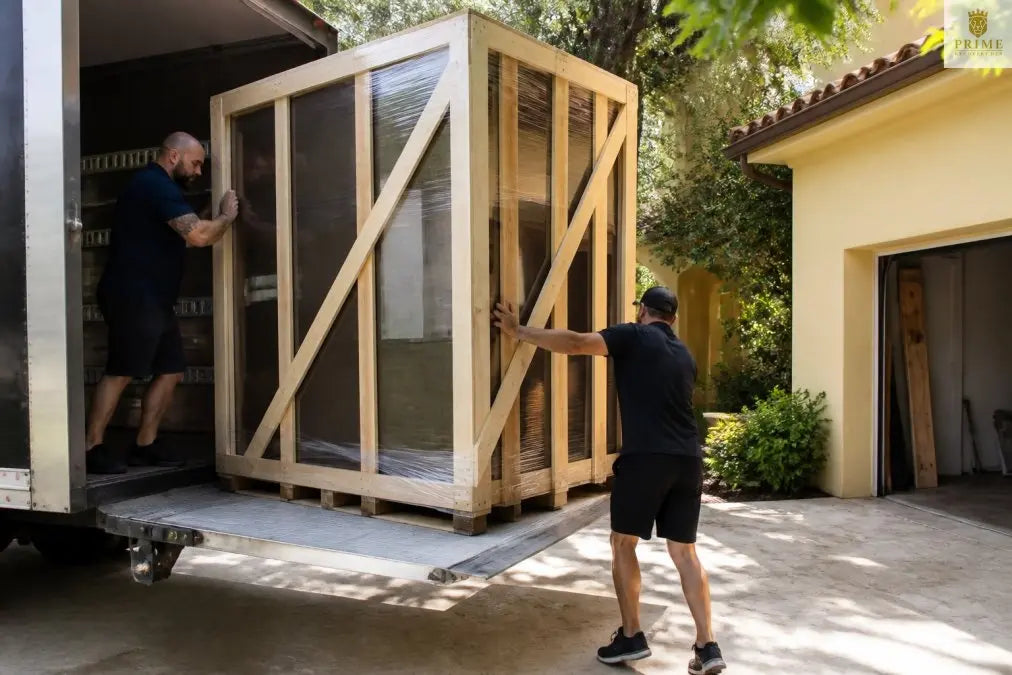
A typical sauna assembly takes one to three days, depending on complexity. A modular infrared sauna might assemble in one day; a custom-built traditional sauna with full electrical integration could take three or more.
The timeline includes:
- Site inspection and preparation verification
- Unpacking and component inspection (checking for damage)
- Frame and panel assembly
- Bench installation
- Heater mounting and electrical connections
- Control panel configuration and testing
- Final safety inspection
Professional installers provide a realistic timeline upfront. If someone promises to assemble your sauna in four hours, they're either rushing or oversimplifying. Proper assembly cannot be rushed without compromising quality.
Labor costs vary by region, sauna type, and complexity. Straightforward modular kit assemblies might cost several hundred dollars; custom installations with extensive site prep and electrical work can run into the thousands. The investment protects your sauna's longevity and your home's safety.
DIY vs. Professional Installation: Making the Right Choice
The decision to hire professionals or tackle assembly yourself hinges on several factors: your skill level, the sauna type, electrical complexity, and local permitting.
DIY assembly works for some homeowners, specifically those with carpentry experience, comfort with basic electrical concepts, and saunas that don't require extensive site prep. Modular kits designed for DIY assembly, like those from SaunaFin with clear step-by-step instructions, can be manageable for handy homeowners. However, even DIY-friendly kits typically require licensed electrician involvement for hardwiring.
The risks of DIY installation include:
- Warranty voidance if assembly isn't performed correctly
- Electrical hazards if wiring or connections are improper
- Structural problems if floor prep or leveling is inadequate
- Moisture and ventilation failures that emerge months later
- Code violations that surface during home inspections or insurance claims
Professional installation eliminates these risks. You're paying for expertise, liability insurance, manufacturer certification, and peace of mind. For luxury saunas, the kind Prime Recovery Den curates, professional assembly is the standard expectation.
The real question isn't whether you can assemble a sauna yourself; it's whether the risks justify the savings. For most homeowners investing in a premium sauna, professional sauna assembly service is the right choice.
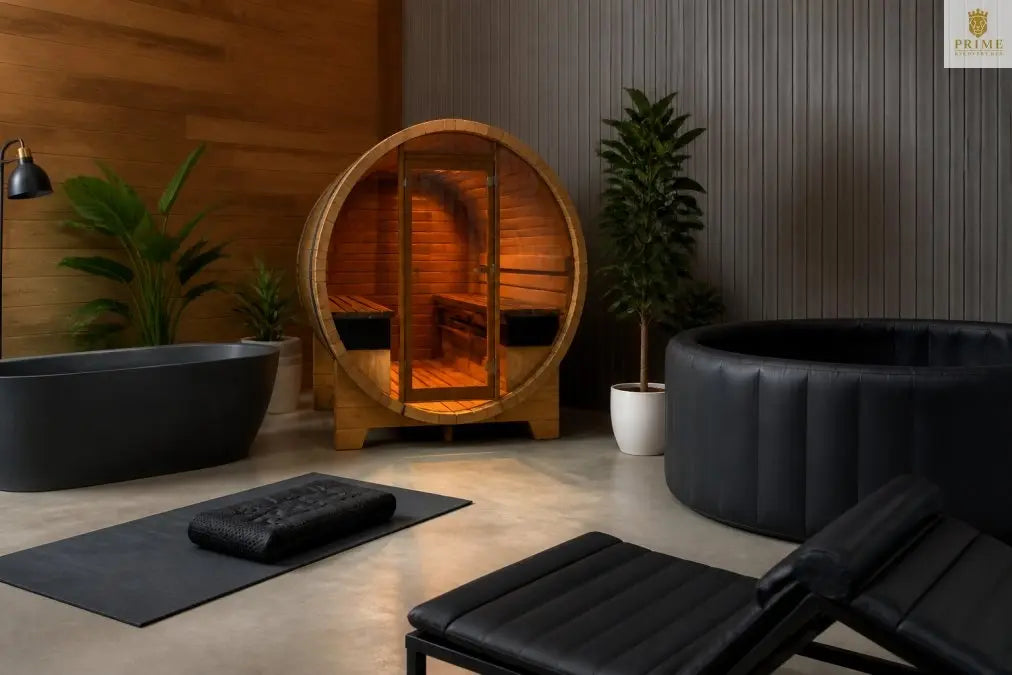
Choosing to install a luxury sauna is an investment in your home's wellness infrastructure and your daily quality of life. The assembly process determines whether that investment delivers decades of reliable performance or becomes a source of regret. Prime Recovery Den's curated sauna selection is designed for longevity and sophisticated integration into your home, and that begins with professional assembly that meets NEC standards, respects local codes, and honors the craftsmanship of the equipment itself. Get started with Prime Recovery Den and transform your space into the restorative sanctuary you deserve, backed by professional installation guidance and thoughtfully designed products built to last.
Frequently Asked Questions
Do I need a building permit to install a luxury home sauna in the US?
Yes, most jurisdictions require a building permit for sauna installation, though requirements vary by state and local code. Permits ensure your sauna meets electrical, structural, and safety standards. The permitting process typically involves submitting installation plans, having inspections at key stages, and ensuring NEC compliance. Check with your local building department before purchasing or assembling your sauna to avoid costly rework or fines.
What are the electrical requirements for a high-end home sauna?
Most luxury saunas require a dedicated 240-volt circuit with appropriate amperage (typically 30-60 amps depending on heater power). The National Electrical Code (NEC) mandates proper wire type, temperature rating, and grounding. Hard-wired connections are safer than plug-in options and required for many high-end units. A licensed electrician should handle all electrical work to ensure compliance and safe operation.
How much does professional sauna assembly typically cost?
Professional sauna assembly services generally start around $395 and vary based on sauna type, location, and complexity. Custom installations or those requiring extensive electrical and site prep work cost more. Many installers offer white-glove service that includes unboxing, assembly, calibration, and testing. Contact local installers for quotes tailored to your specific sauna model and space requirements.
What site preparation is required before sauna delivery?
Proper site preparation includes floor leveling to ensure structural integrity, installing moisture barriers to protect surrounding structures, and confirming adequate ventilation space. You'll need to verify that your floor can support the sauna's weight and that the room has proper airflow. Measure your space carefully, clear the installation area, and ensure electrical access is available. A luxury sauna site preparation checklist from your installer will outline specific requirements.

Leave a comment
This site is protected by hCaptcha and the hCaptcha Privacy Policy and Terms of Service apply.