

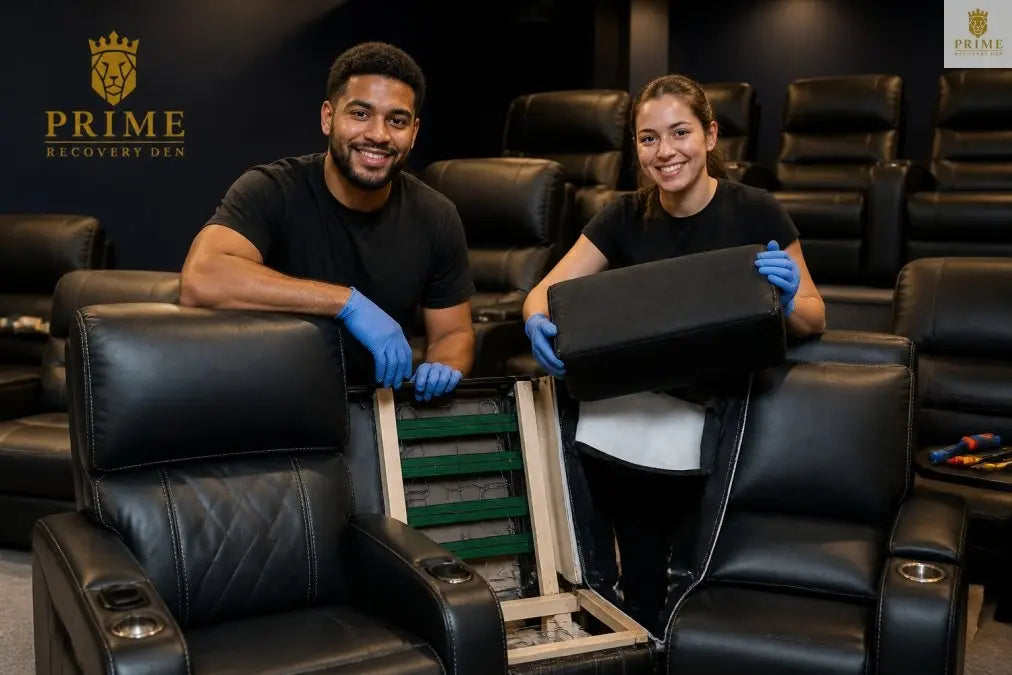
How to Fix Sagging Theater Seat Cushions
Table of Contents
- What Causes Theater Seat Cushions to Sag
- Assessing the Damage: When to Repair vs. Replace
- How to Add Support to Theater Seat Springs
- Replacing High-Density Foam in Recliners
- Best Tools for Furniture Upholstery Repair
- Step-by-Step Repair Process for Sagging Cushions
- Maintenance Strategies to Prevent Future Sagging
- Conclusion
Last Updated: August 19, 2026
What Causes Theater Seat Cushions to Sag
Theater seat cushions sag because the support structure underneath fails over time. The most common culprit is worn-out coil springs or sinuous springs that have lost their resilience. When springs compress and don't bounce back, the cushion collapses into the gap, creating that sunken appearance that makes sitting uncomfortable.
High-density foam also compresses with repeated use. Even premium cushioning eventually experiences compression set, where the material doesn't fully recover after being sat on. The frame itself can warp or weaken, and upholstery batting can compress or shift, causing the foam to sag directly into the springs beneath.
Assessing the Damage: When to Repair vs. Replace
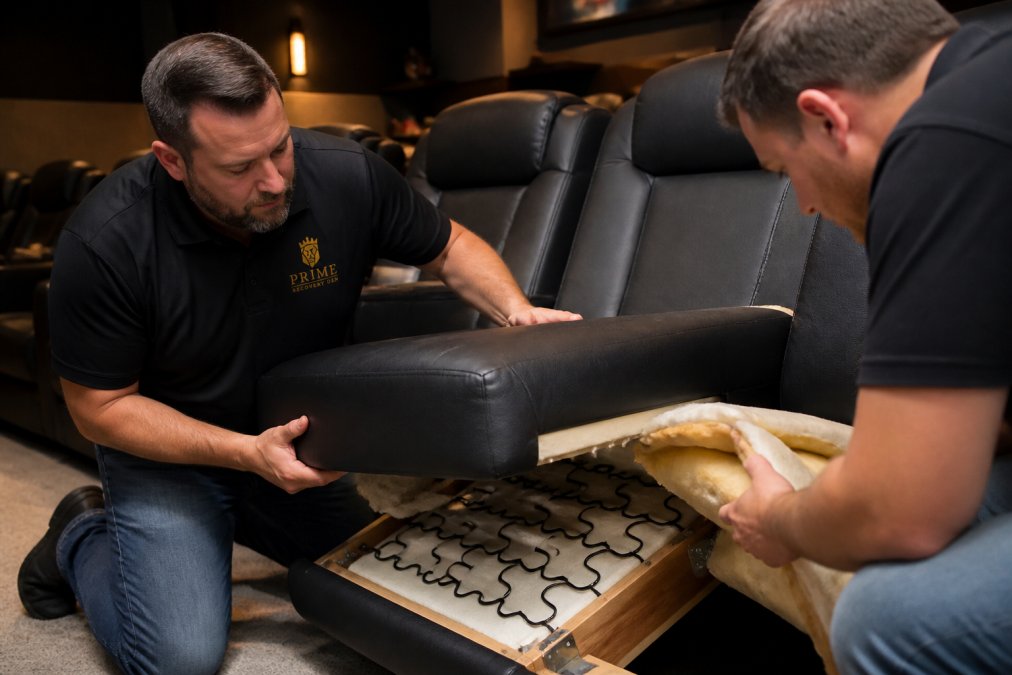
Before you start pulling apart your theater seating, determine whether repair makes sense or if replacement is the smarter choice. This decision depends on the severity of sagging, the age of the cushion, and the condition of the frame underneath.
Minor sagging, where the cushion is still mostly supportive but has lost some height, is almost always worth repairing. Severe sagging, where sitting in the center feels like you're sinking into a hole, usually signals that multiple components have failed and replacement often makes more economic sense.
Check the frame by pressing on the wooden base. If it flexes excessively, feels soft, or shows visible cracks, frame damage is the root problem. A damaged frame won't support new springs or foam effectively.
If the upholstery fabric is still in excellent condition and the cushion is relatively new, repair is almost certainly worth it. If the fabric is torn, faded, or worn, you'll need reupholstering anyway, which adds significant cost. In that scenario, Prime Recovery Den's premium theater seating, designed with durable high-density foam and reinforced support structures, might be more economical than repairing and reupholstering an aging cushion. You'll feel the difference immediately, seating that supports you properly transforms how you experience your home theater, turning it into a true sanctuary where you can relax completely.
How to Add Support to Theater Seat Springs
Reinforcing sagging springs is often the fastest way to restore cushion support without full replacement. The most effective method is installing a support board, typically a piece of plywood or high-density particleboard, directly under the springs. A half-inch plywood base works well for most theater seats. Cut it to fit the cushion dimensions exactly, then secure it to the frame with wood screws or brackets.
Spring clips hold springs in place and can loosen over time. Check that every spring clip is tight. If clips are bent or broken, replace them with new ones of the same gauge.
For sinuous springs, inspect where they attach to the frame. If attachment points have shifted or loosened, re-securing them can restore significant support. Use a staple gun with heavy-duty staples to re-anchor springs to the frame.
Adding a cushion support pad on top of the springs, before you install foam, provides an additional layer of support and is inexpensive and remarkably effective at extending cushion life.
Replacing High-Density Foam in Recliners
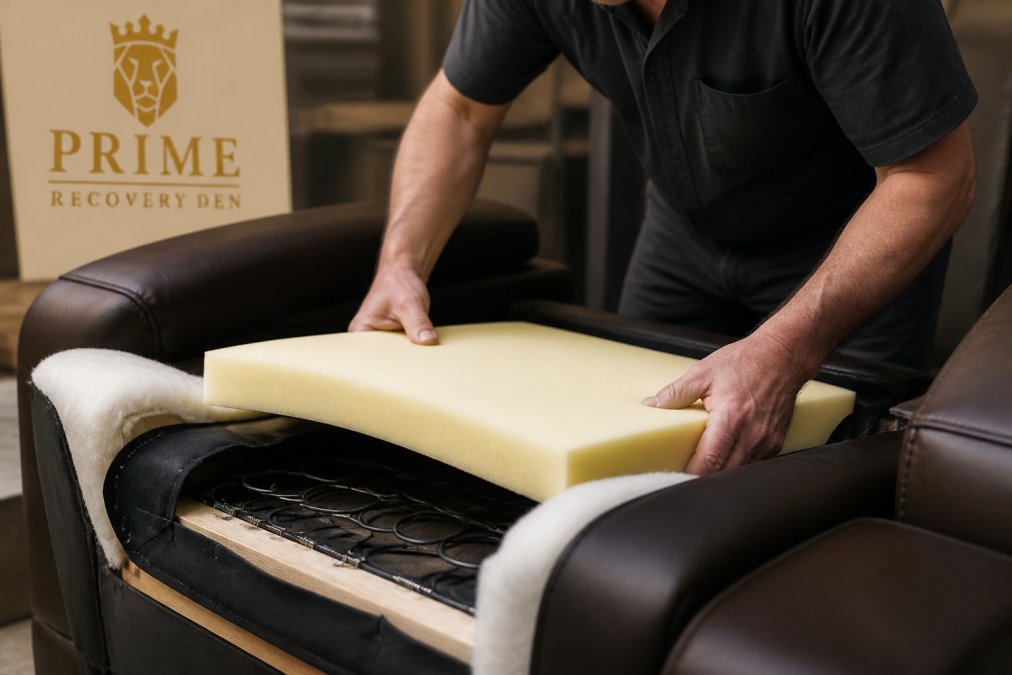
High-density foam is the core of a comfortable, durable theater seat cushion. When existing foam is compressed beyond recovery, replacing it is the most impactful repair you can make. High-density foam resists compression set far better than standard foam, meaning it maintains its support and comfort longer.
Measure your cushion dimensions carefully before ordering foam. You need the exact width, depth, and thickness. Theater seat cushions typically range from 3 to 5 inches thick. For theater seating, aim for 1.8 to 2.2 PCF high-density polyurethane foam. This density provides firm support while remaining comfortable for extended sitting.
When you remove old foam, check what's underneath. If the support pad or springs show damage, address those issues before installing new foam. Layer your foam strategically: start with a support pad, then the main high-density foam layer, then a layer of upholstery batting on top. This layering distributes weight evenly and extends the life of the foam.
Prime Recovery Den's premium theater seating comes with high-density foam engineered specifically for residential use, tested for durability and comfort in home environments. If you're considering a full cushion replacement rather than foam-only repair, investing in professionally designed seating eliminates the guesswork about foam specifications and support structure. You'll experience the comfort of seating that truly supports your body, allowing you to sink into relaxation without the distraction of sagging or uneven support.
Best Tools for Furniture Upholstery Repair
Successful cushion repair requires the right tools. A staple gun is essential for securing fabric and batting. A heavy-duty manual staple gun works fine for most residential repairs. A staple remover or small pry bar helps remove old staples without damaging the frame.
A utility knife with fresh blades cuts foam cleanly. Dull blades tear foam instead of cutting it. A measuring tape, straightedge, and marker are essential for accurate cutting. For spring work, you'll need spring clips, wire cutters, and possibly a spring removal tool if you're replacing old springs.
A heat gun helps shape batting and fabric around curves and corners. Heavy-duty work gloves protect your hands from staples, sharp foam edges, and rough materials.
| Tool | Purpose | Essential |
|---|---|---|
| Staple gun (pneumatic or manual) | Secure fabric and batting to frame | Yes |
| Staple remover | Remove old staples cleanly | Yes |
| Utility knife with fresh blades | Cut foam and batting | Yes |
| Measuring tape | Accurate cushion dimensions | Yes |
| Spring clips or replacement springs | Reinforce or replace springs | If needed |
| Heat gun | Shape fabric around curves | Helpful |
| Work gloves | Hand protection | Yes |
Step-by-Step Repair Process for Sagging Cushions
Step 1: Remove the Cushion and Inspect the Base
Start by removing the cushion from the frame. Most theater seat cushions are secured with staples underneath, so you'll need to flip the seat or access the bottom. Use your staple remover to carefully pull out all staples holding the cushion to the frame.
Once the cushion is free, examine the frame and support structure. Look for visible damage to springs, cracks in the wood base, or deteriorated batting. Press on different areas of the frame to check for soft spots or excessive flex.
Step 2: Evaluate Spring and Frame Condition
Inspect each spring individually. Coil springs should feel firm and bounce back when pressed. Springs that remain compressed or feel mushy have lost their resilience and need reinforcement or replacement. Check that spring clips are tight and not bent.
Examine the wooden frame for cracks, splits, or soft spots that indicate rot. Press on the wood with a screwdriver or awl. If it penetrates easily, the wood is compromised and needs repair or replacement.
Step 3: Reinforce or Replace Springs
If springs are still functional but weak, reinforce them with a support board. Cut a piece of 1/2-inch plywood to fit your cushion dimensions exactly. Secure it to the frame with wood screws or L-brackets positioned at corners and midpoints.
For broken or severely compressed springs, replacement is necessary. If you're not experienced with spring installation, consider having a professional handle it.
Step 4: Add Support Boards or Pads
After springs are addressed, add a cushion support pad on top of the springs. These are typically made from dense foam or composite materials and create a stable base for your new foam. Cut the support pad to match your cushion dimensions and secure it with adhesive or light stapling.
Step 5: Install New Foam and Batting
Measure your cushion space precisely, then order high-density foam cut to those dimensions. For theater seating, 1.8 to 2.2 PCF density is ideal. Position the foam on top of your support pad.
Layer upholstery batting on top of the foam. This protects the foam from direct contact with upholstery fabric and creates a smoother finished surface. If your cushion has curved edges, use a heat gun to warm the batting, making it more pliable.
Step 6: Reupholster and Secure the Cushion
Pull your upholstery fabric taut over the batting and foam. Start by stapling the center of each side, then work outward toward corners. This prevents bunching and ensures even tension.
At corners, fold the fabric cleanly and staple securely. Once all edges are stapled, flip the cushion over and verify the top surface is smooth and evenly supported. Reattach the cushion to the frame using new staples, spaced evenly around the perimeter.
Maintenance Strategies to Prevent Future Sagging
The best approach to sagging cushions is preventing them in the first place. Rotate cushion use when possible to distribute wear more evenly. Avoid concentrated weight on one spot by encouraging family members to vary their seating position slightly.
Maintain proper humidity and temperature in your home theater. Ideally, keep your theater room between 40-60% humidity and 65-75 degrees Fahrenheit. Inspect cushions quarterly by pressing on different areas to check for soft spots or unusual compression. Use cushion protectors if your theater gets heavy use, and clean upholstery regularly with appropriate fabric cleaner.
If you're investing in new seating for your home theater, Prime Recovery Den's premium theater seating is engineered with durable materials and reinforced support structures designed to resist the sagging that cheaper cushions develop. The high-density foam and quality frame construction mean you're buying seating that maintains its comfort and support for years. You'll experience the satisfaction of relaxing in a seat that supports you properly, night after night, with the peace of mind that your theater investment will feel as good in five years as it does today.
Theater seat cushions don't have to stay sagging. Whether you're repairing an existing cushion or considering a replacement, the key is addressing the root cause, failed springs, compressed foam, or weak support structure, rather than just treating the symptoms. Small repairs catch problems early and extend cushion life significantly. When replacement makes sense, investing in quality seating from Prime Recovery Den means you're building a home theater sanctuary that delivers comfort and durability for years to come. Your theater deserves seating that feels as refined and intentional as the rest of your space, and you deserve the satisfaction of relaxing in a seat that supports you properly.
Frequently Asked Questions
What causes theater seat cushions to sag?
Theater seat cushions sag due to foam compression, worn springs, and accumulated use over time. High-density foam loses resilience as it compresses under repeated weight, while coil springs and sinuous springs deteriorate from consistent pressure. Moisture exposure and poor support structures accelerate degradation. Understanding these causes helps you choose the right repair approach for your specific situation.
Can you replace the foam in theater seat cushions?
Yes, replacing high-density foam in recliners is one of the most effective repairs for sagging theater seats. You can source polyurethane foam or specialty cushion core material and install it yourself using basic upholstery tools. The process involves removing the old foam, measuring cushion dimensions precisely, and securing new material with dacron wrap and batting. This restoration typically costs less than buying new seating and preserves your furniture's character.
What is the best material to add support to sagging theater seats?
High-density foam with a density rating of 2.5 pounds per cubic foot or higher provides excellent load-bearing support. Plywood base boards create structural integrity under the cushion, while support pads and sinuous springs reinforce the seat deck. For optimal results, combine multiple solutions: add a plywood base, install new springs or spring clips, and top with high-density foam wrapped in upholstery batting. This layered approach restores both comfort and longevity.
How do I know if my theater seat needs professional repair versus DIY?
DIY repair works well for minor sagging, compressed foam, and worn cushion covers. Seek professional help if the recliner mechanism is broken, the frame has structural damage, or multiple springs are completely failed. If you're uncertain about spring replacement or frame reinforcement, professional upholstery services ensure proper restoration. However, many theater seat owners successfully handle foam replacement and support pad installation themselves with basic upholstery tools and patience.


Leave a comment
This site is protected by hCaptcha and the hCaptcha Privacy Policy and Terms of Service apply.