

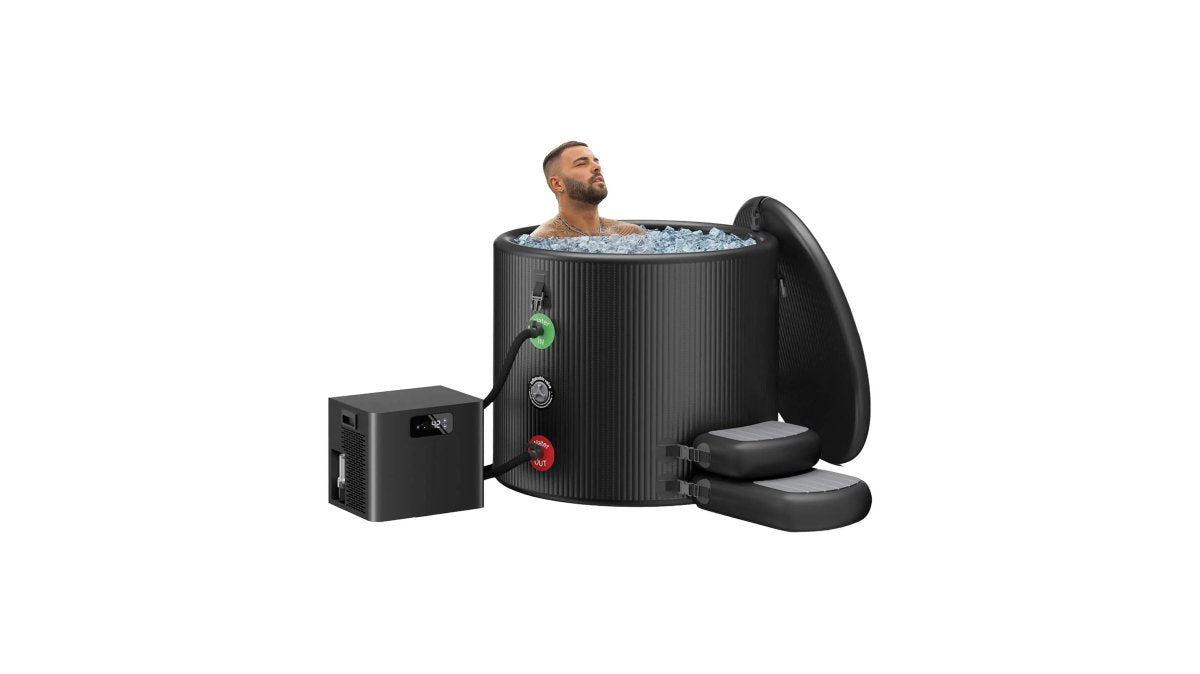
Cold Plunge vs Ice Bath for Muscle Recovery
Table of Contents
- Cold Plunge vs Ice Bath: What Actually Separates Them
- Cold Plunge Temperature for Recovery: What the Research Supports
- What Cold-Water Immersion Does to Soreness, Swelling, and Blood Flow
- Cold Water Immersion and Muscle Growth: The Trade-Off Nobody Mentions
- Timing Your Plunge: Endurance, Strength, and Competition
- How to Choose a Home Cold Plunge Tub
- Safety: Who Should Skip Cold-Water Immersion
- Conclusion: Pick the Setup That Matches Your Goal
- Frequently Asked Questions
Last Updated: October 4, 2026
Cold Plunge vs Ice Bath: What Actually Separates Them
The cold plunge vs ice bath question comes down to one thing: whether you add ice or let a chiller hold the temperature.
At Prime Recovery Den, we sell both styles and will tell you plainly which buyer each suits. Below, we break down temperature, duration, soreness, swelling, blood flow, and the muscle-growth trade-off most guides skip.
The Defining Difference: Ice or a Chiller
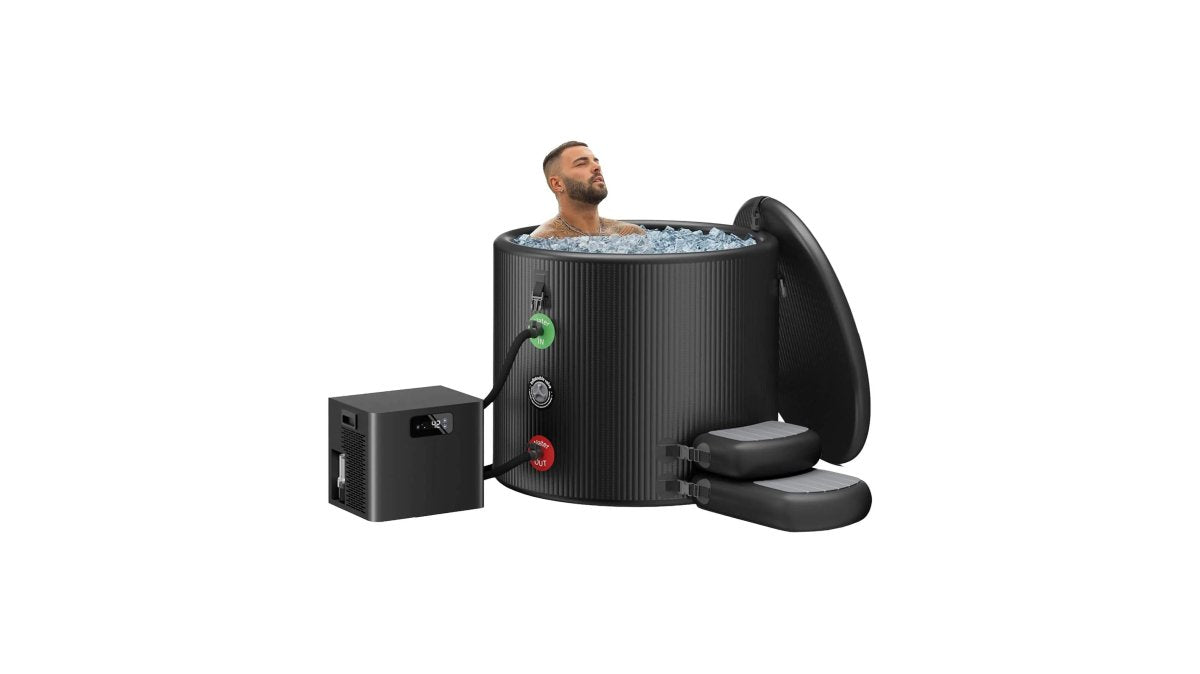
An ice bath is a tub of water you cool by adding ice. A cold plunge is a tub paired with a chiller that actively holds a set temperature.
The practical gap shows up on day three, not day one. Ice melts, so your water warms as you sit. A chiller reads the water and cools it back down, session after session.
Quick Comparison: Cold Plunge vs DIY Ice Bath
| Factor | Cold Plunge (Chiller) | DIY Ice Bath |
|---|---|---|
| Temperature control | Set and held | Drifts as ice melts |
| Recurring cost | Electricity and filters | Bags of ice, every time |
| Setup | Plug in, fill, ready | Buy ice, haul, dump |
| Water quality | Filtration built in | You manage it |
| Best for | Daily, repeatable sessions | Occasional use |

Cold Plunge Temperature for Recovery: What the Research Supports
Most home protocols land between 50°F and 59°F (10°C to 15°C), cold enough to trigger the circulatory response people are chasing, tolerable enough to repeat daily.
Colder is not automatically better. Water near 39°F to 45°F feels far more intense, and intensity is exactly what makes people quit after two weeks. The American College of Sports Medicine position stands on recovery methods are worth reading before you chase the coldest possible number.
What the Evidence Actually Shows (and What It Doesn't)
Most guides blur the line between proven and popular. The research on cold-water immersion for recovery is mixed: studies use small samples, different temperatures, durations, and outcome measures, so no single protocol is proven for everyone.
What the evidence does support reasonably well:
- Perceived soreness reduction. Multiple studies and reviews find that cold-water immersion reduces how sore people feel after exercise. This is the most consistent finding.
- Short-term swelling reduction. Cold exposure appears to limit swelling and inflammation markers in the hours after exercise.
- Return to perceived readiness. Athletes often report feeling more ready to train again, though this is subjective.
What the evidence does not clearly support:
- Faster actual muscle repair. Feeling less sore is not the same as measuring faster tissue repair. The research here is weaker and more mixed.
- Improved long-term strength or muscle gains. In fact, some evidence suggests cold-water immersion right after strength training may blunt muscle growth adaptations.
- A single "best" temperature or duration. There is no universally agreed protocol. The ranges below reflect common practice and study designs, not a guaranteed formula.
Evidence-Graded Protocol: Temperature, Duration, and Frequency
The table below separates what is well-supported from what is common but weakly supported. Use it as a starting framework, not a prescription.
| Water Temperature | Typical Duration | Frequency | Evidence Level | Notes |
|---|---|---|---|---|
| 50-59°F (10-15°C) | 10-15 minutes | Daily or most days | Moderate | Most sustainable for regular use; best balance of benefit and tolerability |
| 45-50°F (7-10°C) | 5-10 minutes | 3-5 times per week | Moderate | Popular home range; good for post-endurance recovery |
| 39-45°F (4-7°C) | 2-5 minutes | 2-3 times per week | Weak | Advanced; build up slowly; higher dropout rate |
| Below 39°F (below 4°C) | Not recommended for home use | , | Insufficient | Risk of cold shock; reserve for supervised settings |
Frequency guidance: Most practitioners find 3-5 sessions per week is enough to notice a difference in soreness and perceived recovery.
How to progress: Start at the warmer end (55-59°F) for 10 minutes, stay there two weeks, then either drop 2-3°F or add 2-3 minutes, not both.
Why Temperature Control Changes the Experience
An ice bath drifts: you add ice, the water cools, then warms as you sit, so your protocol changes every session and your body never gets a consistent stimulus.

How Long to Stay in an Ice Bath at Each Temperature
Duration and temperature trade off against each other:
| Water Temperature | Typical Duration | Notes |
|---|---|---|
| 50-54°F | 10-15 minutes | Sustainable for daily use |
| 45-50°F | 5-10 minutes | Most popular home range |
| 39-45°F | 2-5 minutes | Advanced; build up slowly |
Start at the warmer end. Add time before you subtract degrees.
The Bottom Line on Temperature
There is no magic number. The best temperature is the one you will actually use consistently, for most people, 50-59°F for 10-15 minutes, 3-5 times per week.
Our cold plunge tubs make that consistency effortless: set the temperature, step in, and get the same experience every time. No ice runs, no guessing, no drift.
What Cold-Water Immersion Does to Soreness, Swelling, and Blood Flow
Cold-water immersion narrows blood vessels near the skin (vasoconstriction); when you get out, they widen again, and that rush of returning circulation is the "reset" most people describe. Hard training triggers inflammation and swelling, and cold exposure appears to blunt both short-term, often reducing the delayed-onset soreness that peaks a day or two later.

Cold Water Immersion and Muscle Growth: The Trade-Off Nobody Mentions
This is the part that changes how you schedule your week: cold water immersion and muscle growth can work against each other. Strength training builds muscle through a stress-and-adapt cycle, and inflammation is part of the signal that tells your body to rebuild. Blunt that signal right after lifting and you may blunt the adaptation too.
Timing Your Plunge: Endurance, Strength, and Competition
Timing depends entirely on your goal, and the goals pull in opposite directions. "Avoid cold after lifting" is correct but incomplete. Here is a decision framework you can actually use.
The Core Trade-Off: Recovery vs. Adaptation
Cold-water immersion does two things that matter for timing: it reduces perceived soreness and swelling (a recovery benefit), and it may blunt some inflammatory signaling that drives muscle growth and strength adaptations (a training trade-off). If you want to feel better and return to training sooner, cold exposure helps; if you want to build muscle or get stronger, cold right after lifting may work against you.
CSC Smart Freestanding Full-Body Cold Plunge Tub – Built-In Chiller, App →
Goal-Specific Timing Framework
| Training Goal | When to Plunge | Why | What to Avoid |
|---|---|---|---|
| Endurance training (running, cycling, swimming) | Within 1-2 hours after long or hard sessions | Manages swelling and perceived soreness; helps you return to training sooner | Plunging before a session, which can reduce power output |
| Strength training (lifting for muscle or max strength) | At least 6 hours after lifting, or on rest days | Preserves the inflammatory signaling that drives adaptation | Plunging immediately post-lift, especially after hypertrophy work |
| Competition or tournament days | Between efforts, or after the final event | Cooling down between bouts matters more than long-term adaptation | Over-cooling before an event, which can reduce explosiveness |
| General wellness | Morning, most days | Builds a consistent habit; supports perceived energy and mood | Plunging right before bed if it disrupts your sleep |
| Injury rehabilitation | As directed by your provider | May help manage swelling and pain | Plunging without medical clearance for acute injuries |
Endurance Training: Plunge After, Not Before
For runners, cyclists, swimmers, and other endurance athletes, cold-water immersion after long or hard sessions is common and well tolerated. The goal is to manage swelling and return to training sooner, a 10-15 minute session at 50-59°F within an hour or two of finishing is a common pattern. Avoid plunging before a session: cold water can reduce muscle temperature and power output, the opposite of what you want before a hard workout or race.
Strength Training: Keep Cold Away from the Lifting Window
This is where the trade-off is sharpest. Strength training builds muscle through a stress-and-adapt cycle, and inflammation is part of the signal that tells your body to rebuild, blunt it right after lifting and you may blunt the adaptation too. A practical rule: keep cold exposure at least six hours from your lifting session.
Competition: Cooling Between Efforts
On competition or tournament days, the priority flips. If you have another event within hours, cooling down between efforts matters more than long-term adaptation. Keep sessions short (2-5 minutes) and bring your core temperature down without over-cooling, you want to feel fresh, not numb.
General Wellness: Morning Is Usually Best
For general wellness rather than specific training goals, morning is a common choice, many people find it supports perceived energy and mood for the day. If you plunge in the evening, watch whether it affects your sleep, since some find cold exposure too stimulating close to bedtime.
A Simple Decision Rule
If you are unsure, ask: "What am I trying to improve right now?"
- Feeling less sore and getting back to training sooner, plunge after your session.
- Building muscle or getting stronger, keep cold away from your lifting window.
- Performing again in a few hours, plunge between efforts.
Our chiller-equipped tubs make this framework easy: set the exact temperature and duration you want, any time of day. No ice runs, no waiting, no guessing. You decide when to plunge, and the tub is ready, that control lets you match cold exposure to your training goal instead of fitting your goal around your recovery setup.
How to Choose a Home Cold Plunge Tub
Choose by temperature range, depth, and how much maintenance you will actually do.
Depth matters more than width. You want full-body immersion, ideally above the shoulders.
Maintenance is the quiet dealbreaker. Filtration and a rinse-clean or replaceable filter cartridge keep water clear.
Here is how our own lineup maps to different buyers:
| Model | Price | Temperature Range | Best For |
|---|---|---|---|
| FCP Premium 2XL Cold Plunge Tub Kit | $999.97 | Chiller-cooled, 148 gal | First plunge, backyard or garage |
| FCP Premium XL Cold Plunge Tub Kit | $1,099.97 | Chiller-cooled, 120 gal | Portable and travel-friendly |
| CSC Smart Freestanding Full-Body Cold Plunge Tub | $5,999.97 | Built-in chiller, app control | Daily home use, no ice |
| RevX Acrylic X Tub Cold Plunge + LUX Chiller | $7,500.00 | 34°F to 104°F | Deepest full-body submersion |
| iCoolsport MiPod Pro Dual Temp Bath | $17,049.00 | 39°F to 104°F | Hot and cold contrast therapy |
The FCP kits are the honest starting point.


What will any of these feel like? Quiet.
Safety: Who Should Skip Cold-Water Immersion
Cold-water immersion is not for everyone. Cold exposure causes a rapid circulatory response, and some bodies should not handle it without medical clearance. Skip it, or get a doctor's approval first, if you:
- Have a heart condition, high blood pressure, or a history of stroke
- Are pregnant
- Have Raynaud's phenomenon or another cold-sensitivity condition
Never plunge alone. Never plunge impaired. Get out if you feel dizzy, numb, or short of breath. Cold tolerance builds slowly, and there is no prize for enduring a temperature your body is warning you about.
Conclusion: Pick the Setup That Matches Your Goal
The cold plunge vs ice bath decision is really about consistency. Ice is cheaper on day one and more expensive every day after; a chiller costs more upfront and removes every excuse not to use it. If you are chasing muscle growth, keep cold away from your lifting window.
Most people who abandon cold plunging do not quit because it stopped working. Prime Recovery Den carries the chiller-equipped setups that remove that friction entirely, including the CSC Smart Freestanding Cold Plunge Tub with app control and dual filtration, the RevX Acrylic X Tub with its 34°F to 104°F range, and the iCoolsport MiPod Pro for full hot-and-cold contrast therapy.
Frequently Asked Questions
Is a cold plunge the same as an ice bath?
Both use cold water, but they differ in how the cold is created. An ice bath is a tub of water chilled by added ice, so temperature drifts as the ice melts and you top it up. A cold plunge uses a built-in chiller to hold a set temperature, so every session starts at the same degree. The CSC Smart Freestanding Full-Body Cold Plunge Tub, for example, maintains precise temperatures without ice and lets you adjust them from your phone. Chilled water is also typically cleaner, since filtration runs continuously instead of stopping when the ice is gone.
Which is better for muscle recovery: a cold plunge or an ice bath?
For recovery results, the water temperature and how long you stay in matter more than the label on the tub. A chiller makes those two variables repeatable, which is the main practical advantage over a DIY ice bath. If you are guessing at ice ratios, you cannot reliably compare one session to the next or tell whether a protocol is working. A chilled cold plunge removes that guesswork. The recovery effect itself comes from the cold-water immersion, not the method used to get the water cold.
How long should you stay in a cold plunge after a workout?
Most recovery protocols call for roughly 10 to 15 minutes in water around 50 to 59°F. Colder water calls for shorter sessions. Start at the warmer end of that range and build cold tolerance before pushing lower. Getting out is simple when a chiller holds the temperature steady, because you are not racing melting ice. If you feel numbness, tingling that will not stop, or uncontrollable shivering, get out and warm up, regardless of the clock.
Can cold plunges affect muscle growth?
They can, and not always in the direction people expect. Cold-water immersion after resistance training may blunt some of the signaling that drives muscle growth and strength adaptations. That does not make cold plunges bad, it makes timing the issue. If hypertrophy or strength is your priority, keep intense cold exposure away from your hardest lifting sessions, or place it on rest days. If your goal is managing soreness so you can train again sooner, the trade-off often favors plunging.
What temperature should a cold plunge be for recovery?
A practical range for recovery is 50 to 59°F for 10 to 15 minutes. Trained users often work down toward 45°F for shorter sessions, and some units reach as low as 34°F. Colder is not automatically better, and the risk of cold shock rises as the water drops. Pick a temperature you can hold for the full session with controlled breathing, then adjust. A chiller lets you change that number by a degree or two rather than guessing.

Leave a comment
This site is protected by hCaptcha and the hCaptcha Privacy Policy and Terms of Service apply.