

Cold Plunge Safety Tips for Home Users: 2026 Guide
Table of Contents
- Cold Plunge Safety Tips for Home Users: What Changes When You Plunge at Home
- How to Prepare for a Cold Plunge Before You Step In
- Water Temperature and Cold Plunge Duration for Beginners
- Best Practices for Home Ice Baths: Setup, Monitoring, and Equipment
- Emergency Protocols: Recognizing Hypothermia and Afterdrop at Home
- Post-Plunge Recovery: Warming Up Without Undoing the Benefits
- Who Should Avoid Cold Plunges: Contraindications and Medical Clearance
- Conclusion: Building a Safe Cold Plunge Routine at Home
- Frequently Asked Questions
Last Updated: October 2, 2026
Cold Plunge Safety Tips for Home Users: What Changes When You Plunge at Home
Cold plunge safety at home comes down to one idea: you are now your own lifeguard. In a gym or spa, someone else checks the water and watches the clock. At home, that job is yours.

That shift matters more than most people expect. The cold shock response, a sudden gasp and spike in heart rate, hits hardest in the first 30 seconds.
This guide from Prime Recovery Den walks through the practical side: temperature, timing, setup, and what to do when something goes wrong.
Below, we cover the safety steps most home guides skip, including water sanitation and emergency protocols.
How to Prepare for a Cold Plunge Before You Step In
Preparation is the difference between a controlled session and a shock to your system. Do these two things first, every time.
Screening Yourself: Medications, Heart Conditions, and Cold Sensitivity
Talk to your doctor before your first plunge if you take blood pressure medication, have a heart condition, or have Raynaud's syndrome.
Some medications blunt your body's ability to regulate temperature. Others affect heart rhythm under cold stress. Your doctor can tell you if cold exposure is safe for you.
Don't guess on this one. A single screening visit is cheap insurance.
Mental Rehearsal: Controlling the Cold Shock Response
The cold shock response is an automatic gasp and rapid breathing pattern that hits when cold water contacts your skin. You cannot stop it, but you can prepare for it.
Try this before you get in:
- Take five slow breaths, exhaling longer than you inhale
- Picture the first 30 seconds and stay calm through them
- Enter feet first, then hands, then torso
- Keep breathing slow and steady once you're in
The goal is not to fight the shock. It is to ride it out without panicking.
Water Temperature and Cold Plunge Duration for Beginners
Cold plunge duration for beginners should start at 30 to 60 seconds in water between 50°F and 59°F. Add time only after your body adapts to that range.

Here is a simple progression table:
| Week | Water Temp | Duration | Sessions/Week |
|---|---|---|---|
| 1-2 | 55-59°F | 30-60 sec | 2-3 |
| 3-4 | 50-55°F | 1-2 min | 3 |
| 5-6 | 45-50°F | 2-3 min | 3-4 |
| 7+ | 40-45°F | 3-5 min | 3-4 |
Most beginners push too hard in week one. That is the fastest way to quit.
Reading Your Body: Shivering, Respiratory Rate, and Numbness
Shivering is your body's signal that core temperature is dropping. When it starts, you're done.
Watch for these warning signs:
- Uncontrollable shivering that doesn't stop
- Breathing that stays fast after the first minute
- Fingers or toes going numb
- Confusion or trouble speaking
If any of these appear, get out. Warm up slowly.
Best Practices for Home Ice Baths: Setup, Monitoring, and Equipment
Best practices for home ice baths start with the right setup: a stable tub, a reliable thermometer, and a safe entry point.

A few essentials make home plunging safer:
- A digital thermometer you check before every session
- A non-slip mat or step for entry and exit
- A timer within arm's reach
- A towel and warm clothes waiting nearby
Never plunge alone if you can avoid it. If you must, tell someone your start time.
Sanitation and Water Maintenance Between Sessions
Water sanitation is the safety step almost every home guide ignores. Standing water grows bacteria fast.
Follow this routine:
- Test and balance water weekly
- Rinse or replace filters on schedule
- Shower before you get in
- Drain and deep-clean the tub monthly
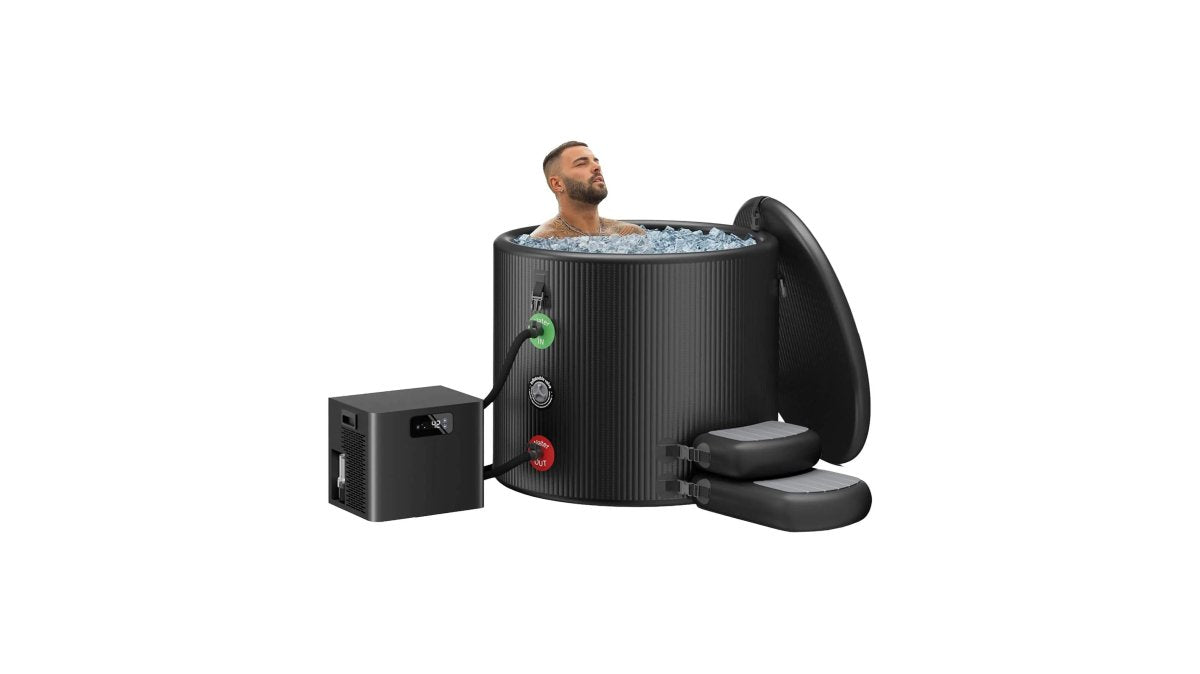
A rinse-clean filter, like the one on the FCP Premium XL Cold Plunge Tub Kit - 120 Gal, 1/3 HP Chiller, Travel Bag, 1-Year Warranty, cuts this work down to a quick rinse. No cartridges to buy.
Emergency Protocols: Recognizing Hypothermia and Afterdrop at Home
Hypothermia happens when core body temperature drops below 95°F. Afterdrop is the continued cooling that occurs after you exit the water, your core temperature can keep falling for 10 to 20 minutes even though you're dry and shivering.
Both are real risks at home, where no one is watching you. This is the section most home guides skip. Here is exactly what to do.
Recognizing the Stages of Hypothermia
Hypothermia progresses in stages. Catch it early and you can handle it at home. Let it advance and you need emergency help.
Mild hypothermia (core temp 90-95°F):
- Uncontrollable shivering that won't stop
- Cold, pale skin
- Numbness in fingers and toes
- Trouble performing fine motor tasks like zipping a jacket
- Rapid breathing and heart rate
Moderate hypothermia (core temp 82-90°F):
- Shivering may stop, this is a dangerous sign, not a good one
- Slurred speech or confusion
- Loss of coordination, stumbling
- Drowsiness or apathy
- Slow, weak pulse
Severe hypothermia (core temp below 82°F):
- No shivering
- Unconsciousness
- Slow, irregular pulse or no detectable pulse
- Cold, blue-gray skin
What to Do: Home Emergency Protocol
If you suspect mild hypothermia:
- Get out of the water immediately. Do not try to "finish your time."
- Move to a warm, dry place indoors.
- Remove all wet clothing, cut it off if you have to. Wet fabric pulls heat from your body 25 times faster than air.
- Wrap in dry blankets, including your head and neck. Heat escapes fastest from your head.
- Apply warm compresses to your core, chest, neck, groin, armpits. Not your arms and legs; warming extremities first pushes cold blood back to your heart.
- Drink something warm and non-alcoholic if you can swallow easily. No caffeine.
- Keep warming until shivering stops completely and you feel normal.
If you suspect moderate or severe hypothermia:
- Call 911 immediately. Do not wait to see if they improve.
- Handle the person gently. Rough movement can trigger cardiac arrest in a cold heart.
- Do not rub their skin or extremities. This can push cold blood to the core.
- Do not give alcohol. It dilates blood vessels and accelerates heat loss.
- Do not give food or drink if they are confused or drowsy, choking risk.
- If they become unconscious and stop breathing, begin CPR if you are trained. Use an AED if available. Cold hearts can sometimes be revived after longer periods than normal.
- Keep them horizontal. Sitting up can cause a blood pressure crash.
Preventing Afterdrop Before It Starts
Afterdrop is the continued cooling of your core after you exit the water. It happens because cold blood from your limbs returns to your core as you warm up. You can blunt it:
- Get dry and dressed fast. Every minute wet and cold extends the afterdrop window.
- Warm your core first, not your hands and feet.
- Don't jump into a hot shower immediately. Gradual warming is safer.
- Keep moving lightly. Walking around generates heat from the inside.
- Have warm clothes laid out before you get in. Fumbling for a towel while shivering wastes critical minutes.
When to Call 911
Call 911 if you see:
- Shivering that stops but the person still feels cold and confused
- Slurred speech or inability to answer simple questions
- Loss of coordination or inability to stand
- Drowsiness or loss of consciousness
- Slow or irregular breathing
When in doubt, call. Hypothermia can worsen quickly, and home warming methods have limits.
Why This Matters for Home Users
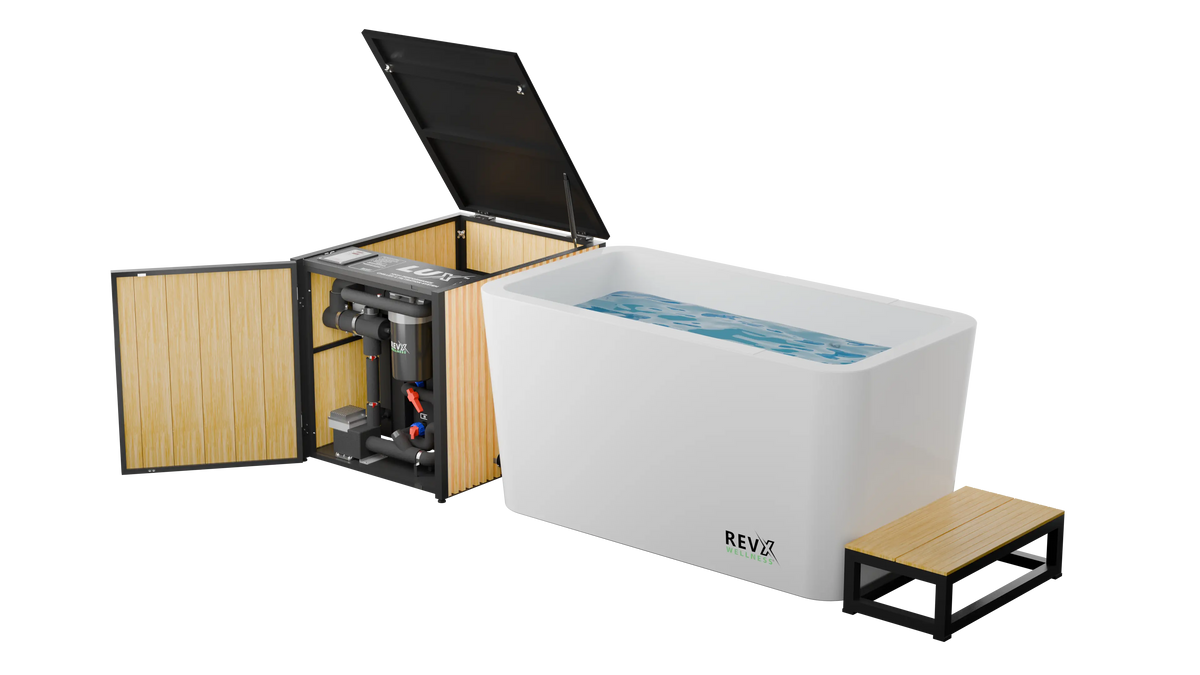
At a gym or spa, someone else is watching. At home, you are the only one who will notice the signs. That's why Prime Recovery Den builds safety into the experience. The RevX Acrylic X Tub Cold Plunge + LUX 1.5HP Chiller - 34"+ Deep, 3" Insulated Walls, 34-104°F gives you precise temperature control from 34°F to 104°F, so you never guess how cold the water is. The three-inch insulated walls keep temps steady, and the adjustable jets help you acclimate gradually instead of shocking your system. You'll feel the difference: calmer, more in control, and confident that your home setup is as safe as it is effective. That peace of mind is what a real home sanctuary feels like.
Post-Plunge Recovery: Warming Up Without Undoing the Benefits
Warm up gradually, not with a hot shower. Rapid heating can cause a blood pressure swing.
Here's what works:
- Dry off and put on warm, dry clothes
- Wrap up and let your body warm on its own
- Drink something warm, like tea or broth
- Move around lightly to boost circulation
Skip the hot shower for 20 to 30 minutes. Your body needs to find its own balance.
Who Should Avoid Cold Plunges: Contraindications and Medical Clearance
Some people should not cold plunge without a doctor's approval. The list is shorter than you'd think, but it matters.
Get medical clearance first if you have:
- A heart condition or arrhythmia
- High blood pressure that isn't controlled
- Raynaud's syndrome
- A history of stroke or seizure
- Cold urticaria, an allergic reaction to cold
Pregnant women and people with open wounds should also check with a doctor first.
The American Heart Association guidance on cold exposure and heart health notes that cold water stress can affect heart rhythm, especially in people with existing conditions.
Conclusion: Building a Safe Cold Plunge Routine at Home
A safe routine is built on small steps: screening, temperature control, timing, and warming up properly.
Prime Recovery Den builds equipment for exactly this. The RevX Acrylic X Tub Cold Plunge + LUX 1.5HP Chiller - 34"+ Deep, 3" Insulated Walls, 34-104°F holds temperatures from 34°F to 104°F, so you control the cold instead of guessing.
For a simpler setup, the Barton DIY Cold Tub gives you commercial-grade insulation and a lockable lid, ready for the chiller of your choice.
You'll feel the difference: calmer, clearer, and more in control of your recovery. That quiet confidence is what a real home sanctuary feels like.
Frequently Asked Questions
What are the most common cold plunge safety mistakes home users make?
The biggest mistakes are skipping a medical screening before the first plunge, staying in too long because the cold feels manageable, and plunging alone without anyone nearby. Home users also tend to overlook water sanitation, letting bacteria build up between sessions. Set a timer, keep sessions short, and always have a phone within reach. If you have heart conditions or take blood pressure medication, get clearance from your doctor first.
How long is it safe to stay in a cold plunge?
For beginners, 1 to 3 minutes at 50 to 59 degrees Fahrenheit is a safe starting range. Experienced users may extend to 5 to 10 minutes at similar temperatures, but longer sessions increase hypothermia risk without adding recovery benefits. The cold plunge duration for beginners should never exceed 3 minutes until your cold tolerance builds. Watch for uncontrolled shivering, numbness in fingers and toes, or a racing heart, and exit immediately if any appear.
Is it safe to do multiple cold plunges in a single day?
Two short sessions per day are generally safe for healthy, acclimated users, but they are not necessary for recovery. Each plunge triggers cardiovascular strain and a cold shock response, so stacking sessions too close together stresses your system. Space them at least four hours apart, keep each under 3 minutes, and pay attention to how you feel. If you are shivering between sessions or feel fatigued, skip the second plunge.
Who should avoid cold plunging for health reasons?
People with heart conditions, uncontrolled high blood pressure, Raynaud's phenomenon, or a history of stroke should avoid cold plunges unless a doctor approves. Pregnant women and anyone with open wounds or compromised immunity should also skip them. Cold exposure causes vasoconstriction and spikes cardiovascular strain, which can be dangerous for these groups. If you take beta-blockers or blood thinners, talk to your physician before starting a cold plunge routine at home.
Cold plunging at home should feel restorative, not risky. Prime Recovery Den helps you get there with equipment built for safety and control, including free shipping on most orders within the Continental U.S. and thoughtful support when you need it. Get started with Prime Recovery Den and turn your space into a sanctuary built for recovery.

Leave a comment
This site is protected by hCaptcha and the hCaptcha Privacy Policy and Terms of Service apply.