
Is High-End Cold Plunge Worth the Cost?
Table of Contents
- What Makes a Cold Plunge High-End: Premium Features and Build Quality
- Cold Plunge Total Cost of Ownership: What You'll Actually Spend
- Cold Plunge vs. Ice Bath: Which Delivers Better Value?
- Cold Plunge Temperature and Session Length: Optimizing Your Investment
- Cost Per Session: Breaking Down Your Real ROI
- Why Premium Cold Plunges Justify Their Price
- The Verdict: Is a High-End Cold Plunge Worth It for You?
- Frequently Asked Questions
Last Updated: October 8, 2026
What Makes a Cold Plunge High-End: Premium Features and Build Quality
Whether is high end cold plunge worth the cost depends on understanding what separates a tub filled with ice water from a premium system. The difference between a budget ice bath and a premium cold plunge system comes down to temperature precision, durability, and the overall experience it delivers.

Prime Recovery Den's curated collection focuses on systems that combine serious performance with thoughtful design. The depth of immersion matters. The insulation quality matters. The chiller's power matters. These aren't luxury add-ons, they're the foundation of whether your cold plunge actually works and whether you'll use it consistently.
Premium cold plunges feature deep acrylic or fiberglass construction with thick foam insulation (typically 3 inches or more) that locks in cold temperatures and blocks ambient heat. The chiller systems in high-end models, 1.5HP or higher, cool rapidly and maintain precise temperatures without constant cycling. Adjustable water flow jets create an active cold experience that intensifies the therapeutic effect.
The best systems also offer contrast therapy capability, meaning they heat as well as cool. This matters because the jump from cold to warm, or vice versa, amplifies the recovery benefits and creates a more complete wellness experience.
Cold Plunge Total Cost of Ownership: What You'll Actually Spend
Upfront Purchase Price Range
The purchase price is just the starting point. A complete cold plunge setup ranges dramatically depending on the system you choose. Budget-conscious buyers might spend under $2,000 for a portable, inflatable option. Mid-range systems run $7,500 to $12,000. Premium, commercial-grade systems exceed $17,000.
The FCP Premium XL Cold Plunge Tub Kit costs $1,999.97 and includes everything needed to start: a 120-gallon inflatable tub, 1HP chiller, filtration system, pump, and step stool.
For serious home use, the RevX Acrylic X Tub Cold Plunge + LUX 1.5HP Chiller runs $7,500.00. The RevX is the deepest acrylic cold plunge available, with 34 inches of depth for full above-the-shoulder submersion.
The Icetubs IceBath costs $12,099.97 and offers a lie-flat design with premium Thermowood and stainless steel construction. It feels more like a sophisticated bathtub than a recovery device, which matters if you're integrating this into a traditional home aesthetic.
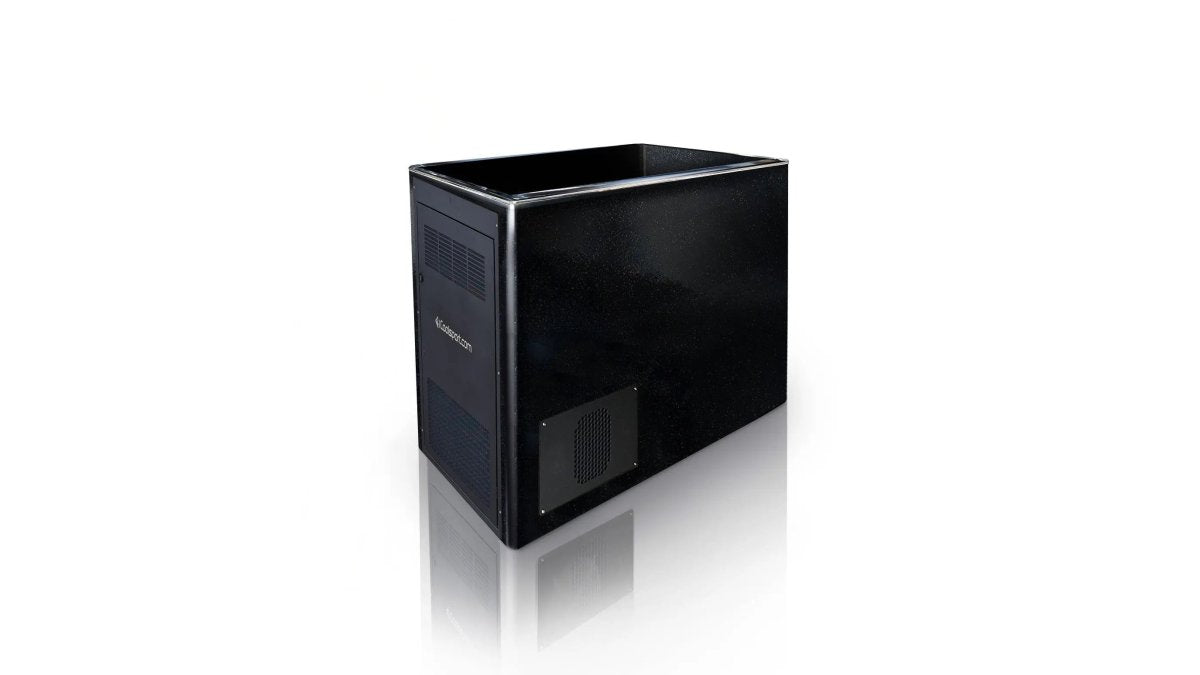
At the premium end, the iCoolsport MiPod Pro Dual Temp All-In-One Bath costs $17,049.00, and the elite model (iCoolsport MiPod Elite Ice Bath & Hot Tub) reaches $20,460.00. These are commercial-grade systems with 5000W chillers, integrated heating, and touch-screen controls.
Annual Operating Costs: Electricity, Water, and Chemicals
Electricity is your largest ongoing expense. A 1HP chiller running daily consumes significant power. A 1.5HP chiller uses more. The 5000W systems in premium models draw even more. Expect electricity costs to range from $50 to $150 monthly depending on your chiller size, how often you use it, and your local power rates.
Water costs depend on how frequently you drain and refill. Many owners drain monthly or quarterly to refresh the system. A 120-gallon tub costs roughly $1-2 per refill depending on your water rates. Premium systems with high-capacity filtration can go longer between drains, sometimes 2-3 months, which reduces water waste and cost.
Chemical costs are minimal if you're using a quality filtration system. The FCP Premium XL requires filter cartridge replacements every 2 weeks at roughly $20-30 per cartridge. Systems with ozonation (like the Icetubs IceBath) eliminate the need for chlorine or salt treatments entirely, which saves money over time and creates a cleaner, chemical-free experience.
Cold Plunge Maintenance and Operating Costs Over Time
Maintenance separates affordable systems from genuinely high-end ones. Budget inflatable tubs require more hands-on care, checking water chemistry, replacing filters frequently, monitoring for leaks. Premium systems automate much of this. Built-in ozonators sanitize continuously. Advanced filtration systems handle micro-particles without constant intervention.
Chiller maintenance is predictable. Most quality units require annual inspection and occasional refrigerant checks, typically $100-200 per year. Acrylic and fiberglass tubs need occasional cleaning but resist degradation. Thermowood (like in the Icetubs system) is naturally rot-resistant and requires only light maintenance.
Over five years, a $2,000 portable system might cost $3,500-4,000 total when you factor in electricity, water, cartridges, and minor repairs. A $7,500 premium system might cost $10,000-11,000 total. The premium system holds up better, requires less intervention, and delivers a more consistent experience, which means you'll actually use it, which justifies the investment.
Cold Plunge vs. Ice Bath: Which Delivers Better Value?
The terms "cold plunge" and "ice bath" are often used interchangeably, but they represent different approaches to cold therapy. An ice bath is typically a tub filled with ice and water, manual, temporary, and requiring constant ice replenishment. A cold plunge is a dedicated system with an integrated chiller that maintains precise temperatures automatically.

An ice bath costs almost nothing upfront. You fill a tub with ice from your freezer or buy bags. The problem: the temperature drops unpredictably, the ice melts within 15-20 minutes, and you're left with water that's no longer cold enough for effective therapy. You can't control the temperature.
A cold plunge system with a chiller delivers precision. You set 34°F and it stays 34°F for your entire session. The water stays clean. You can use it multiple times daily without refilling. If your system has heating capability, you can transition from cold to warm in seconds, something impossible with an ice bath.
For value, it depends on commitment. If you're curious about cold therapy and want to test it cheaply, ice baths make sense. If you're serious about recovery, if you plan to use cold plunge 3+ times weekly, a chiller system pays for itself in consistency and reliability.
Cold Plunge Temperature and Session Length: Optimizing Your Investment
Temperature precision is what separates a mediocre system from one worth the cost. Most quality cold plunges cool to 34-37°F (around 1-3°C). This is the range where cold therapy becomes genuinely challenging and effective. Warmer temperatures (50-60°F) feel refreshing but don't trigger the full adaptive response your body is seeking.
Session length matters as much as temperature. Most practitioners recommend starting with 1-3 minutes in cold water, building tolerance over weeks to 5-10 minutes. Longer isn't better, it's diminishing returns. The real benefit happens in the first few minutes when your body experiences the shock and begins adapting.
RevX Acrylic X Tub Cold Plunge + LUX 1.5HP Chiller – 34"+ Deep, 3" Insulated →
Premium systems let you control both variables independently. The RevX Acrylic X Tub reaches 34°F and heats to 104°F, giving you full contrast capability. The iCoolsport systems go even lower (down to 39°F in the MiPod Pro, 39°F in the Elite) and up to 104°F for hot therapy.

Temperature stability matters more than you'd expect. A system that drifts from 34°F to 42°F during your session changes the stimulus. Premium chillers maintain within 1-2 degrees, which keeps the stimulus consistent and the results predictable.
Cost Per Session: Breaking Down Your Real ROI
If you spend $7,500 on a premium cold plunge system and use it 4 times weekly for 5 years, you're looking at roughly 1,040 sessions. Add electricity, water, and maintenance, total cost approaches $10,000-11,000. That's approximately $10 per session.
Compare that to a commercial recovery center charging $30-50 per session. At $40 per visit, 4 weekly sessions cost $160 monthly or $1,920 annually. Over five years, you're spending nearly $10,000 just on entry fees, without the convenience of home access or the ability to do contrast therapy.
The math shifts dramatically if you use your system more. Six sessions weekly over five years drops the per-session cost to roughly $7. If you're an athlete serious about recovery, a home cold plunge system becomes cheaper than ongoing gym memberships while offering superior convenience and consistency.
For lighter users, once or twice weekly, the per-session cost is higher, and a recovery center might make more financial sense. But most people who invest in home cold plunge systems increase their usage once the barrier to entry (travel time, cost per visit) disappears. You'll use it more than you think, which improves the ROI.
Why Premium Cold Plunges Justify Their Price
The feeling of stepping into a precisely-controlled 34°F cold plunge is different from dumping ice into a tub. There's clarity in the consistency. Your nervous system knows what to expect. Your body adapts predictably.
Premium systems also create an intentional space. When you invest in something like the RevX Acrylic X Tub or the Icetubs IceBath, you're not just buying equipment, you're declaring that recovery matters to you.
Durability is another reason premium systems justify their cost. A $2,000 inflatable tub might crack, degrade, or fail after 2-3 years. A $7,500 acrylic system with proper maintenance lasts 10+ years.
Features matter too. Built-in ozonation (like in the Icetubs) eliminates chemical treatments entirely. App-controlled temperature (iCoolsport systems) lets you pre-cool before arriving home. Adjustable jets (RevX) intensify the therapeutic effect.
At Prime Recovery Den, we've selected these systems because they deliver on their promises consistently. When you invest in a high-end cold plunge, you're buying reliability, precision, and the confidence that every session will be effective.

The Verdict: Is a High-End Cold Plunge Worth It for You?
A high-end cold plunge is worth the cost if you're committed to recovery and you plan to use it regularly.
The RevX Acrylic X Tub at $7,500.00 represents the best balance of depth, insulation, and performance for most serious home users. You get above-the-shoulder immersion, powerful chilling, and the durability to last a decade.
For athletes or teams where recovery is non-negotiable, the iCoolsport systems (MiPod Pro at $17,049.00 or Elite at $20,460.00) justify their premium pricing through commercial-grade engineering and integrated heating for true contrast therapy. These systems feel like investments in performance, not just wellness.
If you're uncertain about commitment, start with the FCP Premium XL at $1,999.97. It's portable, complete, and lets you build the habit before upgrading to a permanent installation.
Ultimately, is high end cold plunge worth the cost comes down to one question: will you actually use it? If you will, the premium system pays for itself. If you won't, no price is justified. Be honest about that before deciding.
A high-end cold plunge transforms how you approach recovery. Each system delivers the temperature control, durability, and reliability that make cold therapy a sustainable part of your life rather than an occasional experiment. SHOP ALL
Frequently Asked Questions
How much does a good high-end cold plunge cost?
High-end cold plunges range from $2,000 to over $20,000. Budget options like the FCP Premium XL start at $1,999.97 and deliver solid performance for home use. Mid-range systems like the Icetubs IceBath ($12,099.97) offer premium materials and app control. Top-tier models like the iCoolsport MiPod Elite ($20,460.00) feature commercial-grade engineering, dual-temperature capability, and advanced filtration. Your budget should reflect how often you'll use it and whether you want contrast therapy (hot and cold in one system).
Is a cold plunge better than an ice bath?
Cold plunges and ice baths both deliver cold therapy, but differ in consistency and convenience. Ice baths require you to add ice manually, labor-intensive and temperature fluctuates. High-end cold plunges use chillers to maintain precise temperatures (34-39°F) automatically, so every session is identical. Chillers also eliminate the ongoing cost of buying ice. If you plunge regularly, a cold plunge system delivers superior reliability and temperature control, making it worth the investment over time.
What features make a high-end cold plunge worth the price?
Premium cold plunges justify their cost through durability, temperature precision, and user comfort. Look for thick insulation (3+ inches) that locks in cold and reduces energy waste, powerful chillers (1.5HP or higher) that cool reliably, and advanced filtration that keeps water clean without constant chemical treatment. High-end systems like the RevX Acrylic X Tub offer 34°+ depth for full submersion, adjustable jets for therapeutic intensity, and materials built to last 10+ years in residential use. These features reduce maintenance time and long-term operating costs.
How much does it cost to run a cold plunge at home annually?
Operating costs depend on chiller size, usage frequency, and local electricity rates. A 1HP chiller running 1-2 hours daily typically costs $30-$50 monthly in electricity (roughly $360-$600 per year). Water and filter replacements add another $200-$400 annually. Total annual operating cost ranges from $600-$1,000 for typical home use. Premium systems with larger chillers may cost more to run but often include better insulation, reducing runtime and offsetting higher wattage. Calculate your cost per session by dividing annual operating costs by your plunge frequency.


Leave a comment
This site is protected by hCaptcha and the hCaptcha Privacy Policy and Terms of Service apply.