

How to Maintain Leather Home Theater Upholstery
Last Updated: November 2, 2026
Quick Summary
Maintain leather home theater upholstery by vacuuming seams monthly, wiping with a pH-balanced leather-safe cleaner on a damp cloth, and conditioning every three to six months with a thin, even layer. Blot spills instead of rubbing, and keep seats away from direct sun and HVAC vents to prevent cracking and fading.
- Vacuum seams, creases, and cup holder crevices before any liquid touches the seats.
- Spot test cleaner on a hidden patch and wait a few minutes for fading or stiffness.
- Condition every three to six months, or closer to three with heavy use or dry air.
- Blot spills straight down with a dry microfiber cloth; never scrub the finish.
- Keep humidity steady and seats away from vents and direct sunlight.
Table of Contents
- Why Leather Home Theater Upholstery Needs a Different Routine
- What You'll Need Before You Start
- How to Clean Leather Theater Seats Step by Step
- How to Condition Leather Furniture Without Overdoing It
- How Often to Condition Leather Furniture in a Theater Room
- How to Remove Stains from Leather Upholstery
- Preventing Cracks, Fading, and Pet Damage
- Choosing Seating Built to Be Maintained
- Frequently Asked Questions
Why Leather Home Theater Upholstery Needs a Different Routine
Leather home theater upholstery needs a different routine because it sits in a dark, warm, enclosed room where body oils, snacks, and dry air do more damage than sunlight ever will.
Leather is a natural material that holds moisture, breathes, and reacts to whatever touches it.
That mix creates three problems:
- Body oils soak into the headrest and armrests first
- Snack crumbs and drink rings work into seams and grain
- Dry air pulls moisture out and speeds up cracking
A quick wipe now and then will not fix any of it. Leather needs a real routine.
Identify Your Leather Type First
Before you buy a single cleaner, find out what your upholstery actually is. Aniline, top-grain, full-grain, and synthetic leather each respond differently.
Here is how to tell them apart:
- Full-grain: the top layer is intact, with visible grain texture and natural marks. It absorbs moisture and needs regular conditioning.
- Top-grain: lightly sanded for a smoother feel. It still breathes but takes less conditioner.
- Aniline: dyed without a heavy protective coating. It is soft and rich, but stains sink in fast.
- Synthetic leather: a fabric base with a polyurethane coating. It wipes clean easily but does not absorb conditioner.
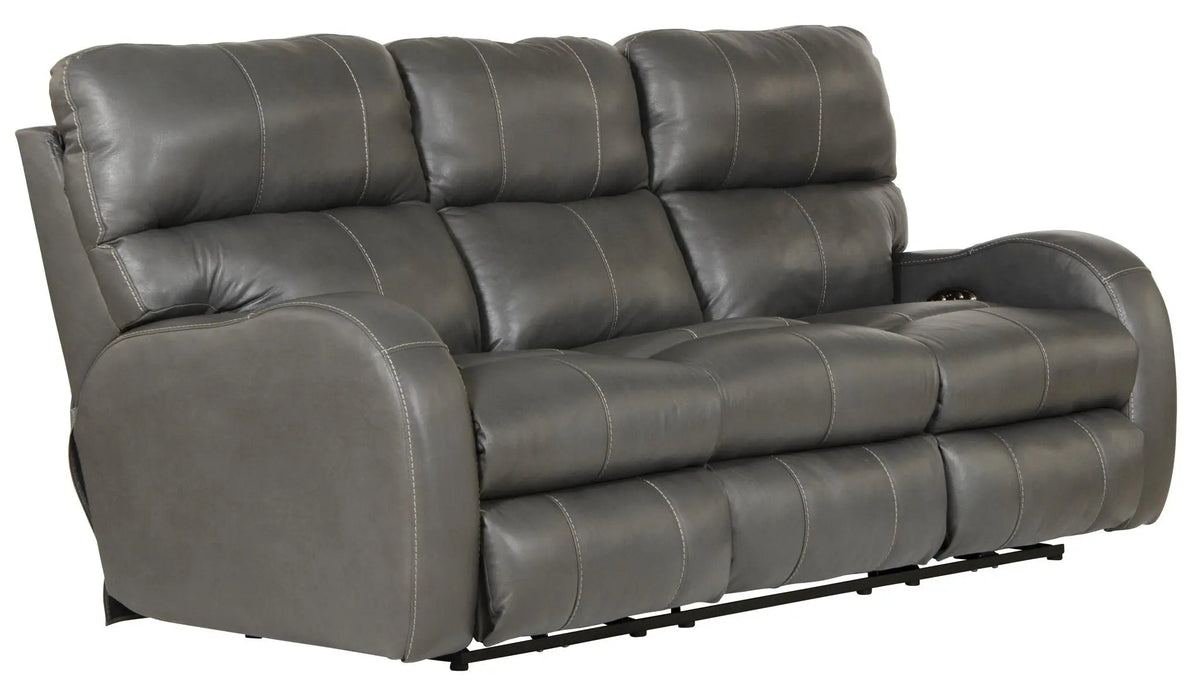
If you own a genuine leather power recliner, like our Angelo 83-inch leather power reclining sofa, you are caring for real Italian leather that benefits from gentle conditioning. If your seats are synthetic, like our Zuriel synthetic leather recliner sofa, they are a practical choice for easy-to-clean movie-night seating.


Not sure which you have? Press a fingertip into a hidden spot. Real leather warms and softens under your touch. Synthetic stays cool and springs back.
What You'll Need Before You Start
Gather your supplies first so you are not hunting for a cloth mid-clean.
- A vacuum with a soft upholstery attachment
- A microfiber cloth or two
- A pH-balanced leather-safe cleaner
- Distilled water in a spray bottle
- A soft-bristled brush
Skip harsh household cleaners entirely. All-purpose spray, bleach, and vinegar can strip the protective coating and leave residue behind.
Watch out: never soak the leather. Too much water pushes past the grain and into the padding, where it can cause odor and separation. Damp cloth, not wet cloth.
How to Clean Leather Theater Seats Step by Step
Cleaning leather theater seats is simplest when you follow a steady order: vacuum, spot test, wipe, then buff dry.
Vacuum and Clear Surface Grime
Start with dry debris removal. Crumbs and dust act like sandpaper if you rub them across the hide.
- Attach the soft brush or upholstery tool to your vacuum.
- Run it along seams, creases, and the gap between the seat and backrest.
- Work the crevices around cup holders and recliner mechanisms.
- Go over the headrest and armrests last, since they hold the most oil.
This step takes two minutes and prevents scratches. Do it before any liquid touches the seat.
Spot Test, Then Wipe in Circular Motions
A spot test is a small trial of your cleaner on a hidden patch to confirm it will not discolor or dry the finish.
Apply a little cleaner to a cloth, not the leather. Rub it into a spot under the seat or behind an armrest. Wait a few minutes and check for fading or stiffness.
Then clean in small circular motions:
- Work one section at a time, top to bottom
- Use light pressure and let the cleaner lift the grime
- Buff dry right away with a clean microfiber cloth
- Rinse the cloth often so you are not spreading dirt
Circular motions lift oil without grinding it deeper into the grain.
How to Condition Leather Furniture Without Overdoing It
To condition leather furniture, apply a thin, even layer of conditioner with a soft cloth, let it absorb for a few minutes, then buff off the excess. Less is more: a heavy coat leaves sticky residue that attracts dust and clogs the grain.
Conditioner restores moisture balance and keeps the hide supple, which prevents cracking over time.
Here is a sensible approach:
Angelo 83-Inch Leather Power Reclining Sofa with Power Headrest, Lay-Flat →
- Clean and dry the seat completely first.
- Put a small amount of conditioner on a microfiber cloth.
- Work it in with gentle circular motions.
- Let it sit for the time the product label recommends.
- Buff off anything left on the surface.
Focus on the seats you actually use. The headrest, armrests, and seat cushion take the most wear.
How Often to Condition Leather Furniture in a Theater Room
Condition leather furniture every three to six months in a theater room, and clean it monthly. Heavy use or very dry air may need conditioning closer to every three months.
Frequency depends on a few things:
- Use: daily movie nights wear leather faster than weekly ones
- Air: heating and cooling dry out the room and the hide
- Leather type: aniline and full-grain absorb more and need more care
- Climate: dry seasons pull moisture out faster
A simple test: press the leather. If it feels stiff or looks dull, it is ready for conditioner. If it feels soft and looks rich, wait.
How to Remove Stains from Leather Upholstery
Remove stains from leather upholstery by blotting, not rubbing, then using a leather-safe cleaner made for that stain type.
Start with the universal rule: blot, do not scrub. Press a clean, dry microfiber cloth straight down on the spill and lift.
Then match the method to the mess:
- Liquids (water, soda, juice): blot immediately with a dry cloth, then air dry away from heat. Do not use a hair dryer. On aniline leather, blot once and stop; excess wiping spreads the dye.
- Oil and grease: blot up what you can, then apply a small amount of leather-safe cleaner to a cloth and work it in gently. On full-grain and top-grain leather, follow with a thin coat of conditioner once dry, because oil lifts the natural moisture barrier.
- Ink: dab gently with a cloth and a cleaner made for ink. Work from the outside of the mark inward so you do not enlarge the stain. On protected leather, ink often sits on the coating and lifts with light pressure; on aniline, ink can sink in and may need professional attention.
- Food (ketchup, chocolate, cheese): lift solids first with a plastic spoon, then wipe with a damp cloth and mild leather soap. Rinse the cloth often. Sugar and dairy residues attract pests and hold moisture in the seams.
- Pet accidents: blot, then clean with an enzyme-based leather-safe cleaner. Standard soap does not break down the proteins in urine, and the odor can linger in the padding.
Watch out: never pour cleaner directly on the leather.
Act fast. Fresh stains lift far easier than set ones. For tough marks, test any product on a hidden spot first.
Preventing Cracks, Fading, and Pet Damage
Prevention is where leather care pays off. Cracking and fading build slowly, and by the time you see them, the damage is set.
A little control over the room and the seating goes a long way. Here is what actually moves the needle:
- Keep seats out of direct sunlight through windows. UV exposure is the leading cause of fading on leather, and theater windows often sit behind the seating. Use blackout curtains or UV film on any window that reaches the seats.
- Run a humidifier in dry months to hold moisture balance. Leather generally does best when indoor relative humidity stays in a steady middle range rather than swinging from very dry to very damp. A cheap hygrometer near the seating tells you what the room is actually doing.
- Keep seats away from HVAC vents. A vent blowing directly on a recliner dries one area faster than the rest, which is how you get localized cracking on an armrest or headrest.
- Clean up body oils monthly before they soak in. Oils from skin and hair are acidic and break down the finish over time. The headrest and armrests take the worst of it.
- Condition on schedule, not on impulse. A thin coat every three to six months replaces what the air takes out. Over-conditioning is its own problem: excess product clogs the grain and attracts dust.
For pets, the biggest risk is claws catching the grain, followed by dander and oils in the coat.
Environmental control matters too. A room that swings from very dry to very damp stresses leather; steady conditions keep the material calm.
Our home theater seats collection offers seating that suits this kind of routine. A coordinated set like our Bahrain 5-piece home theater seating set can give you matching upholstery across the room.
Choosing Seating Built to Be Maintained
Good leather care starts with seating made to last. Look for quality hides, solid frames, and construction that holds up well with use.
Our home theater seats collection is built for exactly this. For design ideas before you commit, our guide to sophisticated home theater seating design trends shows how materials and layout come together.
Here is what to weigh when you choose:
| What to Check | Why It Matters | What to Look For |
|---|---|---|
| Leather type | Sets your care routine | Genuine leather for richness, synthetic for easy care |
| Frame and cushions | Holds shape over years | Solid framing and supportive cushions |
| Upholstery match | One routine for the room | Coordinated sets with the same hide |
| Reclining clearance | Fits your space | Check wall clearance before you buy |
Well-made seating can make maintenance simpler, and leather that is cared for properly can keep its appearance over time.
Frequently Asked Questions
Is Dawn dish soap or Murphy's oil soap safe for leather theater seats?
Neither is a good choice for regular use. Dish soap strips the oils that keep leather supple, and oil soap can leave a residue that dulls the finish. Use a leather-safe cleaner or a few drops of mild soap in distilled water instead, and always spot test on a hidden panel first. Rinse with a barely damp microfiber cloth and dry immediately so moisture does not sit in the seams.
How often should you clean and condition leather theater seats?
Vacuum the seams and wipe down high-contact areas every two to four weeks. A full clean with a leather-safe cleaner fits best every two to three months for a room used most nights. Condition two to four times a year, more often in dry winter air. If the leather feels stiff or looks dull between sessions, it is asking for moisture, not more cleaner.
Can you use household cleaners like WD-40 on leather recliners?
No. Solvent-based sprays and multi-surface cleaners pull dye and oils out of the grain, and the damage often shows up weeks later as cracking or fading. Stick to pH-balanced leather products, distilled water, and a microfiber cloth. For tough spots, use a leather-safe cleaner applied to the cloth rather than poured onto the seat.
How do you keep leather theater seats from cracking?
Cracking comes from lost moisture, sun exposure, and body oils left on the surface. Condition on schedule, keep seats out of direct sunlight, and wipe down armrests and headrests where skin contact is heaviest. Avoid sitting on the same seat in the same position every night. A leather home theater setup that gets consistent, light care lasts far longer than one that gets an occasional deep clean.
Leather seating that feels rich and comfortable night after night is worth protecting. Prime Recovery Den helps you build a theater room that stays beautiful, with seating made for real use and real care. Browse our collection to find pieces that fit your space, then settle in and enjoy the quiet satisfaction of time well spent. Get started with Prime Recovery Den and create a sanctuary you will love for years.


Leave a comment
This site is protected by hCaptcha and the hCaptcha Privacy Policy and Terms of Service apply.